Chinese exporters of vinyl chloride recycling technologies?
2026-02-09
If we talk about the export of PVC recycling technologies, many immediately imagine turnkey plants. But the reality, especially in developing markets, often comes down to adaptation to local raw materials, outdated infrastructure and... let's say, a peculiar understanding of environmental standards. This is where the difference between a equipment seller and someone who really understands the process is visible.
From ?iron? to the process: where real competence lies
Previously, many Chinese suppliers, including us, focused on hardware: extruders, crushers, granulation lines. It's clear and tangible. However, when faced with a dozen projects abroad, you understand that the key thing is not the machine, but the technological regulations. What to do if it is not pure manufacturing defects that are used, but mixed waste cable insulation with impurities of copper and rubber? The standard line won't work here.
For example, in one of the projects in Central Asia they encountered the problem of residual hydrogen chloride when processing old window profiles. The local customer believed that it was enough to simply wash the crushed plant. But upon subsequent heating in the extruder, corrosion of the screw and barrel turned out to be catastrophic. We had to modify the pre-heat treatment and neutralization system on the fly. This was a lesson: you need to sell not equipment, but a proven solution for a specific “dirty” problem. problems.
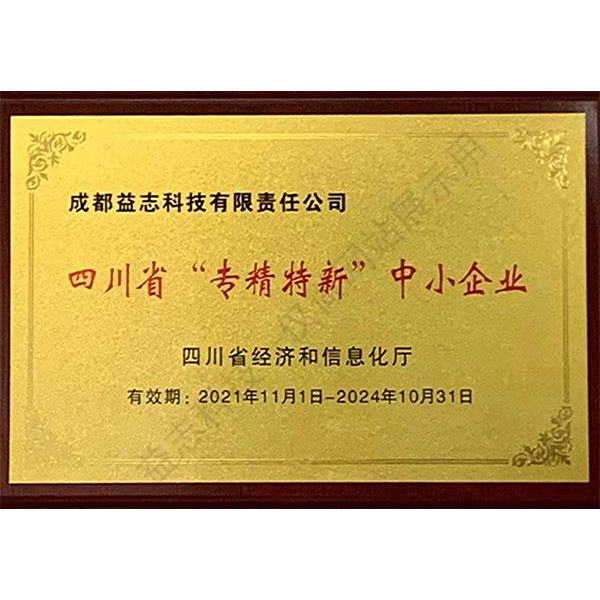
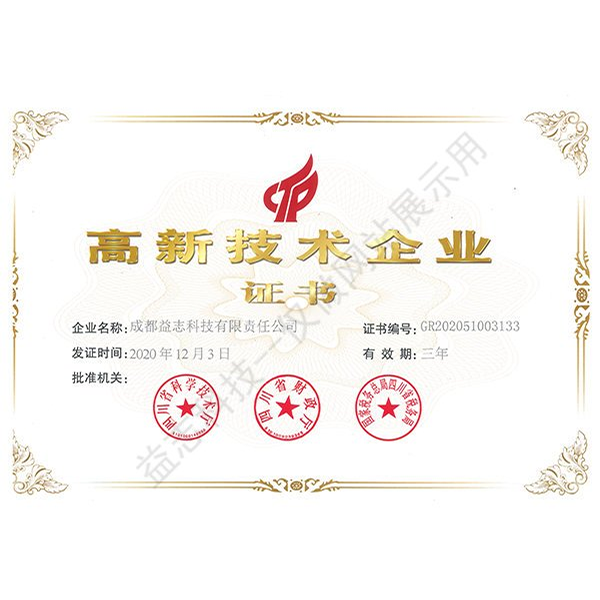
This is where the role of such structures asChengdu Yizhi Technology Co.– a design institute created on the basis of a chemical technology company. Their websiteyzkjhx.ru- this is not just a catalogue, there is an attempt to systematize the approach: from the analysis of raw materials to the choice of cleaning method (hydrocyclones, flotation) and the final modification of the granulate. Their background is important: a registered capital of 120 million yuan and affiliation with Huaxi Technology indicate serious investments in R&D, and not just in an assembly shop.
Typical mistakes when entering a foreign market
The first and main mistake is ignoring the logistics of reagents. We have installed a line for recycling plastic from medical waste (hoses, containers). The technology included multi-stage washing with specialized detergent compositions. It turned out that a customer in Southeast Asia could not purchase these compounds regularly due to customs difficulties. The line was idle. We had to revise the entire chemical part of the process to match those available on the local market, which reduced the purification efficiency by 15%, but made the process viable.
The second mistake is overestimating the qualifications of local personnel. Drawings and instructions that are ideal for a Chinese engineer may be Chinese instructions for an operator in another country. One incident: the operator forgot to explain the importance of cleaning the coarse filters on the film processing line every shift. A week later the pump burned out. Now the basic delivery package necessarily includes a three-week start-up with daily monitoring and simple icons on the equipment.
And third - “rigidity?” design solutions. European standards on residual volatile substances for regranulate are one thing. But in countries where the main driver is saving on primary raw materials, the customer is willing to put up with a slight odor or slightly worse color. You need to be able to flexibly configure parameters, leaving a power reserve for possible future tightening of standards. Sometimes it is more profitable to install a slightly more productive gas separation system in the extruder, even if it is not 100% in demand now.
Case: working with complex cable waste
Let's take a specific example - the recycling of vinyl chloride sheathing of power cables. An ideal world: the shell is clean, separated from copper and insulation. Real world: tangled pieces of cable with traces of copper, oil-soaked paper insulation and ethylene propylene rubber.
Our approach with the teamChengdu Yizhi Technology(information about their comprehensive solutions can be found atyzkjhx.ru) was built in several stages. The first is mechanical separation. Not just crushing, but cascade, with metal separation at several stages. It was important to minimize the copper content in the crushed material - even 0.5% kills the stability of the granulation process.
The second is the problem of PVC plastic, which already contains lead stabilizers (this is quite common in old cables). Melting without proper gas cleaning is a risk. We proposed a modular absorption system, but the customer saved money. As a result, it was necessary to add binding additives directly to the melt, which increased the cost of the granule. This is the same compromise between ideal technology and budget.
The resulting granules were used for the production of technical products (sheaths for new low-voltage cables, mats). The key was to prove to the customer that even such an imperfect regranulate has stable indicators of fluidity and thermal stability if the process is controlled. This cannot be done without a deep understanding of the chemistry of polyvinyl chloride - which is what the project’s parent company, Huaxi Technology, is doing.
Environmental regulations as a double challenge
On the one hand, this is a limitation. Many technologies that were acceptable in China 10 years ago (for example, open washing pools) are now unacceptable for export. It is necessary to install closed water use cycles and complex gas purification systems with catalytic afterburning, which increases the cost of the project by 30-40%.
On the other hand, this is our competitive advantage. European analogues of technology are often redundant and expensive for the markets of Asia, Africa, and the CIS. Chinese engineers have learned to create more flexible and “lightweight” ones. options for treatment systems that comply with local, as yet lax, regulations, but have the potential for modernization. For example, you can install basic scrubbers first, and later, if necessary, add a fine filtration unit.
But there is a trap here. Some players, trying to reduce the price, “forget?” about this reserve for the future. A solution is being sold that will become a problem for the client tomorrow. Our practice shows that honesty in this matter pays off with reputation and repeat contracts. The client must clearly understand what emissions parameters the system provides today and what it will cost to improve them.
The Future: Integration and Chemical Modification
Now the trend is shifting from simple recycling to the creation of value chains. PVC regranulate is not the most expensive product. But if it is modified, for example by adding impact-resistant modifiers or improving color stability, it can be used again in more critical products.
It is here that design institutes likeChengdu Yizhi Technology Co.get an advantage. Their connection with the chemical-technological base makes it possible not only to purify the polymer, but also to purposefully change its properties. On their resourceyzkjhx.ruthere is an emphasis on complex lines that include not only processing, but also the compounding stage.
Personal view: The next stage for Chinese exports in this area is not the sale of another crusher, but the export of digital process control solutions. Real-time sensors monitoring the degree of polymer degradation, systems for selecting additive formulations for a specific batch of raw materials. This is still rare, but those who invest in it now will determine the rules of the game in five years. Because ultimately, the client does not need a device, but a guaranteed quality of secondary granules from extremely heterogeneous raw materials. And those who understand this difference will remain in the market.