China: LNG products - innovation and ecology?
2026-02-09
When you hear “Chinese innovations in LNG,” the first thing that comes to mind is giant terminals and supply numbers. But the reality, especially at the level of specific products and technological solutions, is much more complex and sometimes contradictory. They talk a lot about ecology, but often behind this there is banal economy, not philosophy. I’ll try to break down what it looks like from the inside, without the gloss.
Innovation: not where people are looking for it
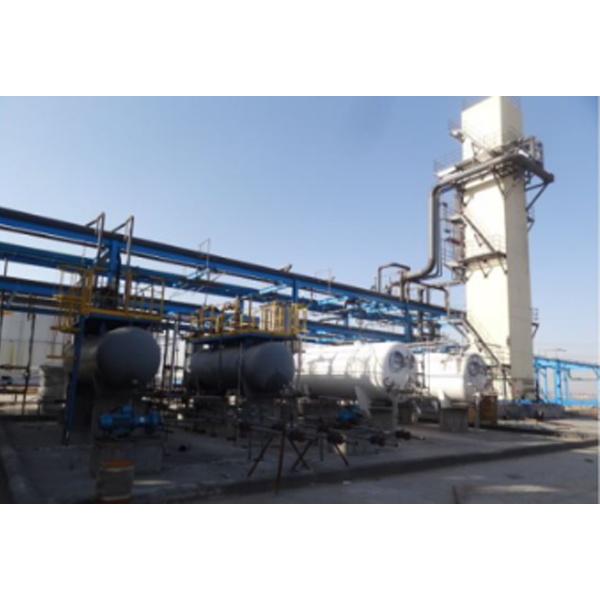
The main focus in China over the past five years has been miniaturization and modularity. Everyone is waiting for breakthrough materials or liquefaction cycles, but in fact the main progress is in how to package standard technology in a container and quickly launch it on site. This is not fundamental science, but engineering optimization, but its effect on the market is enormous. For example, low-capacity modular liquefaction plants (5-50 thousand tons per year) have become the hallmark of several Chinese engineering companies.
A misconception often arises here: if it’s modular, it means it’s cheap and of poor quality. In fact, the reliability of such solutions has increased dramatically after a wave of early failures. I remember a project in 2017: a Chinese module for a gas well in Central Asia was constantly being capricious. due to an unadapted control system to sudden changes in raw material pressure. The innovation was not hardware, but modified software and a hybrid control system, which was then replicated. Success came through a series of practical failures.
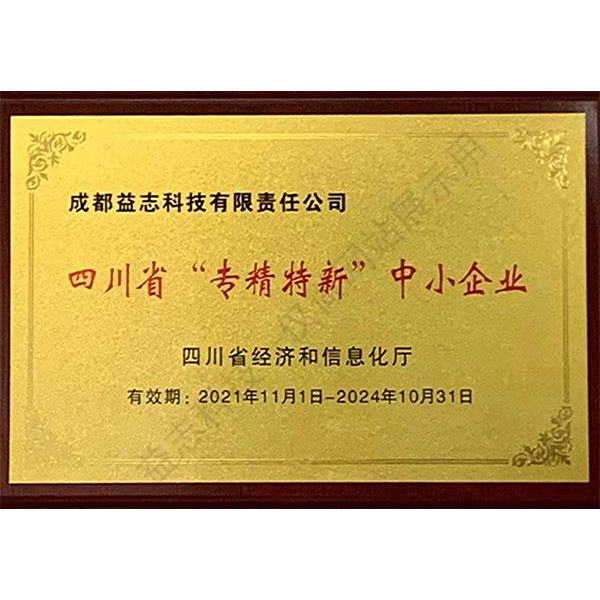
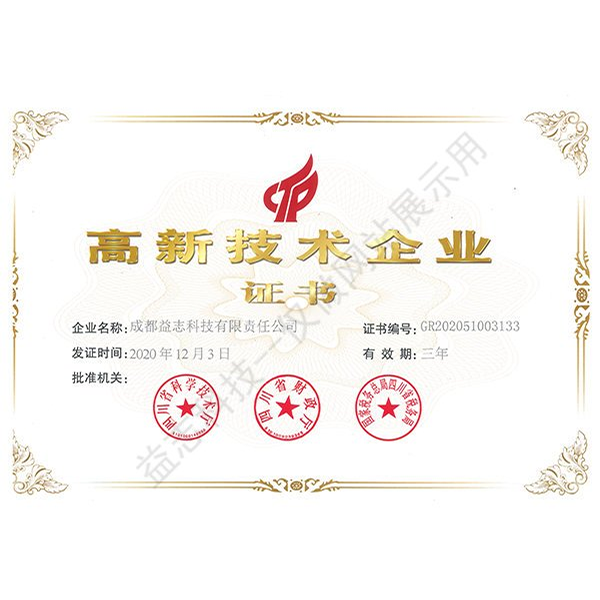
The key point is chain integration. Chinese players have learned not just to make equipment, but to build a full cycle from design to service. Let's takeChengdu Yizhi Technology Co.(their website ishttps://www.yzkjhx.ru). This is not just a plant, but a design institute created on the basis of chemical technologies. Their approach is often based on deep customization of standard solutions for a specific field or logistics hub. The registered capital of 120 million yuan is not about gigantomania, but about financial stability for long-term R&D, which does not always pay off quickly.
Ecology: driver or marketing?
The theme of ?green LNG? has become mandatory in the Chinese narrative. But if you dig deeper, there is a hard economic calculation behind most of the statements. The transition to LNG in heavy transport and river fleet is, first of all, a fight for air quality in megacities and the implementation of state plans for carbon neutrality, and then concern for the planet. However, this does not detract from the real effect.
An interesting case is the use of associated petroleum gas (APG) in small fields. Previously, they simply burned it. Now the focus is on compact mobile liquefaction plants directly at the field. The environmental effect is obvious - reduced emissions. But without government subsidies and flare fines, such projects would often be unprofitable. Technologically, we had to solve problems with the unstable composition of raw materials and dust - standard “dry” ones. technology did not always work here.
Another aspect is the energy efficiency of the processes themselves. Chinese engineers, in my opinion, have become masters of recycling heat in liquefaction cycles. This is not always advertised as “eco-innovation”, but it provides direct economic and environmental benefits. At one of the sites in Xinjiang, I saw how the recovered heat from the main process was used to heat the process rooms in winter, which reduced the overall energy consumption of the complex by 7-8%. Trifle? On a national scale, this is a huge number.
Dips as part of the journey
You can't talk about innovation without remembering failure. One of the most significant is the attempt to mass introduce LNG as a motor fuel for long-distance travel 7-8 years ago. A network of gas stations was being built, but the expectation of a quick abandonment of diesel did not materialize. The price of diesel fluctuated, the reliability of some Chinese cryogenic tanks for trucks left much to be desired, and refueling logistics were poor. This dampened the enthusiasm. But! It was this stage that provided invaluable experience in real operation in harsh conditions, which later formed the basis for more advanced standards for equipment and logistics models.
Another type of "failure" - technological. There have been attempts to copy Western liquefaction technologies without proper adaptation to local materials and operating conditions. The result is increased wear on the turboexpanders on some early installations. We had to retrain the staff and modify the designs on the fly. Now this experience has led to the development of our own school of diagnostics and service.
It is stories like these that shape today's approach. Companies likeChengdu Yizhi Technology Co.Nowadays, projects are not based on ideal parameters from a textbook, but on adjustments to “real life”: the quality of local service, climatic extremes, and the qualifications of operators. This is the very practical innovation.
Logistics and “last mile”
Product innovation comes down to logistics. China has made a huge leap in creating a network of small-scale transshipment points and using LNG container shipping. This has lowered the barrier to entry for small consumers. But the main headache is the last mile. for remote industrial sites or gas stations.
Interesting hybrid solutions have emerged here. For example, mobile pumping stations on chassis that can act as a temporary buffer terminal. Or the standardization of tank containers, which simplified multimodal transportation (road-railway-river). It's not high-tech, but it's extremely effective for such a large and diverse country.
From an environmental point of view, the logistics focus has shifted to reducing "idle" waste. runs and evaporation (boil-off gas). Vapor recovery systems have become a mandatory element for new projects. Again, the driving force is not only the environment, but direct product savings, which ultimately makes such solutions sustainable.
Looking ahead: what's next?
The current trend is digitalization and hydrogen. Digital twins for monitoring and optimizing the operation of LNG equipment are no longer pilot projects, but are gradually becoming the norm. Allows you to predict breakdowns and calculate your carbon footprint more accurately.
There are still more questions than answers with hydrogen. Active work is underway on technologies for producing “blue” hydrogen with carbon capture on the same sites as LNG and over the use of existing cryogenic infrastructure. But this is still expensive and difficult. My prediction: in the next 5 years we will see not a revolution, but a gradual hybridization - pilot projects to add hydrogen components to LNG chains to test technologies.
The result? The Chinese path in innovation and LNG ecology is the path of pragmatic optimization. Breakthroughs here are not born in a vacuum, but from solving specific, often very mundane problems: how to reduce costs, increase reliability, fit into strict environmental standards and still make money. It is this practical, sometimes even mundane, experience that shapes the current face of the industry, where large-scale declarations are gradually filled with real, field-tested content.