China Exporters: Pressure Swing Adsorption?
2026-02-09
- Not just a “box with a compressor”: where does the difference in quality lie?
- Adaptation to “local conditions”: not only temperature
- Economics of the process: what sales people are silent about
- Case: from design to commissioning through the eyes of an engineer
- Looking ahead: what is changing in market demands
When you hear this question from new partners, especially from the CIS, you often notice that many immediately think about simple oxygen concentrators for medicine. But in industrial exports, especially for metallurgy or large chemical production, everything is much more complicated and capricious. The term “pressure swing adsorption” itself? (PSA) for many is a black box: air in, nitrogen or high-purity oxygen out. What's inside? What are the pitfalls when delivering to countries with different standards and different climates? This is something that is rarely written about in glossy catalogues.
Not just a “box with a compressor”: where does the difference in quality lie?
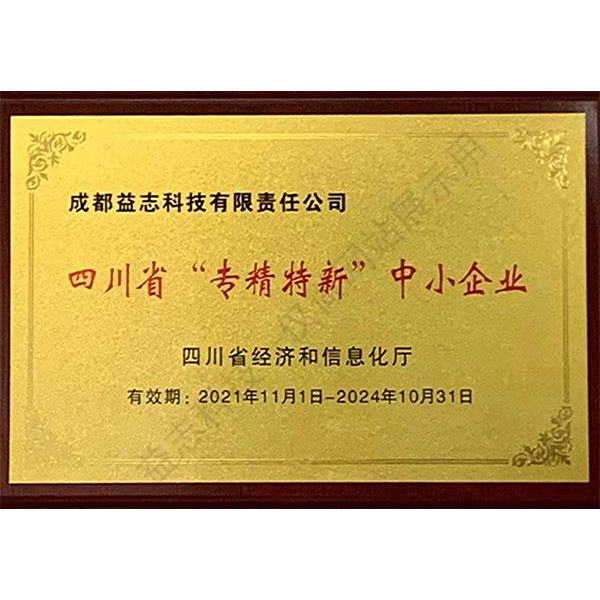
The main misconception is that PSA technology is mature and standard. Like, put it together from ready-made units and sell it. In fact, the heart of the system isadsorption columnsand valve control algorithm. Chinese manufacturers have a colossal range here. Some take cheap Chinese solenoid valves, which in the cold near Novosibirsk can “think about it”. Others, like Chengdu Yizhi Technology Co., initially include imported fittings in the project, for example, from Burkert or ASCO, specifically for northern deliveries. This is immediately obvious from the specification, but a client without experience may not ask.
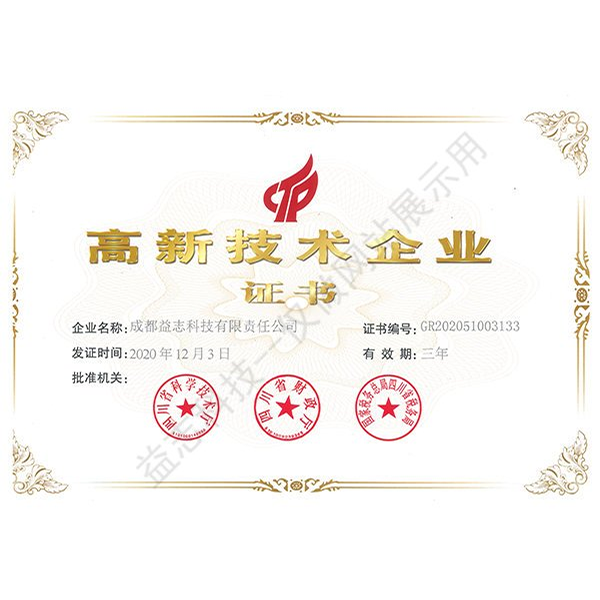
Another nuance is zeolite. Everyone says “we use LiX molecular sieves,” but their lifespan and cleaning stability depend on pre-drying the air. I have seen projects where they skimped on this and installed a weak chiller or a cheap adsorption dryer. Result? After six months, the purity of the product decreases, the zeolite requires replacement twice as early as expected. In Siberia this is a disaster and huge costs for the client. Therefore, in serious design institutes, like the one mentionedChengdu Yizhi Technology Co.(a subsidiary of Huaxi Technology with a registered capital of 120 million yuan), the calculation of the dehumidification stage is a separate iteration with the client, taking into account the dew point of the local air.
I had a case with a delivery to Kazakhstan, to a polymer production plant. What was needed was 99.999% nitrogen. The customer initially chose a cheaper supplier. After 9 months, a call: “The cleanliness is jumping, the line is up?”. We arrived and opened it - it turned out that the control program contained a simplified algorithm for switching columns, which was not adapted to frequent pressure surges in the factory air network. The system did not have time to regenerate the zeolite. I had to reflash the controller and install an additional receiver-stabilizer. Lesson: PSA is not only hardware, but also software, which must be flexible.
Adaptation to “local conditions”: not only temperature
Everyone asks about frost resistance. Yes, this is important: oil in the screw compressor, pipeline material, heating of the control cabinet. But there are less obvious things. For example, the quality of the electrical network. In some regions of the CIS, tension may be running high. A cheap frequency converter on a compressor will quickly fail due to this. In such cases, we always install a stabilizer or UPS for the controller. This increases the cost, and you need to be able to explain to the client why this is needed, and not just silently increase the price.
Another point is service. When delivering a plant to Uzbekistan or Belarus, you cannot expect that there will be an engineer there who deeply understands the intricacies of zeolite regeneration. Therefore, the documentation is not just a translation into Russian, but detailed, step-by-step manuals with pictures. And even better - recorded video instructions for replacing filters and resetting errors. At Yizhi Technology, we make such a package for every major project. This is not technical support, this is a necessity.
I remember one failed project, fortunately not ours, for a Russian oil depot. We installed an excellent PSA installation for producing nitrogen according to the passport. But they did not take into account the high dust content of the air in the area. Air filters clogged in two weeks instead of three months, maintenance personnel did not have time to change them, and dust was transferred to the zeolite. The result is expensive repairs. Now we always find out not only the temperature, but also the environmental situation on the site.
Economics of the process: what sales people are silent about
When presenting PSA technology, people often talk about low operating costs compared to, say, cryogenic plants. This is true, but not the whole truth. A key parameter that is bashfully kept silent is the specific energy consumption per cubic meter of gas. It depends greatly on the purity required. Going from 99% to 99.9% nitrogen is not a linear cost increase, but rather an exponential one. And if the client actually needs 98%, but was sold the installation at 99.5%, he will overpay for electricity for years.
Honest consultation at the design stage is important here. We need to find out the real technological need. There was a dialogue with the metallurgical plant: they initially wanted to provide a 99.5% unit for purging. After a detailed discussion among the technologists, it turned out that for their process it is not so much the absolute percentage of nitrogen that is critical, but rather the absence of moisture and oils. We focused on ultra-deep drying and cleaning, and nitrogen purity was reduced to 99.2%. We saved the customer both on capital costs and on future kWh.
Another hidden consumable is the zeolite itself. It's not always enough. The resource depends on switching cycles and aggressiveness of the environment. In the chemical industry, where there may be solvent vapors in the source air, the life of the zeolite can be reduced significantly. Therefore, for such applications we always offer an additional carbon pre-treatment stage. Yes, this is again an initial increase in price, but in the long run - savings. Explaining this is the job of an engineer, not a sales manager.
Case: from design to commissioning through the eyes of an engineer
I would like to give an example of a specific project, not ours, but indicative. A building materials plant near Moscow ordered a PSA installation from one of the well-known Chinese exporters to produce oxygen for the furnace. Everything according to specifications: purity 93%, productivity 30 Nm3/h. They delivered it and installed it. During commissioning, it turned out that the installation was not reaching its rated capacity. It turned out that when making calculations, Chinese engineers used standard parameters for an altitude of 100 meters above sea level. And the plant site was at an altitude of about 200 meters. The air density is different. The compressor pumped the same volume, but there was less air mass. We had to urgently change the gears in the compressor and reconfigure the adsorption cycles. Simple, hassle-free.
From this we made a strict rule for ourselves: the first question in the questionnaire for the technical specifications is the geographical coordinates and height of the site. It would seem like a small thing. But in the practice of exporting such “trifles” there are a dozen, and each one can lead to a failed launch. A design institute that works not for flow, but for results, like Chengdu Yizhi Technology, is obliged to take this into account in its design documentation.
The commissioning process itself is also an art. You can't just turn it on and leave. It is necessary to conduct a minimum 72-hour test run, constantly taking data: product purity at the exit of each phase of the cycle, adsorber temperature, pressure in the buffer tank. You often see how parameters “float”? the first day until the system reaches thermal balance. And here it is important to have a reserve of settings in the program in order to adjust the cycle times. Sometimes manual adjustments help, based precisely on sensations - the sound of valves switching, the vibration of pipes - this cannot be taught in the instructions.
Looking ahead: what is changing in market demands
Previously, the main question was “how much does it cost?”. Now, especially after a number of unsuccessful deliveries from “garage” companies. manufacturers, the request shifted towards “how long will it work and how much will its maintenance cost?” Clients have become more literate. They ask you to provide not just an ISO certificate, but reviews from specific sites, preferably in similar industries and climate zones.
The trend towards remote monitoring and diagnostics is gaining momentum. It’s no longer exotic when the PSA installation in Yekaterinburg has a 4G module that transmits the main parameters to the manufacturer’s server in Chengdu. This allows you to predict breakdowns, for example, by a gradual increase in the pressure drop across the filters, and send spare parts in advance or make recommendations to maintenance personnel. For the exporter, this is an additional responsibility, but also a powerful tool for creating long-term trust.
Another change is the request for hybrid solutions. Sometimes a PSA is not enough. For ultra-high purities (the same 99.9995% nitrogen), a cascade may be required: first, coarse PSA purification up to 99.9%, then additional purification with a membrane or another, finer, PSA stage. The market demands flexibility. There are no more universal solutions. And an exporter who positions himself as a serious player, like the same team fromChengdu Yizhi Technology Co., should be able not to sell a ready-made catalog, but to design a system for the task. This is the same “adsorption at variable pressure”? in a broad sense - the ability to filter out the noise, absorb the real needs of the client and produce a working solution, and not just a sold one.
In general, the export of PSA technologies is no longer about containers with equipment. This is about the export of engineering, adaptation and, ultimately, responsibility. And those who do not understand this remain in the niche of cheap and problematic supplies, creating a bad reputation not only for themselves, but for the entire industry as a whole.