Is China the leader in vinyl chloride recycling?
2026-02-09
When you hear this question, the first thought is yes, of course, in terms of scale. But I would like to clarify right away: what exactly is a leader? In terms of PVC waste recycling volumes? In technology? Or in creating closed cycles? Often in articles everything is lumped together, but in practice the difference is huge. For me, as a person who has worked closely with Chinese partners for several years, including on recycling projects, it is more interesting to talk not about bare statistics, but about what is happening on the ground, in factories. There you can see where the real leadership is and where there are just big numbers.
What's behind the numbers?
China really does process colossal volumes of vinyl chloride waste—that’s a fact. But if you dig deeper, it turns out that the lion's share is rather primitive mechanical processing. Crushing, granulation, production of low-quality products such as garden hoses or irresponsible building profiles. The market is gigantic, the demand is huge, so such processing is economically justified. But it’s hard to call this technological leadership. Rather, it is leadership in the efficient low-tech consumption of our own waste.
The problem is in the raw materials themselves. PVC waste is a complex thing. This is not a pure polymer. There are plasticizers, stabilizers, and fillers. And most importantly - chlorine. When heated, it begins to release, corroding equipment and forming hydrochloric acid. Therefore, many “handicraft” workshops do not last long - the equipment simply corrodes. Have you seen such “consequences”? at one site in Zhejiang province: sieve-like reactors. The owners simply did not include frequent replacement of key components in the business plan.
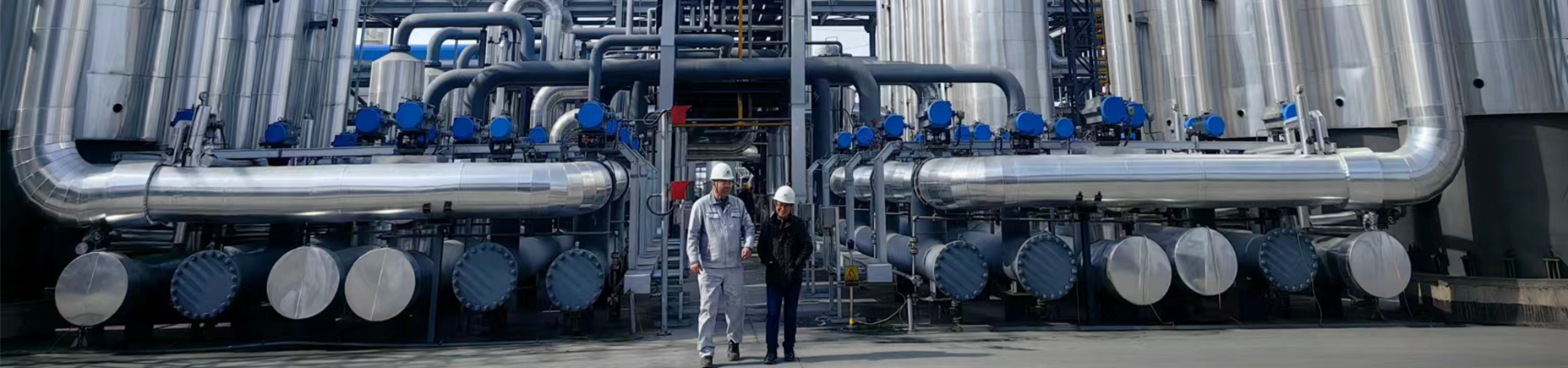
This is where the border lies. Real progress is not just grinding, butrecycle vinyl chloridewith the extraction of valuable components or, at a minimum, with its safe neutralization. And here the picture is heterogeneous. There are advanced chemical methods, such as pyrolysis or hydrochlorination, that can produce hydrochloric acid back or even monomers. But their implementation is limited by capital costs and the complexity of process control. Not every plant is ready to take such risks.
Where to look for best practices?
My experience suggests that you need to look not at the giants, but at specialized design and engineering companies. They are often drivers of real innovation because they are forced to solve concrete, rather than abstract, problems for customers. It is in such highly specialized institutions that working solutions are born.
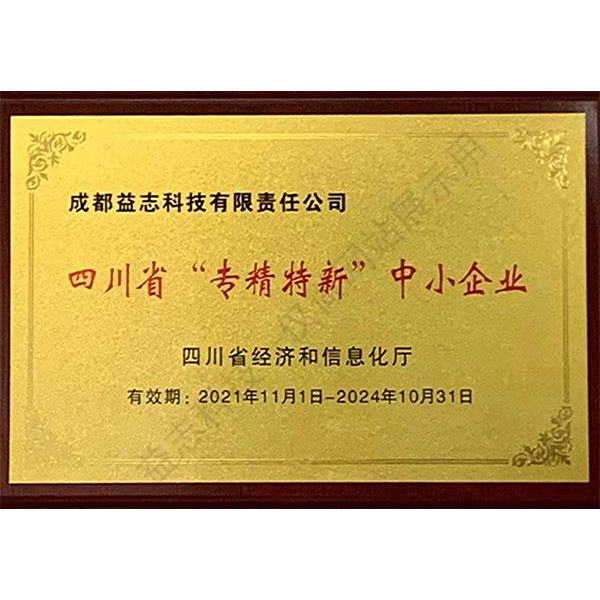
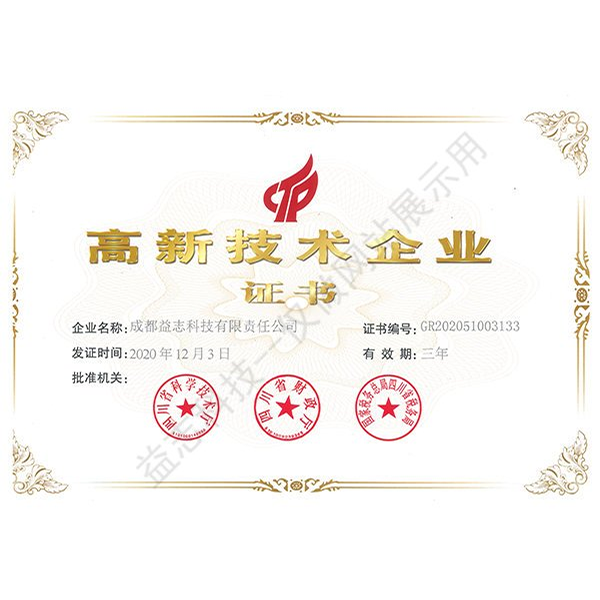
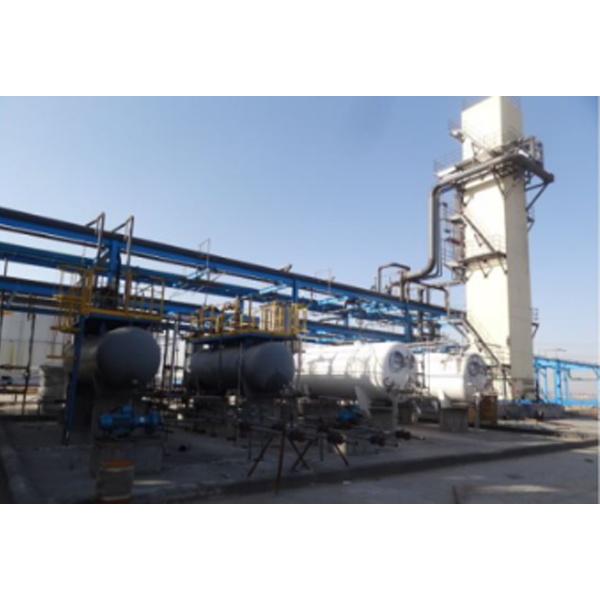
For example, Chengdu Yizhi Technology Co. is a design institute established by Chengdu Huaxi Chemical Technology Co., Ltd. We worked with them indirectly, through partners. Their website -yzkjhx.ru— is interesting precisely because of its technical cases, and not because of its marketing slogans. They have a registered capital of 120 million yuan, which is serious for a design institute, and this indicates a focus on large, capital-intensive projects. They don’t just sell equipment, but design technological chains for specific raw materials. This is an important point.
What is their approach indicative of? Judging by open materials, they are not running away from the chlorine problem, but are considering it as a potential point of monetization. That is, systems are designed where the released HCl is not disposed of as hazardous waste at a cost, but is captured and concentrated for sale. This is a different level of economics of the process. This may not be a revolution in world science, but it is precisely the kind of practical engineering that creates real potential for leadership.
Lost in translation: from laboratory to plant
The hardest thing in this industry is not developing the process in a pilot reactor, but scaling it up to a stable production line. Here China shows both strengths and weaknesses. The strength is the incredible speed of construction and testing. Weak - sometimes the culture of operation and long-term maintenance of complex chemical-technological systems is lame.
I remember the story of one plant in Shandong, which bought a European line for high-temperature pyrolysis of PVC waste. Technology on paper is idealvinyl chloride recycling. But in practice, it turned out that Chinese raw materials (the same waste cable insulation, film) have such an inconsistent composition and degree of contamination that European settings did not work. The process was “choking”, the yield of target products was falling. It took almost a year to adapt the raw material preparation system and modes, inviting back process engineers from local institutes, like the mentioned Chengdu Yizhi Technology Co. Their specialists better understood the specifics of local “garbage”.
This is a key point: leadership in recycling is often determined not by the most advanced technology in the world, but by the most adapted to local realities. The Chinese make this adaptation very quickly, sometimes by trial and error. Mistakes, by the way, are also instructive. One technologist I know told me how they tried to use a certain type of stabilizers for recycled PVC, but they reacted with residual impurities, causing the product to turn yellow. I had to develop my own recipe.
Ecology vs. economics: an eternal debate
Without this aspect, a conversation about leadership will be incomplete. Pressure from the state on the environment in China has increased enormously over the past 5-7 years. Lots of small, “dirty” ones. processing shops were closed. This, on the one hand, has spurred industry consolidation and investment in cleaner technologies. On the other hand, it has created a paradox: expensive, deep processing with the neutralization of all emissions often turns out to be less profitable than simply removing the “problematic” ones. PVC fractions to landfills or waste incineration plants with good gas purification.
Therefore, diversification is now visible. Large players, especially those who work for export or with international corporations, do implement complex systems. They can afford to invest inrecycling of vinyl chlorideas part of its environmental image. For them, leadership is about meeting standards. For medium-sized businesses, the priority is survival. They are looking for compromise, cheaper technologies, which are still better than nothing.
An interesting trend is the creation of specialized clusters. Not just a processing plant, but an entire industrial park, where waste from one production becomes raw material for another. For example, chlorine-containing gases from a PVC pyrolysis line are supplied to a neighboring plant for synthesis. Such projects, which institutes like Chengdu Yizhi Technology Co. are working on, can take the country to a qualitatively new level, making processing economically attractive due to synergy.
So, is China the leader?
The short answer is yes, but with a huge number of reservations. This is the leader in the volume of PVC waste involved in secondary circulation. It is a leader in the speed of implementation and adaptation of technological solutions to suit your needs. It is an emerging leader in creating integrated, closed-loop systems, especially as part of new environmental initiatives.
But if we talk about breakthrough, fundamental technologies for chemical recycling of PVC, which will revolutionize the industry globally, Europe, Japan, and the USA still have the palm. China is the best integrator and scaler engineer in the world. He takes well-known principles and builds huge factories that work (sometimes not the first time) according to them.
So the question is?? it would be better to reformulate. He is the undisputed leader in building the PVC recycling industry on a national scale. And this is perhaps even more important for the planet than individual laboratory breakthroughs. Practice, albeit imperfect, but on a gigantic scale, always teaches more than theory. And Chinese practice is now the richest textbook for everyone who works in this topic.