Is China an exporter of desulfurization technology?
2026-02-10
Many people still think that China only buys “iron”. for gas purification. But in fact, about ten years ago the situation has turned upside down - we are actively entering foreign markets with entire technological packages. Not without difficulties, of course.
Where did the misconception come from?
I remember in the mid-2000s, all large thermal power plants and metallurgical plants had imported equipment - mostly German and Japanese. Their technologydesulfurizationflue gases were considered the standard. Ours were just beginning to copy and adapt. Hence the stereotype: China is a manufacturer, but not a developer.
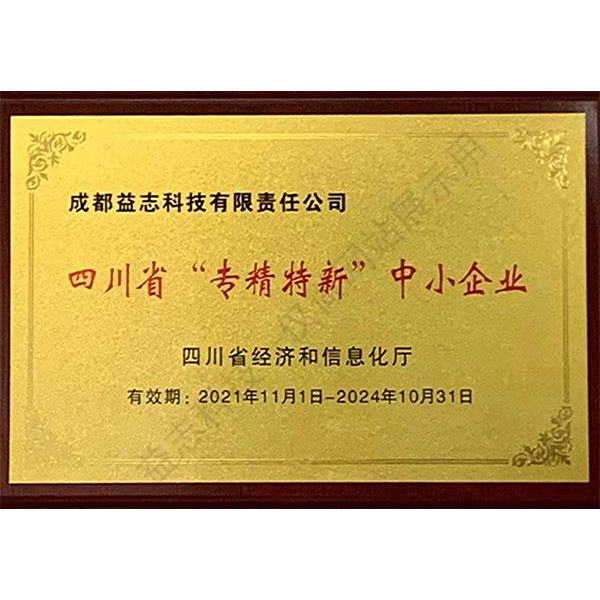
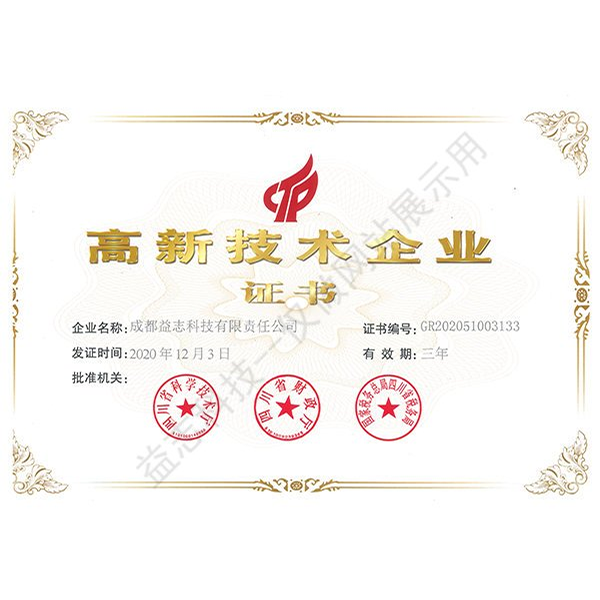
The turning point began after 2010, when environmental standards within the country were sharply tightened. Massive, relatively inexpensive and effective solutions were required. Local companies such asChengdu Yizhi Technology Co., then they just grew out of the engineering divisions of large chemical holdings. Their websiteyzkjhx.ruis a good example of how they position themselves now: not just a supplier of absorbers, but a full-cycle institute, from R&D to commissioning abroad.
But recognition did not come immediately. Even our own customers were initially skeptical about “homegrown” products. circuits with a circulating fluidized bed (CFB). They trusted more proven Western names. We had to prove in practice that our limestone, our scrubber designs and process control algorithms can provide an efficiency of 99%, and even with lower operating costs.
What exactly do we export: not just “iron?”
The key thing is the technology package. Not the sale of the reactor as a device, but a license for the process, drawings, calculations, commissioning and personnel training. This includes specific know-how. For example, controlling the supply of suspension in conditions of unstable coal composition is a whole science, full of cones at dozens of objects.
Often under technologydesulfurizationunderstand only the main column. But in fact, 70% of problems arise in auxiliary systems: preparation and supply of absorbent, sludge treatment, corrosion resistance of pipelines at certain points. These details, written in our work instructions, are the real value. We have learned to calculate the economics of the process for a specific ash, for a certain humidity. This is not from textbooks.
Let's take, for example, a project in one of the CIS countries. The task there was to modernize the old Soviet installation. German colleagues proposed a complete replacement - expensive and time-consuming. Our team fromChengdu Yizhi Technologyanalyzed the remaining life of the devices and proposed a hybrid solution: new nozzles and a gas distribution system of our production, plus a redesigned recirculation scheme. We saved the customer about 40% compared to the “boxed” one. solutions. But, I admit, there was a lot of paperwork with approval of changes to the project.
Problems on the ground: where theory diverges from practice
The most painful moment when exporting is raw materials. Our technological calculations are tailored to the specific granulometric composition of limestone, which is mined in the provinces of Sichuan or Shandong. Bring this technology, say, to Southeast Asia, where the limestone is different - softer and with impurities - and you immediately get overlays.
There was a case in Indonesia: the installation reached its designed capacity, but the absorbent consumption turned out to be 15% higher than calculated. Local limestone was worn out faster in the mill, and the reaction surface changed. I had to adjust the grinding modes and suspension density on the fly. As a result, we reached the parameters, but the launch schedule shifted by a month. Such nuances are not written in catalogs.
Another common headache is the qualification of on-site operating personnel. You can hand over thick volumes of instructions in English and conduct two weeks of training. But if local engineers do not have a culture of monitoring slurry pH on a shift basis or regularly checking injectors, the efficiency of the entire system quickly declines. Sometimes it seems like you sold a great tool, but they continue to hammer nails with it like an old hammer. This is not a question of technology, but rather of management and transfer of experience, which is difficult to package in a contract.
Competition and niches
On the global market, we, of course, do not compete with such monsters as Mitsubishi Heavy Industries or GE in the turnkey segment. for supercritical units of new thermal power plants. Their reputation and financial power are incomparable. Our strength lies elsewhere.
We have found our niche in the modernization of existing production facilities, especially where the question is “to do it cheaper and faster?” Our solutions are often more flexible and less capital intensive. Design Institute, likeChengdu Yizhi Technology Co., Ltd.With its registered capital of 120 million yuan, it is not a giant, but not a small company either. This is exactly the size that allows you to quickly make decisions and adapt a standard project to non-standard customer conditions.
Another trump card is experience in working with very “dirty” people. and complex gases, for example, from roasting furnaces in non-ferrous metallurgy or from fuel oil boilers. There are few such sites left in Europe, but we had many of them, and we accumulated a huge amount of data on their cleanup. This empirical experience, supported by calculations, is more valuable for many emerging markets than a beautiful theory that has not been tested in harsh conditions.
The future: where technology exports are heading
Now I see a shift from simply selling a license to deeper forms of cooperation. For example, the creation of joint engineering centers in partner countries. In order not just to install the installation, but, together with local specialists, to adapt it to regional characteristics and further develop it.
There is also a growing demand for comprehensive solutions: not onlydesulfurization, but also the concomitant removal of nitrogen oxides (DeNOx) and fly ash capture. The market wants one point of responsibility. Here, Chinese companies that have grown up solving complex complex problems within the country have a good chance.
But the main challenge, in my opinion, is “green?” transition. Issues of disposal or beneficial use of gypsum (the reaction product) are becoming increasingly critical. A technology that only solves the problem of SO2 emissions, but creates mountains of waste, is no longer quoted. The next stage of export is the export of closed, waste-free cycles. And here our companies still have room to grow; we need to invest more actively in R&D in this area. So far we are strong at “cleaning up”, but not always at “closing the cycle”.
So, returning to the main question: yes, China has been exporting technology quite successfully for a long timedesulfurization. But this export is not a triumphal procession, but hard, step-by-step work of adaptation, proof of effectiveness and overcoming skepticism. And the most valuable thing that we take abroad is not ideal catalogues, but real, often bitter, experience gained on hundreds of objects at home.