China is the leading exporter of MEA/MDEA/NHD desulfurization technology?
2026-02-05
When it comes to the global supply of technologies and reagents for gas purification, especially in the amines segment - MEA, MDEA, NHD - the same question often comes up. Many, especially in the post-Soviet space, still automatically look to Europe or the United States. But over the past ten years the picture has changed radically. China has taken first place in the export of complex solutions, and this is not just replication of other people's developments. We are talking about deep adaptation, scaling and, what is critically important, about the enormous experience accumulated within the country. I myself have encountered skepticism: “Chinese means cheap and unstable?” However, having worked on several projects to modernize installations at refineries in Kazakhstan and Russia, where Chinese technology packages and reagents were the key element, you begin to see the nuances. It is not just a ?leading exporter? by volume. This is an exporter that offers solutions tailored to specific, often very stringent conditions, and does this with amazing efficiency.
From raw materials to technology package: how the landscape has changed
China used to be primarily a source of raw materials and basic chemicals. I remember ten years ago the main request was simply MDEA in tanks. But even then it became clear that local engineers were not just selling a product. They closely studied how it works in the specific conditions of the customer. This was the first step. The second was the transition to supplying not just amine, but a complete technological scheme - from calculations and design to equipment supply, commissioning and personnel training. This is the very “desulphurization technology?” in the full sense of the word.
The key driver was the domestic market. Strict environmental standards within China, a huge number of coal-fired power plants and oil refineries have created a gigantic testing and optimization site. The solutions that we now see for export have been tested at hundreds of facilities. These are not laboratory ideals, but schemes that have already “survived?” fluctuations in raw material quality, load fluctuations and harsh operation. For example, adapting the formulas of amine solutions to the high CO2 content in associated gas is a typical task that Chinese technologists have learned to cope with at local fields.
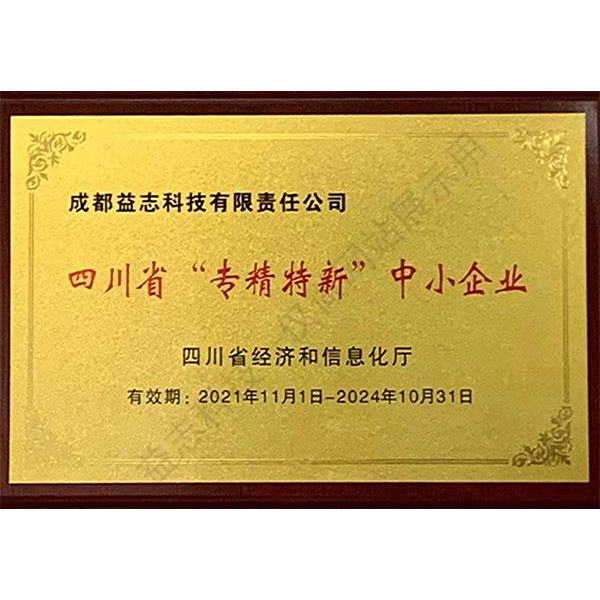
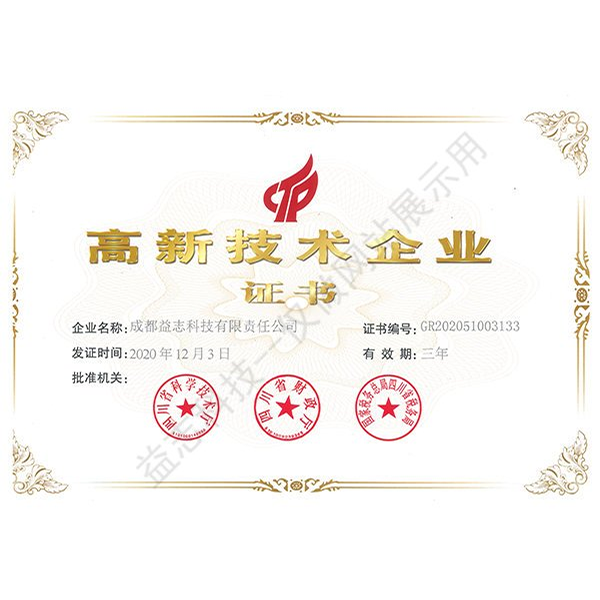
It's worth mentioning specific players here. It's not just giants like Sinopec. Specialized engineering companies that grew out of research institutes play a huge role. One of these isChengdu Yizhi Technology Co. (https://www.yzkjhx.ru). It is a design institute established on the basis of Chengdu Huaxi Chemical Technology Co. Its experience is eloquent: the registered capital of 120 million yuan indicates serious investment in development. Such companies often act more flexibly, offering customized solutions for the specific tasks of the customer, which one encounters, for example, when reconstructing old Soviet equipment.
NHD (Polyethylene glycol dimethyl ether) - the hidden export champion
If with MEA and MDEA everything is more or less clear - these are world classics, then with NHD the story is special. This physical absorbent for deep purification of sulfur compounds and CO2 is an area where Chinese suppliers, in my opinion, have become absolute leaders. Why? Because the scale of domestic production of synthesis gas for the chemical industry in China is unprecedented. NHD purification technology was once licensed, but has since been refined, improved, and reduced in cost to the point that today the standard turnkey package? from China there are often no alternatives in terms of price, efficiency and reliability.
At one of the ammonia production projects in Central Asia, we were just faced with a choice: a European license with expensive equipment or a Chinese technology package based on NHD. The decisive argument was not only CAPEX. The Chinese side provided detailed data on the actual solvent consumption at its existing installations, including degradation and regeneration schedules. These were not theoretical calculations, but actual operational logs. This level of data transparency was surprising at the time.
But this is not without pitfalls. The main problem you encounter when importing such technology is the adaptation of auxiliary equipment (pumps, heat exchangers) to local standards and operating conditions. The Chinese often supply everything as a set, which is logical for them, but sometimes creates difficulties with spare parts and on-site service. It is necessary to agree on the localization of some nodes at the contract stage - a lesson learned in practice.
Practical difficulties and pitfalls implementation
When working with Chinese technologies, you can’t just buy the drawings and forget about them. Their main advantage—complexity—is also their main challenge. Their engineers think in terms of a holistic system that they have fine-tuned. An attempt to take only a part, for example, to purchase a reagent from themMDEA, but using it in an older column design with a European regeneration system can lead to disappointment. Efficiency will drop and losses will increase. They always insist on auditing the existing installation. At first it seems like a formality or a desire to sell more, but in reality it is a necessity.
A striking example: a modernization project at one of the refineries. There was an old desulfurization plant with an outdated amine solution. Chinese partners (including the aforementioned Chengdu Yizhi Technology) did not just offer their MDEA. They conducted a chromatographic analysis of the old solution, simulated the process taking into account real temperatures and pressures on the column, and only then made recommendations for completely replacing the solution and adjusting the regeneration mode. The result is not only an increase in the degree of purification, but also a reduction in energy costs for regeneration by 15%. Without this deep dive, the effect would be minimal.
Another point is training. Chinese specialists bring with them very detailed, sometimes even excessively detailed, operating and safety instructions. But their translation and adaptation to the mentality of local operational personnel is entirely the responsibility of the receiving party. To underestimate this stage means to risk the entire project.
Looking to the future: what's next?
Today, China's status as a leading exporter of desulfurization technologies is a given. But what will move the industry forward? In my opinion, the focus will shift to two areas. The first is hybrid schemes that combine amine flushes with membrane or adsorption technologies for ultra-deep cleaning. Some Chinese research institutes are already actively offering such pilot solutions. The second is digitalization. Implementation of predictive analytics systems to monitor amine degradation and optimize temperature conditions in real time. For now, this is more marketing, but the first real cases at large Chinese factories already exist.
In addition, pressure towards the “greens” is growing. technologies. Demand for solutions to capture and utilize sulfur and CO2, rather than simply remove them, will only grow. And here, Chinese companies, again thanks to the gigantic domestic market with its environmental challenges, have a chance to create and export the next generation of standards.
So, to answer the question in the title: yes, China is by far the leading exporter. But it is important to understand that it exports not just chemicals in barrels, but colossal engineering experience, hard-earned at its own facilities. Experience that often turns out to be more practical and down-to-earth than the flawless, but expensive and sometimes overly theoretical solutions from the West. You need to work with it, clearly understanding this specificity: be ready for deep interaction, and not for a simple purchase of a “boxed” product. product. Only then can you make the most of what they truly have to offer.