China: MEA/MDEA/NHD desulfurization technologies?
2026-02-05
When people talk about Chinese gas purification technologies, they often think about scale rather than nuances. Many people immediately imagine standard installations, stamped solutions. But if you dig deeper, especially in the segmentdesulfurizationwith the use of amines like MEA, MDEA or the physical solvent NHD, the picture becomes much more interesting and not so clear-cut. This is not just a matter of choosing a reagent - it is a whole layer of engineering compromises, adaptations to specific raw materials and, importantly, to strict local environmental standards, which have become seriously stricter in the last decade.
From theory to workshop: why MDEA often outperforms MEA
On paper, monoethanolamine (MEA) looks great: high reactivity, good hydrogen sulfide load. But anyone who worked on the plant ten years ago remembers the problems. Corrosion. Severe corrosion, especially in high temperature areas, in the regenerator. And this is not just a theoretical risk - it is additional costs for materials, frequent checks, and downtime. Plus non-selectivity: MEA is enough for both H2S and CO2, and a lot of energy is spent on CO2 regeneration.
That is why in China, in new projects, especially those related to the purification of natural or associated petroleum gas, methyldiethanolamine (MDEA) has been used en masse since the late 2000s. It would seem that the reaction is slower. But the selectivity to H2S is higher, the energy consumption for regeneration is lower, and corrosion is easier. But this is not without pitfalls. Speed. In installations with high pressure and large volumes of gas, sometimes you have to cheat: increase the height of the absorber, play with the nozzle, or, as is often done, use activated MDEA - add a package of additives to it to accelerate the absorption kinetics. This is no longer a pure reagent, but a whole technological cocktail, and its composition is often the supplier’s know-how.
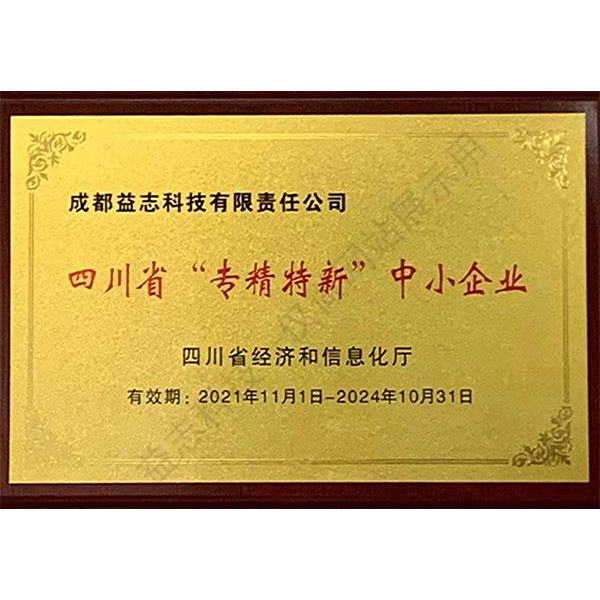
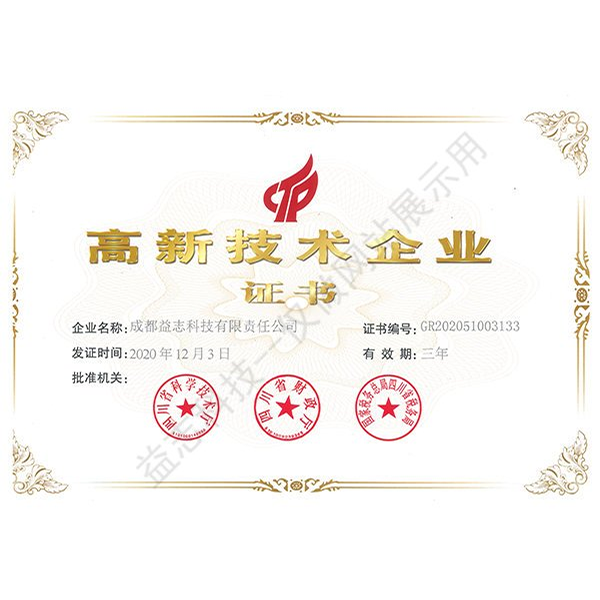
This is where companies likeChengdu Yizhi Technology Co.(their website isyzkjhx.ru). They are positioned as a design institute created on the basis of a chemical technology company. For me, this is an indicator of a certain approach: these are not just sellers of reagents, but those who can design or modernize the entire technological chain. In their case, the authorized capital of 120 million yuan is a serious application for participation in large projects where not just delivery is needed, but responsibility for the result. Have I seen their installations in action? Not directly, but in the industry their name comes up in the context of complex solutions for gas purification, often for complex raw materials.
NHD: when amines fail
But what should you do if, in addition to hydrogen sulfide, the gas is full of organic sulfur compounds (mercaptans, COS) or heavy hydrocarbons? Classic amines can fold here. And this is where NHD technology (N-methyldiethanolamine? No, there is confusion here! In the Chinese context, NHD is often a physical solvent, polyethylene glycol dimethyl ether, an analogue of the famous Selexol). This is an important point - in Chinese technical literature and practice, the abbreviation NHD may hide precisely this physical solvent, and not an amine.
Its strength lies in its good solubility of organic sulfur compounds and CO2 at high pressures. I worked with one coke oven gas installation - it had a circuit with NHD. The recovery efficiency of COS and mercaptans was an order of magnitude higher than that of any modification of MDEA. But the disadvantages are also obvious: the process requires high pressure for absorption and deep vacuum for regeneration. Capital costs are higher, energy consumption is specific. This is not a universal answer, but a tool for a specific task. And Chinese engineers have learned to use it selectively, often in combination with an amine stage - first NHD for deep purification of organic matter, then MDEA for final removal of H2S.
Pitfalls of design and operation
The biggest illusion is to think that by choosing a reagent, you have solved all the problems. Reality begins in the details. Let's take the regeneration system. The temperature in the regenerator boiler is a critical parameter. Overheated - you will accelerate the degradation of the amine, the irreversible formation of heat-stable salts will begin, which will accumulate, reduce efficiency and increase corrosion. If it is not heated enough, you will not achieve the required degree of regeneration; you will circulate the rich solution in a circle, and the purification will fail. At one of the old installations near Chengdu, I saw the consequences of such an imbalance: heat exchangers quickly became overgrown with decomposition products, washing and replacement became a regular headache.
Another point is gas preparation. If there is droplet moisture, hydrocarbon condensate or impurities such as coolant at the inlet of the absorber, this is fatal for the amine. Causes foaming, mechanical entrainment, and chemical degradation. Standard separators do not always help. It is necessary to install coalescing filters, sometimes adsorption cartridges at the inlet. This seems like a small thing, but in practice it’s these little things that determine whether the installation will operate stably for 3 years without major intervention or will require quarterly cleaning and topping up with fresh reagent.
Ecology and economics: what drives modernization
Strict standards for SO2 emissions are the main driver. China can no longer afford to burn raw gas or use outdated methods. The fines have become significant, and the reputational risks for companies have become serious. Therefore, even on old installations there is constant optimization work. Often this is not a replacement of the entire technology, but tuning: the transition from MEA toMDEAor its activated form, installation of more efficient stripping and regeneration units, introduction of online monitoring systems for the concentration of amine and heat-stable salts.
From an economic point of view, the choice between technologies is always a balance between CAPEX and OPEX. Physical solventN.H.D.may require a large initial investment, but for specific raw materials its operational efficiency and lower reagent losses pay for the costs. Amine circuits are cheaper at the start, but their operating cost strongly depends on the price of energy resources (steam for regeneration) and on the ability of operating personnel to control the degradation process. In China, there is now a clear trend towards reducing energy consumption, so anything that reduces the load on the regenerator - be it selective MDEA or hybrid circuits - is in trend.
A look into the future: hybrids and digital
There are fewer clean technologies. More and more often I see projects where a hybrid approach is used. For example, the first stage is MDEA for bulk removal of H2S and part of CO2, the second stage is membranes or adsorption on zeolites for fine purification to ppm levels. Or a combination of amine washing with oxidative desulfurization to produce elemental sulfur. This is no longer a classic, but customization to suit the final requirements for the product.
And, of course, digitalization. Chinese contractors and operators are increasingly implementing predictive analytics systems. pH, pressure, temperature sensors, flow meters - data flows into a single center. Algorithms learn to predict the moment when absorption efficiency begins to decline, or when it is time to start the procedure for cleaning the solution from heat-stable salts. This is no longer the future, but the present for large gas processing and petrochemical complexes in the provinces of Sichuan, Shaanxi, and Xinjiang. Companies that offer not just hardware, but integrated technological and digital packages are the ones that are getting ahead. And in this niche, apparently, such players as the mentioned design institute Chengdu Yizhi Technology are also trying to gain a foothold, relying on the full cycle from design to support.
So, going back to the original question... Technologydesulfurizationin China it is a living, rapidly evolving landscape. There is no one right answer here MEA, MDEA or NHD. There is a deep understanding of the limitations of each method, a pragmatic approach to combining them and a constant search for the optimal balance between gas purity, cost and reliability. And this search is not carried out in the silence of an office, but on real installations, with real problems and real economic calculations.