Chinese exporters of desulfurization technology?
2026-02-06
When you hear this question, the first thing that comes to mind is giants like Longking or Beijing Guodian. But reality, especially in the post-Soviet space, often turns out to be more complex and interesting. For some reason, many people think that Chinese exports in this area are simply the sale of ready-made turnkey installations. In fact, a significant part of the work is the adaptation of technologies that we have in China using local fuel to completely different conditions: for Russian coal, for Ukrainian thermal power plants of the old design, for Uzbek gas fields with their specifics. And this is where the fun begins, and often the hardest part.
Not just a “box”, but a design institute in the head
Our experience shows that the success of a project often depends not on the size of the reactor or the power of the pump, but on how deeply you immerse yourself in the customer's initial data. We had a case at one of the stations in Kazakhstan. We arrived with a seemingly proven wet lime desulfurization scheme. But local coal provided not only high ash content, but also a specific set of microelements that “clogged” absorber sprayers literally in a week. We haven't encountered this in China. I had to change the design of the nozzles and the washing mode on the fly, right on the spot, with the station engineers. This was not written into any of the original contracts.
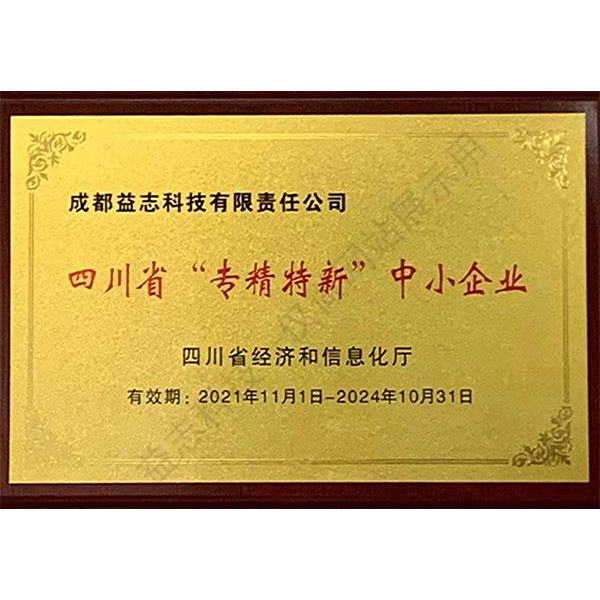
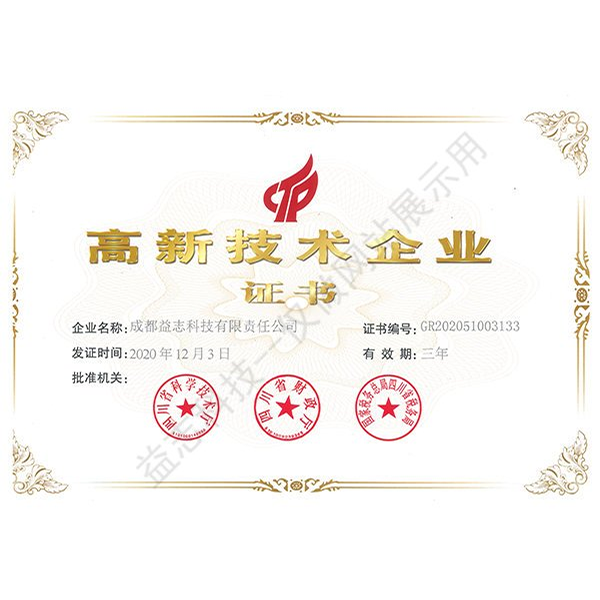
That is why many serious players who really want to gain a foothold in the market operate not as simple equipment sellers, but as engineering centers. Let's take for exampleChengdu Yizhi Technology Co. (https://www.yzkjhx.ru). This is not just a factory. It is a design institute spun off from the parent company Huaxi Technology. Their registered capital of 120 million yuan is not about metal and pipes, it is primarily about intellectual potential. When you have such a structure, you can afford not just to ship the installation, but to conduct a full audit, model the process for a specific fuel, and even provide a module for recycling the resulting gypsum, which for many CIS stations is becoming a critical issue due to stricter environmental standards.
This transition from selling “hardware” to selling technological solutions - this is the main trend that many do not notice. The buyer is now savvy. The Chinese price is not enough for him; he needs Chinese technology adapted to his problems. And if you are not ready to do this, you will quickly be replaced by those who are. For example, the same guys from Yizhi Technology, judging by their projects, often offer non-standard combined circuits, where in addition to the maindesulfurization technologiesa unit is added for preliminary purification of flue gases from fly ash, which dramatically increases the service life of the main equipment.
Pitfalls of “turnkey”: the story of one unsuccessful tender
I want to talk about a failure that taught me a lot. We participated in a tender to modernize the system at a large thermal power plant in Russia. They offered a beautiful, compact and efficient installation based on the ammonia method. According to the papers, everything is perfect, the efficiency is higher, the reagent is more expensive, but its consumption is less, the by-product - ammonium sulfate - can be sold as a fertilizer. We won the tender and were delighted.
And then it began. Firstly, local environmentalists said that the slightest leak of ammonia is an emergency, and they demanded control and protection systems that were an order of magnitude more complex than we had envisioned. The estimate went up. Secondly, it turned out that the logistics of delivering liquid ammonia to that region is a separate quest, and the cost of the reagent on site turned out to be 2.5 times higher than our estimate. And everyone was just talking about the ammonium sulfate sales market, but there were no real contracts. The customer, seeing the growing operating costs, panicked.
As a result, the project was frozen and then completely canceled. Competitors who offered the classic lime scheme with its “dirty?” plaster, but with clear and predictable economics, we eventually received a contract. Conclusion? The most high-tech method is not always the best. It is necessary to consider not the cost of installation, but the cost of the life cycle: reagents, disposal, qualifications of local personnel. Now we always start with a deep analysis of TCO (Total Cost of Ownership) for the customer, even if he himself does not ask for it.
Specifics of the CIS: between the old fund and new norms
The CIS market is unique. On the one hand, there is a huge park of Soviet thermal power plants and boiler houses, where desulfurization was the last thing they thought about. The equipment is worn out, the space for installing new ones is limited, the staff is accustomed to working according to old schemes. On the other hand, there is pressure from environmental standards, which are gradually becoming stricter, striving for European standards. This gap creates a niche forChinese exporters.
Our strength here is flexibility. We have learned to ?embed? installations in cramped workshops, use modular solutions for phased modernization. Often you have to work not from scratch, but to modernize or complete existing, but incomplete or non-functional systems. There was a story in Ukraine, where we revived a half-abandoned dry desulfurization installation, replacing key components - the reactor and the reagent input system - with our own. It turned out to be 1.5 times cheaper than building a new one, and the customer was delighted.
Another critical point is climate. Siberian frosts or Central Asian heat and dust are a test for any equipment. It is necessary to strengthen thermal insulation, install additional heating systems for reagent lines or, conversely, powerful cooling systems for circulating water. In the specifications that come for Europe or China itself, there are simply no such requirements. This knowledge is bought only by experience, often bitter - when the suspension pipeline freezes in the first winter.
The future: service, digital and new reagents
Now competition is shifting to after-sales service and digitalization. The installation has been installed - this is just the beginning. Who will serve it? Train local engineers? Supply reagents? Provide remote monitoring? This is what customers are interested in now.
Leading companies, the sameChengdu Yizhi Technology, are already actively implementing digital twin systems for their installations. The customer receives not only a physical unit, but also a virtual copy of it, which can be used to train operators, simulate emergency situations and select optimal operating modes when changing the fuel grade. This is no longer exotic, but a request from large generating companies that is gradually becoming a standard.
The second direction is work on new reagents. The same magnesium oxide or complex organic absorbents. They are more expensive, but more effective and sometimes produce a more marketable by-product. For now, this is a niche market, but it is the future, especially for facilities with strict waste restrictions. Our institute, by the way, is also conducting R&D in this direction, trying to reduce the cost of such reagents through new regeneration methods.
Conclusion: trust as the main asset
So who are they?Chinese desulfurization technology exporters? It is no longer a monolithic mass. This is a spectrum: from large state giants taking large-scale “turnkey” projects. projects, to medium-sized but ambitious engineering companies like Yizhi Technology, which benefit from depth of study, flexibility and willingness to dive into specific customer problems.
Success here is not built on low prices alone. It is built on the ability to listen, adapt and take ownership of a solution throughout its lifecycle. It is necessary to understand the chemistry of the process, mechanics, logistics, local legislation and even the psychology of the customer, who is often wary of new technologies. The most valuable asset we, as exporters, can acquire in this market is trust. And it is earned only in the field, by solving real, not educational problems. It is precisely such companies, with experience of real, including unsuccessful, projects behind them, that will determine the face of Chinese technological exports in this area in the coming years.