China: biogas technologies for export?
2026-02-06
When you hear “Chinese biogas,” many people imagine outdated underground pits somewhere in the village. This is perhaps the main misconception that you encounter in negotiations. In fact, over the last ten years the industry has undergone a radical transformation - from makeshift installations to complete engineering and technological systematization. And the question is no longer whether there is anything to export, but what specific solutions will be in demand abroad and, more importantly, will take root. Here, hardware and drawings alone are not enough.
From the "pit" to the system: evolution of the approach
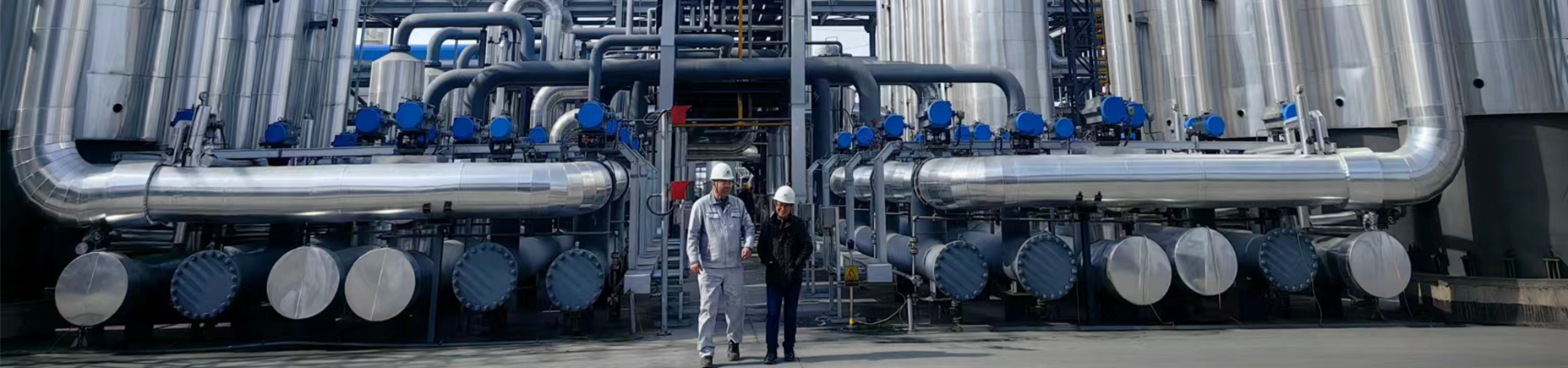
It all started, indeed, with digesters for manure disposal on peasant farms. The goal was simple - to get fuel for the kitchen and light. But it was not possible to scale it up: low efficiency, seasonality, problems with maintenance. The turning point, in my opinion, came when the state began to actively invest in the processing of organic waste from livestock farms and the food industry. There was a demand not for a single tank, but for a complex: pre-processing of raw materials, the reactor itself, a biogas purification system to the quality of natural gas (biomethane), utilization of the fermented mass.
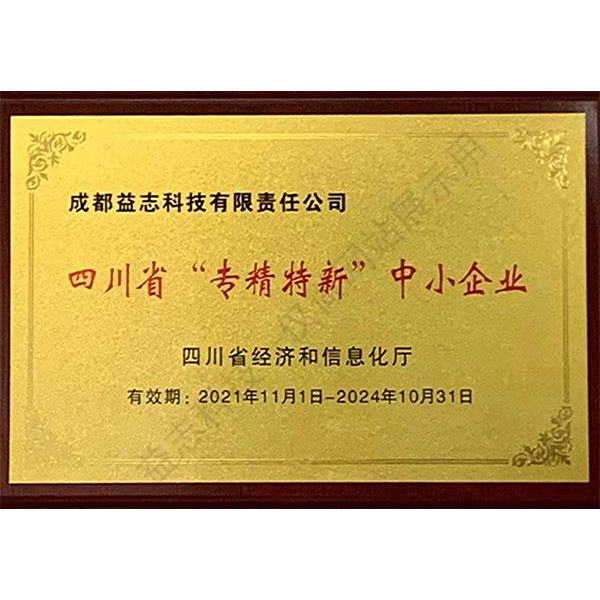
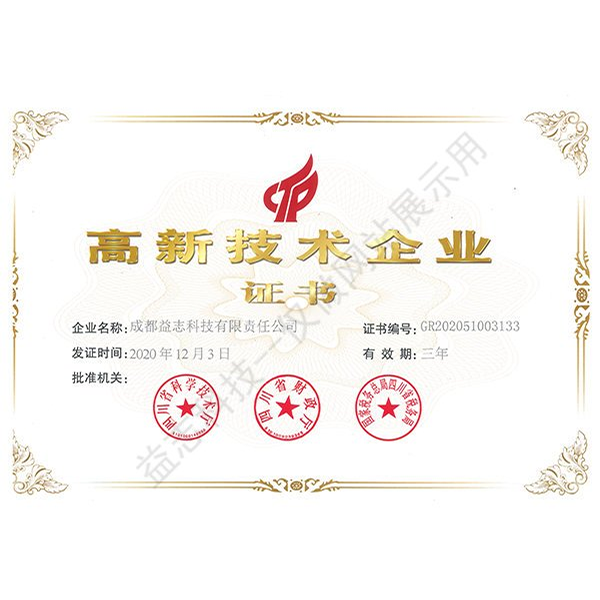
It was then that design institutes such asChengdu Yizhi Technology Co.(a subsidiary of Huaxi Technology). Their role is not just to sell equipment, but to design the entire chain for a specific type of raw material and climatic conditions. The authorized capital of 120 million yuan is not just for show; these funds allow us to conduct serious R&D and take risks on pilot projects.
Websiteyzkjhx.ru, by the way, reflects this systematic approach well: it shows that they are working not with an abstract “biogas plant?”, but with technological lines for bird droppings, alcohol production waste, and municipal organic waste. This is a key difference between the modern Chinese offering.
What can we really offer the world?
If we talk about export potential, it consists of three components. The first is engineering and experience in designing for high loads. A huge number of stations have been built in China, processing hundreds and thousands of tons of waste per day. Statistics have accumulated, solutions for the “complex” have been worked out. raw materials with a high nitrogen or fat content.
The second component is equipment for key stages. For example, hydrolysis systems to accelerate fermentation or membrane plants for biogas purification. They often turn out to be 20-30% cheaper than their European counterparts with comparable quality. But there is a nuance here: reliability in the long term. The European buyer is rightly skeptical.
The third, and most difficult to convey, is operational experience. How to control the bacterial community in a reactor during a sudden change in the composition of the raw material? How to optimize the energy balance of the entire plant? This is know-how, which cannot be attached to the contract in the form of a folder with documents. It can only be transferred through long-term installation supervision and training of local personnel.
Failures that teach more than successes
We had experience in supplying a compact installation to one of the countries in Southeast Asia. Everything was calculated: the humidity of the raw materials and the temperature. But they didn’t take into account the mentality. The technology required daily monitoring of several parameters and precise dosing of coagulants. The local operator, accustomed to simple systems, began to skip measurements, and then gave up altogether. Six months later, the reactor turned sour and production stopped. The client accused us of creating an overly complex system.
This incident forced us to seriously reconsider our approach to exports. Now we divide decisions into “levels”. For markets where there are no trained specialists, we offer the most automated and “forgiving” ones. line operator errors, albeit with some loss of efficiency. And where there is an engineering school, it is already possible to implement advanced circuits with manual control of modes to maximize gas output.
Another stumbling block is logistics and installation costs. Delivery of a large-sized reactor to a remote region can “eat”? all the savings on equipment. Therefore, modular solutions are now in trend, which can be assembled on site like a construction set from blocks delivered by containers. They are actively working on this, including inChengdu Yizhi Technology.
Raw materials as a determining factor
We cannot talk about technology in isolation from what we will process. There are no universal solutions. The experience gained in China is especially valuable for countries with developed agriculture. For example, processing chicken manure is a different story. High ammonia nitrogen is toxic to bacteria. Our engineers, through trial and error (and several emergency stops), worked out schemes with preliminary nitrogen removal or using special strains of microorganisms.
Or palm oil waste - huge potential for Malaysia, Indonesia. But there is a very high fat content, which can also inhibit the process. The solution is two-phase fermentation with a separate reactor for the acidogenic phase. We built these in the southern provinces of China. The technology exists, but its adaptation to local raw materials with its specific admixtures is always an individual project.
That is why the first step in any dialogue on technology exports should be a deep analysis of the customer’s raw material base. Without this, all talk about megawatts and volumes of biogas is just fantasy.
The future: integration into the circular economy
Now the most interesting trend is not even the biogas itself, but what happens to the processed products. Purified to 95%+ methane level (biomethane) can be pumped into gas networks or used as motor fuel for transport. And the fermented residue (digestate) is not just waste, but a high-quality organic fertilizer that has undergone sanitary treatment.
A promising export vector is not the sale of an installation, but the proposal of a business model. We help the client build a chain: waste collection (for example, from plantations) -> production of biogas and electricity for a processing plant -> production and sale of certified fertilizers for the same plantations. Closed loop. This is already the level of strategic partnership.
Chinese companies, including ours, are now actively studying such integrated models for exporting to countries in Africa, Latin America, and Southeast Asia. The potential is enormous, but the risks are also high - long-term investments and a willingness to work in the legal framework of another country, where waste and energy laws may change, are required.
So, returning to the title question... Yes, the technology is there, and it is competitive. But successful export is always a story about adaptation, and not about standard delivery. This is about the readiness not just to ship the equipment, but to “transplant” it. an entire technological organism into new soil and help it take root. Without this, even the most advanced installation risks becoming a pile of useless metal somewhere under the scorching sun, a monument to a failed partnership.