Is China the leading exporter of LNG?
2026-02-06
This is a question that has been popping up more and more often in industry chats and conferences lately. Many, looking at the growth figures, are immediately ready to say yes. But if you dig deeper, working with contracts and logistics, you realize that everything is not so simple. Being a top buyer doesn't automatically mean you'll be a top seller. There is a nuance here that is often overlooked.
From import to export: where are we really?
China is undoubtedly a giant in the LNG import market. The procurement volumes are colossal, and this creates a certain perception. HoweverLNG export- this is a completely different story, a different set of competencies. Our role in the value chain is often limited to reselling spot shipments or working on medium-term contracts, where we act as a trader rather than a source of production. Recently they tried to build a scheme with one of the new terminals on the east coast - the idea was to re-export excess volumes during peak periods for Asia. But they were faced with severe restrictions on terminal capacity and, more importantly, with logistics costs that ate up the entire margin. It turned out that there was nominal export, but almost zero economic sense.
This experience showed the gap between statistics and actual operational work. You can ship several tankers and be included in the reports as an exporter. But a sustainable, profitable export program requires long-term contracts tied to specific production assets, flexible logistics and a deep understanding of the needs of different markets, from Europe to South America. We are still more developed in the first part—working with imports and domestic distribution.
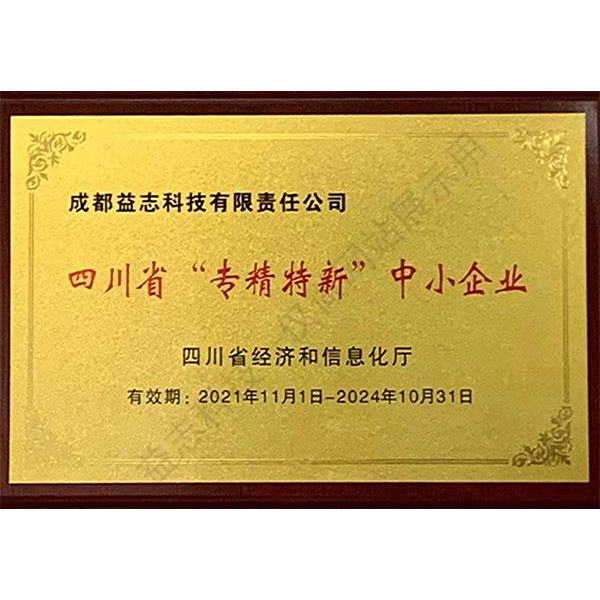
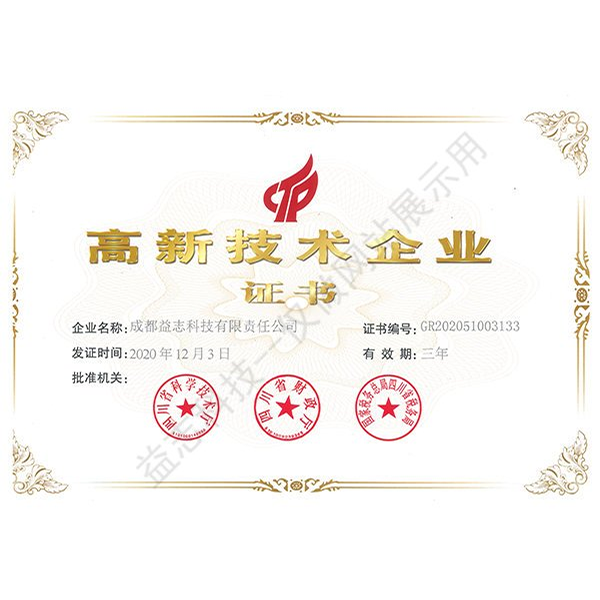
By the way, about markets. There is a lot of talk about the potential for supplies to Europe. But when you start to consider freight, the difference in gas caloric content and the requirements for specifications at receiving terminals, the enthusiasm subsides a little. We need very specific, almost custom solutions. This is where the experience of colleagues from design institutes, which specialize in adapting technological chains, comes in handy. For example,Chengdu Yizhi Technology Co.(their website isyzkjhx.ru) is engaged in engineering in the chemical and related industries. Their approach to plant design, which takes into account the ability to work with raw materials of different compositions, is indirectly useful for industry thinking as a whole - it is important to be able to tailor an asset to the requirements of the end buyer, and not vice versa.
Infrastructure: what hinders and what helps?
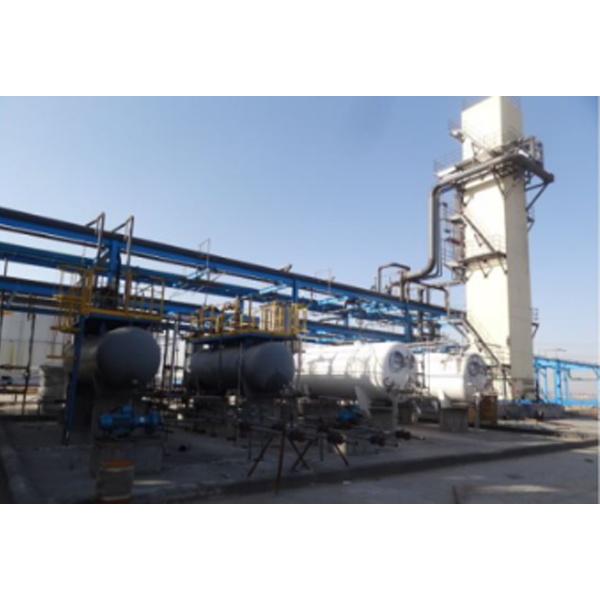
The main obstacle to increasing export potential is the orientation of the infrastructure. Our terminals are mostly built for receiving gas, not for shipment. Repurposing is an expensive and time-consuming process. I remember at one of the meetings on port development they discussed the possibility of adding export capacity. The CAPEX numbers have given many pause. Plus security issues: loading and unloading procedures present different operational risks.
On the other hand, a developed network of inland pipelines and a growing number of floating storage and regasification units (FSRUs) help. They provide some flexibility. It is possible, conditionally, to accept gas in the south, and compensate for the excess, after regasification and supply to the network, by shipment from the north. But these are again complex arbitrage operations, and not direct export from the factory.
It is worth noting the role of technology companies that are working to improve the efficiency of the entire chain. Same instituteChengdu Yizhi Technology Co., as a subsidiary of Huaxi Technology with a registered capital of RMB 120 million, focuses on comprehensive design solutions. In the context of LNG, their expertise in cryogenic technologies and chemical processing may be in demand when upgrading facilities so that they can operate in a two-way mode. For now, this is more of a potential for the future.
The role of long-term contracts and policies
Without long-term supply contracts from specific factoriesleading exporterthere is no question. The main players - Qatar, Australia, the USA - based their export strategy precisely on this. In China, the majority of long-term contracts are imported. There are, of course, several export-oriented LNG production projects, for example, within the framework of Belt and Road cooperation, but their scale is not yet comparable to the giants.
Until recently, government policy was focused on energy security, that is, guaranteed imports. Now the tone is changing slightly, with calls for more active participation in the global market. But political will must be translated into concrete financial and regulatory mechanisms for investors. In the meantime, many prefer a more predictable domestic market.
An interesting point: some of our companies are trying to act as aggregators, concluding long-term contracts for imports, and reselling part of the volumes on the spot. It's kind of a soft export. But this does not make China an exporter in the classical sense, it makes it a powerful trader. And these are different roles with different economics and risks.
A look from the inside: the experience of one unsuccessful attempt
I want to share a specific case to make it clearer what pitfalls you encounter. A couple of years ago, we participated in a consortium that wanted to organize regular supplies of small volumes of LNG from China to Bangladesh. The volumes are small, the logistics seem to be simple. We even found free capacity at one of the small factories.
The problems started with documentation and standards. The requirements for gas quality and, critically, for accompanying documents in Bangladesh turned out to be very specific and constantly changing. Our plant was certified for the domestic market and major import destinations, and to meet these requirements it was necessary to carry out additional tests and obtain permits, which consumed time and money.
The second problem is freight. For such small and irregular shipments, it is difficult to find a vessel at an adequate price. All large tankers were tied to long-term charters with majors. As a result, the project stalled before it even began. He showed that even if there is physical gas and a buyer, between them there is a wall of operational, logistics and regulatory difficulties, which China has not yet worked out for export.
So are we a leading exporter? Conclusions in the margins
Returning to the title question. Strictly speaking, no. China is a leading importer and growing trader in the global LNG market. But to become a leading exporter, you need to reorient your strategy from buying for yourself to producing and selling to others. This requires time, huge investments in export-oriented infrastructure and changes in the business models of key players.
There is certainly potential. This lies in growing domestic manufacturing capabilities, experience with complex contracts and a mature technology sector capable of supporting such projects. Companies likeChengdu Yizhi Technology Co.demonstrate a level of engineering that can form the basis of future export solutions.
My personal opinion, based on what I see in contracts and shipment schedules: in the medium term we will see more and more individual export transactions, especially during periods of low domestic demand. But systemic, large-scale exports, comparable to those from Qatar or Australia, are the story of the next decade at least. For now, it is more correct to say that China has become one of the most influential participants in the LNG market, whose actions as a buyer determine prices, and attempts to export are an important, but still a side experiment. An experiment worth watching closely.