Is China the leader in vinyl chloride recycling?
2026-02-06
When you hear this question at conferences, you often catch yourself thinking: what, exactly, is meant by “leadership”? By tonnage of recycled PVC? In terms of technological know-how? Or by the pace of implementation? In our industry, many people confuse scale with efficiency. China indeed processes colossal volumes, but the path to this was far from direct, and talking about the undisputed leader means missing a lot of nuances. I will share what I saw and what I encountered myself.
From gigantic volumes to technological challenges
Yes, the numbers are impressive. China is the world's largest producer and consumer of PVC. It is logical that the flow of vinyl chloride waste here is huge. Early approaches, about ten years ago, often amounted to simple mechanical crushing and granulation for low-quality products. But this is not recycling in the full sense, it is downcycling. The main problem is the complex composition: plasticizers, stabilizers, impurities. This was especially acute when working withwaste cable insulationor medical waste. Getting stable, safe regranulates was a real headache.
This is where the real technological breakthrough began. The focus has shifted to deep cleaning and fraction separation. For example, for film waste, multi-stage washing and flotation began to be widely introduced in order to separate PVC from PET or PE. This is no longer a handicraft workshop, but serious chemical-technological lines. But even here there are problems: high water consumption, issues with the disposal of cleaning solutions. Many enterprises, especially in Jiangsu and Shandong provinces, have gone through trial and error in setting up these processes.
I personally observed how at one of the factories in Tianjin they could not achieve stable quality of regranulate from a window profile for a long time - the remains of reinforcing fiberglass and metal inserts interfered. The solution did not come immediately: we had to combine optical sorting with air separation. This is a typical example: Chinese engineers often adapt and combine known technologies to suit their specific waste streams. Not always elegant, but often cost effective.
Chemical recycling: where are we?
This is where the conversation gets especially interesting. Mechanics are good, but the future lies in chemical recycling to recover the monomer or recover base chemicals. In China, both academic institutions and leading companies are actively engaged in this. For example, pyrolysis and hydrolysis technologies for the production of hydrochloric acid and hydrocarbons.
But there is a nuance. Many pilot plants, which were announced loudly five years ago, have encountered economic problems. High capital costs, the need for fine tuning for different compositions of raw materials, issues with the purity of the final product. The economics of the project were often undermined by the volatility of primary chemical prices. I was familiar with the project in Sichuan, where they tried to establish the production of vinyl chloride through pyrolysis. We encountered rapid coking of reactors and problems with corrosion due to the released hydrogen chloride. The project was frozen.
However, this does not mean that the direction is closed. Now the emphasis has shifted to co-processing, for example, combined pyrolysis of PVC and biomass. This helps improve chlorine balance and increase profitability. Work in this direction is very active, and here China is at the forefront of research, although mass industrial implementation still needs time.
The role of specialized players and chain integration
Success in processing is not only about technology at the plant, but also about well-established logistics and pre-processing. In China, a whole class of companies has emerged that specialize not in “a little bit of everything,” but in specific types of PVC waste. This is the key point.
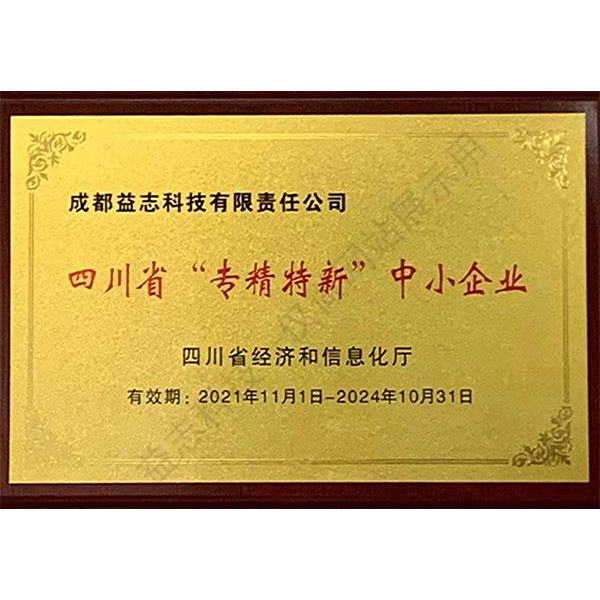
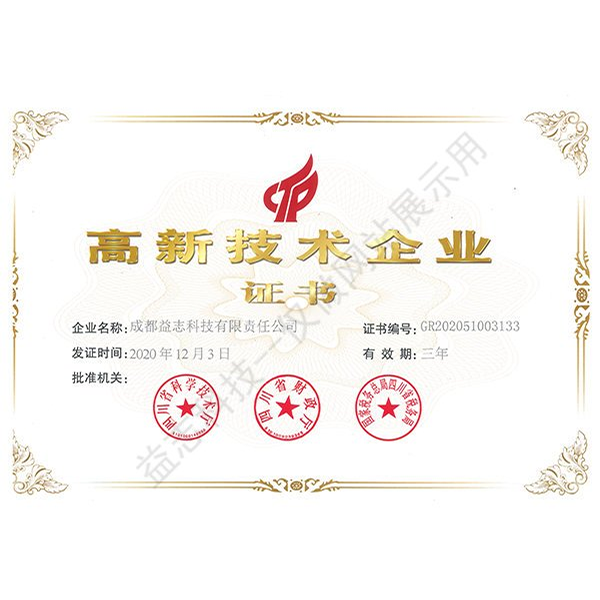
Take Chengdu Yizhi Technology Co. for example. is a design institute created on the basis of Huaxi Technology. Their website (https://www.yzkjhx.ru) reflects this trend well. They don't just sell equipment, but offer comprehensive turnkey project solutions. specifically for chemical and deep processing of complex polymers, including PVC. Their approach is one of integration: from raw material analysis and process development to plant delivery and commissioning. The registered capital of 120 million yuan indicates serious intentions and resources to implement such complex projects.
Such companies become a link between waste generators (construction sites, factories, agricultural complexes) and end consumers of recyclate. They help standardize the flow, which is critical to the stable operation of any recycling technology. Without this, even the most perfect line will remain idle.
Politics as a driver and source of contradictions
The policy of “Ban on waste imports” cannot be ignored. and the “Zero Waste Cities” initiative. They became a powerful catalyst for the entire processing industry within the country. Suddenly it turned out that my own PVC waste had to go somewhere, and quickly. This caused a boom in investment.
But not everything is smooth here either. Local authorities tend to report high percentages of recycling, which sometimes leads to ?paper? statistics or the creation of capacities without a reliable supply of raw materials. I saw new, shiny factories in industrial parks that were operating at half capacity due to a poorly functioning collection and sorting system. The collection isvinyl chloride waste- a separate pain, they are often mixed with other plastic, which kills the economics of recycling in the bud.
On the other hand, this political will has opened up funding for real R&D. Grants and subsidies are often received by projects aimed at solving specific problems: recycling of liquid plasticizers, purification of emissions from PVC processing, creation of new composites based on recyclate.
Looking beyond: international context and future
So are we a leader or not? If measured by the total volumes and speed of capacity creation, of course, yes. If we look at the level of aerobatics technologies, such as closed chemical cycles with high yields, then China is rather a very ambitious and fast catching up, but with unique experience in working with giant and “dirty” ones. flows of raw materials.
Our strength is our ability to scale and reduce the cost of solutions. A technology that may be considered niche in Europe due to its small volumes, in China has a chance to be brought to an industrial level simply because there is a continuous flow of raw materials for its debugging. This applies to automatic sorting and complex chemical processes.
The main challenge now is not quantity, but quality and economics. The future belongs to those who can produce fromrecycled vinyl chloridea product that is not inferior to the original one and at a competitive price. And this requires even closer integration along the entire chain: from product design taking into account future processing to the creation of stable sales markets for recyclates. This is the direction the industry is moving. So leadership is not a title, but a constant process, and China plays one of the most active and visible roles in this process.