Is China a leading exporter of steam hydrocarbon conversion units?
2026-03-08
A question that comes up frequently in industry conversations, but the answer is not as clear-cut as global export reports make it seem. Many immediately imagine giant turnkey plants, but the real picture in the segmentsteam reforming units— it is layered, with nuances, where leadership is measured not only by the tonnage of shipped metal.
What's really behind the export numbers?
If you look at volumes, China is certainly in the forefront. But here lies the first pitfall. When they say “Chinese exports,” they often mean complex projects for countries in Asia, Africa, and the CIS, where we supply everything: from design and reactors to control systems. However, if you dig deeper into the specificssteam reforming, especially for processes like SMR (steam methane reforming) or hydrogen/ammonia production, the leadership is shared. China is strong in medium- and large-capacity installations for chemicals and petrochemicals, but in niche, highly efficient solutions for, say, mini-refineries or specific fractions, there is still room for improvement.
I personally came across the fact that a customer from Central Asia wanted exactly the “European” one. technology of catalysis and precise temperature control in the reactor, despite the fact that the Chinese consortium offered a more cost-effective installation. As a result, the project was divided: the body elements and columns were ours, but the control system and license for the catalytic process were taken from the Europeans. This is a typical story that does not fall into dry statistical reports on exports.
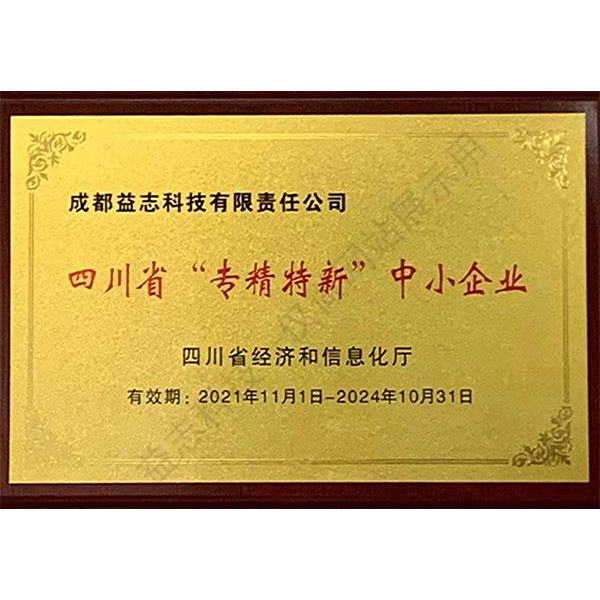
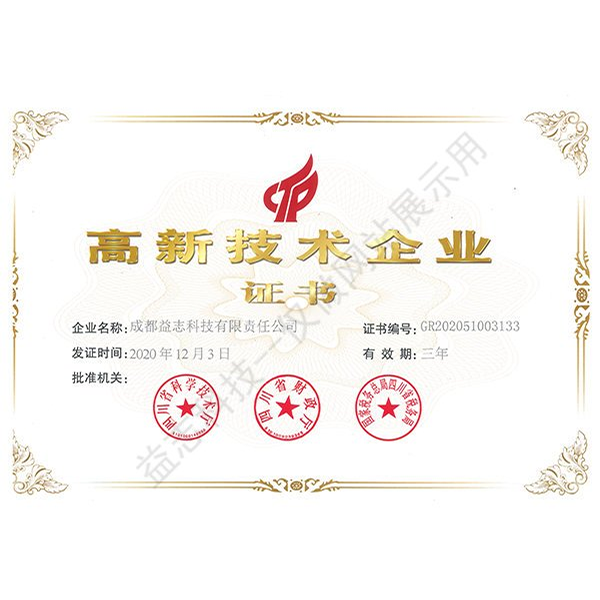
Another point is after-sales. Installing the installation is half the battle. But ensuring its commissioning, personnel training and long-term supply of spare parts is where the gap often arises. Chinese companies likeChengdu Yizhi Technology Co.(their website isyzkjhx.ru) just focus on this. They are not just hardware sellers, but a design institute with a registered capital of 120 million yuan, established by Huaxi Technology. Their approach is a deep dive into the customer’s feasibility study, which is critically important for the CIS market. But such companies that work not “from a catalogue”, but with engineering for a specific raw material base, are still not the majority.
Technological depth vs. cost: where is the balance?
This is where the fun begins. China has long ago moved beyond the stage of simple copying. Let's take, for example, a key component - the conversion furnace. Five to seven years ago, the main complaints concerned the durability of tubes made of heat-resistant alloys and the uniformity of heat flow. Now, according to my observations, many Chinese manufacturers, including those who collaborate with institutes like Chengdu Yizhi Technology, use their own thermal stress calculations and offer customized solutions for coil geometry. This is no longer a commodity, but engineering.
But the problem is different. Often the customer, especially in developing markets, wants “like everyone else?” and cheap. And then simplified solutions are included in the project, for example, for a flue gas heat recovery system. The installation seems to be working, but the efficiency is 5-7% lower than it could be. And this compromise between budget and technological depth is what shapes the reputation. China can supply a top-end solution, but if the market is pressed by price, simpler versions are exported. This creates a distorted impression.
I remember the story of modernizing an installation at one of the plants. Local engineers complained of frequent shutdowns due to slagging in the convection section. It turned out that during the initial deliveries (not from Yizhi, by the way), the calculation was made for the ideal composition of natural gas, but in reality there was a high percentage of higher hydrocarbons. We had to redo the burner devices and the steam supply system. This is the same case when the export of “iron” without a deep analysis of raw materials leads to problems. Nowadays, more advanced suppliers always request a detailed analysis of raw materials at the proposal stage.
The role of design institutes and engineering
This is where structures such as the mentioned design institute Chengdu Yizhi Technology Co., Ltd. come to the fore. Their presence is a sign of the maturity of the segment. Exporting installations is not about shipping equipment according to a list. This is about understanding the entire chain: from the characteristics of raw materials (the same associated petroleum gas with a high sulfur content is a completely different story) to logistics and local regulations.
While working with them on one of the projects in the CIS, I noticed their scrupulousness in matters of seismic resistance and work in winter conditions. They didn’t just take a standard calculation, but requested an archive of weather data and a geological report for the area. This added time to the preparation of the proposal, but in the end problems with the foundation and insulation were avoided. For the customer this turned out to be a decisive argument, despite the fact that the price was not the lowest.
Their websiteyzkjhx.ru- this is, in fact, the gateway to serious engineering. There is not just a catalog of reactors, there is an analysis of cases, and not only successful ones. I saw there an analysis of a case with low conversion efficiency on one of the early deliveries - and how this was corrected by changing the design of the catalyst baskets. Such openness to experience, including negative ones, is worth a lot and precisely creates that very “practical” thing. a feeling, not an advertising picture.
Challenges and where the market is heading
The main challenge now is not even competition with European or American technology giants. They work in their high-budget segment. The challenge is to raise the average quality and depth of project development throughout the chain of Chinese exporters. Because reputation is formed not by leaders, but by the mass segment.
Another trend is the request for “green?” hydrogen and carbon capture. Demand for steam reformers integrated with CCS/CCU systems will increase. I see that Chinese companies are actively investing in this R&D. But they won’t be ready to export tomorrow. So far these are more pilot projects within the country. However, given the experience of scaling, once the technology is mature, entering the foreign market can be very fast.
Also worth noting is the growing role of digital twins and predictive analytics. Plant delivery increasingly also includes a digital model for process optimization and predictive maintenance. In this regard, Chinese suppliers, especially those with close ties to the IT sector, can gain an advantage by offering a more integrated digital product rather than just hardware.
Final thoughts: is he leading or not?
Returning to the title question. If you measure it by gross volume and the ability to complete the project on a “turnkey” basis? in a short time and at a competitive price - then yes, China is certainly one of the world leaders, if not the leading exporter. Its strength lies in the full cycle: from its own mechanical engineering and catalyst production to a strong construction sector that can build the facility.
But if we talk about leadership in the sense of exclusive, breakthrough technologies in each componentsteam reforming, then here the picture is mosaic. For some components, we are already at the global level; for others, there is still a gap that is rapidly closing. The strength of the Chinese approach is its flexibility and speed of adaptation. They can take the basic technology and optimize it for specific, sometimes very stringent, customer conditions, which for many markets is a key factor.
Therefore, when I am asked, I usually answer this way: for a standard project for the production of hydrogen or methanol - yes, Chinese suppliers, especially with a serious engineering background like Chengdu Yizhi Technology, are the strongest players in the market. For niche, ultra-high-impact or pilot projects with untested technology, they often look to others. But this gap is rapidly decreasing. And most importantly, they learn not only from successes, but also from problems, and this is the main sign of a long-term leader in our business.