China: methanol to hydrogen - the future of energy?
2026-03-08
When you hear about “methanol to hydrogen,” many people immediately think about laboratory installations and the distant future. But in reality, the workshops already smell of catalyst and superheated steam. The main question is not “does it work?”, but “where and how will it work?”.
From theory to workshop: where people stumble
The idea is simple: break down methanol into hydrogen and CO2. In theory, the efficiency is high, methanol is easy to transport. But try running the installation somewhere at a remote gas station for hydrogen trucks. The first problem is the quality of raw materials. Technical methanol is not a reagent in a bottle. Impurities, especially chlorine, kill the catalyst in months, not years. We have to install additional cleaning, which eats up the already narrow margin.
The second point is heat balance. The reaction is endothermic and requires a constant supply of heat. In the laboratory everything is perfect, but in industrial conditions, especially under variable loads, maintaining stability is an art. I saw how at one of the first commercial sites in Shandong, engineers struggled with temperature “humps” for weeks. in the reactor, which caused the hydrogen yield to fluctuate. We decided only to use a custom control system, which was written almost from scratch.
And more about infrastructure. Hydrogen is needed clean, especially for fuel cells. But after reforming, CO comes, it is burned off, and then purified. Each step is a loss in efficiency and money. It is often more profitable not to strive for ultra-purity of 99.999%, but to optimize the process for a specific application. For example, slightly lower standards are acceptable for some stationary fuel cell power plants.
Case: unexpected niche - distant objects
Where is the technologymethanol-hydrogenfound the first real soil? Not in megacities, but at remote mining enterprises or scientific bases. Where transporting liquefied hydrogen is golden, and electricity from diesel generators is even more expensive. A container-type unit, powered by a methanol tank, can operate for months.
I remember a project for a weather station in Qinghai. The task is to provide energy to a set of devices and a residential module. Solar panels - inconsistent, diesel - noise and emissions. We installed a 50 kW methanol reforming unit. The key issue was logistics: methanol was imported twice a year, and hydrogen was generated on site for fuel cells. The system paid for itself in 4 years only by saving the cost of delivering diesel fuel by helicopter.
But even here there are some problems. In winter, at -30°C, starting the unit was a problem. Methanol thickens, the pipelines need to be heated. We had to develop a pre-heating system using the same fuel. Trifle? On paper - yes. In the field there are weeks of downtime and rework.
The role of engineering: why ?hardware? more important than formula
Here a lot depends on who assembles the installation. You can buy a better catalyst, but if the heat exchanger is designed without taking into account actual flow variations, it will be of no use. Chinese companies that grew out of chemical engineering often have an advantage here. They know how to brew cycle-resistant reactors.
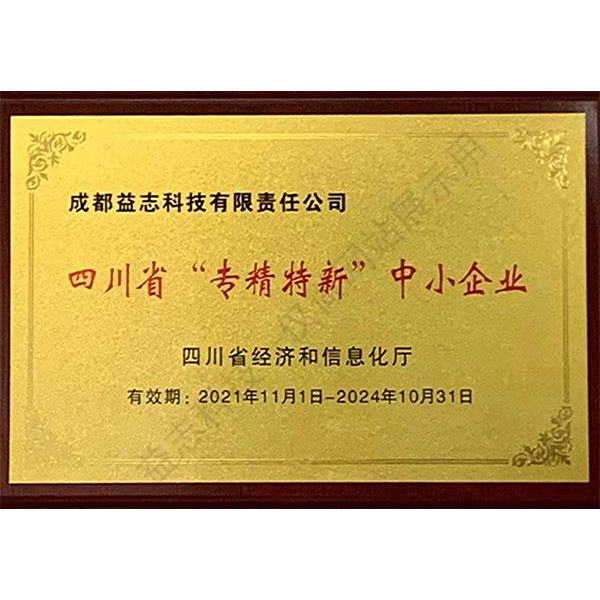
Let's take, for example,Chengdu Yizhi Technology Co.(their website isyzkjhx.ru). This is a design institute created by a chemical company. Their profile is not selling ?magical? technologies, but comprehensive engineering for a specific plant or product. When you look at their portfolio, you see not just diagrams, but calculations for metal fatigue, analysis of working environments, recommendations for suppliers of specific brands of pumps. This is the very practice that many startups lack.
Their approach is often based on integration. Not just “here’s a reforming unit for you?”, but “here’s how it will fit into your workshop, how it will connect to the existing steam circuit, what modifications are needed for your raw materials?”. This reduces risks during the commissioning phase. They had a hydrogen project for fiberglass production, where the key was not maximum purity, but stable output pressure. We did it through cascaded buffer tanks - a simple but effective solution that we came up with on the spot, looking at the plant layout.
Economics: when the numbers add up
All the talk about a "green future" are broken down by a simple question: how much does a kilogram of hydrogen cost at the output? With today's methanol, from coal, the economy is shaky. Everything changes when we talk about biomethanol or “green?” methanol synthesized using renewable energy sources. But it's still expensive.
Nowadays, more or less profitable scenarios are hybrid ones. For example, the use of by-product methanol from chemical production. Or cogeneration: heat from the exothermic stages of the process is used to heat the reactor or to heat the premises. Without such a comprehensive accounting of energy flows, the project often ends up in the red.
I saw calculations for a logistics hub. Liquefied hydrogen supply, on-site electrolysis and methanol reforming were compared. At current electricity tariffs and the price of methanol, reforming turned out to be 15-20% cheaper than electrolysis. But this gap varies greatly by region. In provinces with cheap hydropower, electrolysis is already winning. This means that there is no universal answer - you need to count for each site separately.
What's next: not revolution, but evolution
I don't expect thatmethanol-hydrogenwill replace all other methods. This is not a silver bullet. This is a very pragmatic tool for specific niches: remote energy, use of by-products, hybrid systems with CO2 recovery. Progress will not be in the discovery of a new magic catalyst, but in the little things: cheaper and more durable materials for heat exchangers, smart control systems that adapt to the quality of raw materials in real time.
By the way, about CO2 recycling. This is often put aside, but the pressure is growing. New projects are already installing capture modules, although this again increases the cost. But perhaps this will become a new driver if a market for this CO2 emerges, for example for injection into reservoirs or synthesis of chemicals.
So the future, in my opinion, lies not in giant factories, but in modular, adaptive systems. Such that can be quickly deployed where today it is economically or technically unprofitable to lay a hydrogen pipeline. And this is where Chinese engineering, with its experience of rapid scaling and attention to cost, can play a very big role. Will this be the “future of energy”? Rather, it is its important and pragmatic part.