Is China the leading exporter of hydrogen by conversion?
2026-03-08
This is a question that has often come up in industry chats and at specialized events lately. Many immediately imagine giant liquid hydrogen tankers or large-scale pipeline projects. But reality, especially in contextconversions, often turns out to be more complex and prosaic. If we talk about net exports of molecular hydrogen, then China is not yet in the top. However, when you dig deeper into the value chain - namely the export of technologies, engineering solutions and complete production systems for hydrogen production, especially through hydrocarbon conversion or electrolysis processes - the picture changes dramatically. This is where Chinese companies, especially engineering giants, are showing tremendous activity. What is often overlooked is thatleading exporter- this is not necessarily the one who loads gas into tanks, but the one who determines how and on what equipment this gas will be produced around the world.
Where is the real “export”? Not gas, but technology
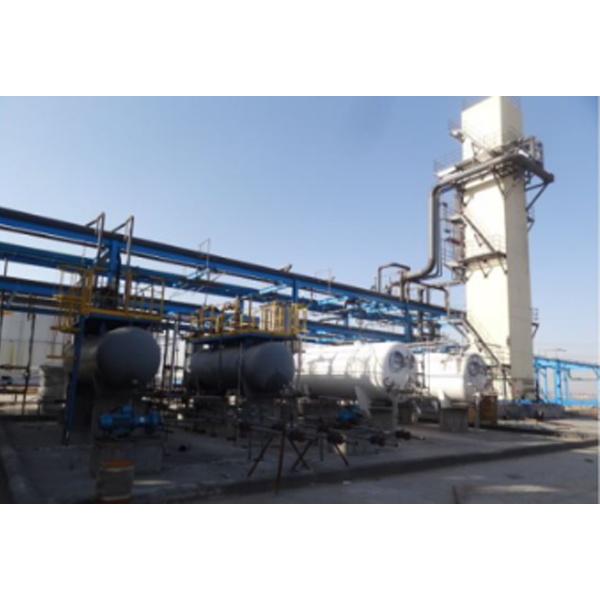
Working on projects in Central Asia and the Middle East, I constantly encounter the same pattern. Local customers want to build a plant for converting natural gas into hydrogen for their refineries or ammonia production. They are studying proposals from European, Korean, Japanese contractors. And increasingly - from the Chinese. Moreover, the latter do not come empty-handed, but with proven technology packages that have already been tested at dozens of facilities inside China. This is not just selling a license. This is a full cycle: FEED design, supply of critical equipment (reformers, reactors, PSA purification systems), installation supervision and commissioning. In fact, they export entire factories on a turnkey basis. And in this sense, China has long been a titan.
I remember one project in Uzbekistan, where options for modernizing hydrogen production were considered. The European consortium offered a beautiful, but expensive and “inflexible” a solution with a bunch of conditions for logistics and future service. A Chinese engineering company, which I won’t name here, brought a ready-made modular design. Their trump card was not revolutionary efficiency (the efficiency was comparable), but adaptability: equipment could be supplied in large blocks, which sharply reduced installation time on site. And most importantly, they were ready to take on long-term obligations for the supply of catalysts and consumables. This is the very “soft power” in technological export.
It’s worth making an important note here. When they talk aboutconversions, often boil it down to steam methane reforming (SMR). But Chinese engineering institutes are actively promoting other routes, especially where there is access to hydrocarbon fractions or it is necessary to utilize by-product gases. I often see in their portfolio installations for carbon monoxide conversion (CO shift) or even partial oxidation (POX) of heavier feedstocks. Their niche is the ability to work with the “imperfect?” raw materials and offer cost-effective solutions for emerging industrial countries where cleanliness and efficiency are not always absolute priorities over price and speed of commissioning.
Battlefield: engineering and design institutes
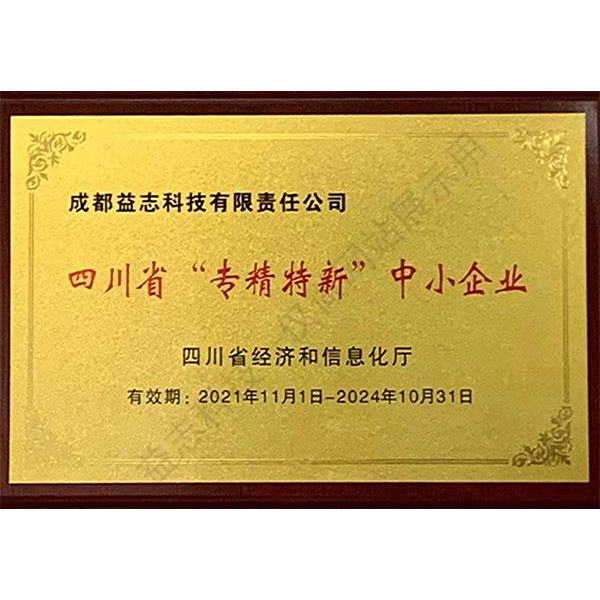
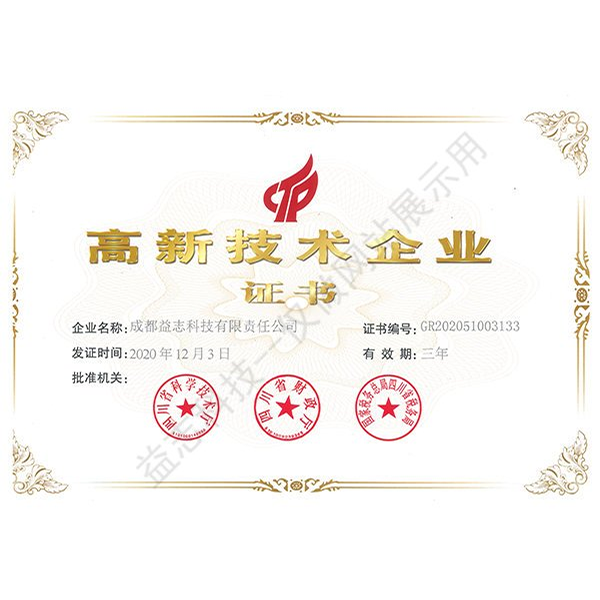
It is design institutes that are the vanguard of this technological export. They accumulate experience, standardize solutions and act as a single window for foreign clients. One of the most striking examples of such a player isChengdu Yizhi Technology Co. (https://www.yzkjhx.ru). This is not just an office, but a full-fledged design institute created on the basis of Chengdu Huaxi Chemical Technology Co. back in 2013. The registered capital of 120 million yuan shows serious intentions. Such companies rarely appear in the news about the “hydrogen economy,” but they are the ones who do the grunt work: they calculate material balances, select the standard sizes of devices, and optimize thermal circuits. Their website is usually a catalog of completed projects: production of synthesis gas, hydrogen, ammonia, methanol. And for many countries in Asia, Africa, and the CIS, applying to such an institute is the first logical step.
Working with them has its own specifics. Technical negotiations can be very substantive; engineers on their part often think in specific technological blocks from their catalog. Sometimes this is a minus - there is not enough flexibility for a non-standard task. But for standard projects this is a huge plus: risks and design time are reduced. I remember how at one tender their representative sketched out a basic technological diagram in a couple of hours and gave an approximate estimate, while the Western partners asked for a month to prepare a commercial proposal. In a business where time is money, this approach wins contracts.
However, not everything is smooth sailing. A common problem that customers face after launching such turnkey projects. objects is dependence on original spare parts and catalysts. A Chinese contractor may offer a very competitive price during the construction phase, but then long-term operating costs become tied to their supply chain. This is not always a bad thing, but requires careful consideration in the contract. This is the very trade-off that you need to know about when choosing such a partner.
?Green? twist: will China remain in the lead?
Now the whole world is talking about green hydrogen produced by electrolysis using renewable energy sources. And here a logical question arises: what about China with its traditional focus on the conversion of fossil raw materials? My observation is this: Chinese players are not going to give up this platform. They are aggressively expanding their capacity to produce electrolysers, mainly alkaline (ALK), and are already beginning to export them. Their advantage is, again, scale and cost. Installing a megawatt electrolyzer made in China can cost 30-40% less than its European counterpart. Reliability and efficiency? While there are questions, data from pilot projects vary. But they are actively learning and adapting.
A more interesting hybrid path that I see in their new offerings is integrating conversion units with carbon capture systems (CCS) or combining "gray" ones. hydrogen with ?green? to reduce your carbon footprint. This is a pragmatic approach, especially for countries with existing gas infrastructure. Instead of building giant renewable energy parks and electrolysers from scratch, you can upgrade your existing SMR by adding CCS. And design institutes like the mentioned Chengdu Yizhi Technology Co. They have the competencies for such complex design. They see in ?green? transition is not a threat, but a new business opportunity.
But herein lies a challenge. Export of "green" technology is not only equipment, but also compliance with strict international standards for carbon accounting and environmental certification. So far, Chinese companies are not strong in this. Their strength is engineering and iron production. Weak - soft power: certification, standards, environmental consulting. To stayleading exporterin the new paradigm, they will have to develop these competencies.
Personal experience: lessons and insights
Working as a consultant on a hydrogen refueling project in Kazakhstan, we considered different sources of hydrogen. A local option is natural gas conversion. Inquiries were sent to both Chinese and European technology suppliers. The Chinese were the first to send a commercial proposal, literally a week later. It included a detailed specification, a 3D model of the installation and a door-to-door delivery schedule. But when we began to delve into the details, for example, into the guaranteed composition of the production gas when the composition of the feedstock fluctuates, the answers became vague. It was easier for them to offer a standard block than to deeply customize it to our conditions. As a result, the project was frozen, but the lesson was learned: Chinese solutions are ideal for tasks that fit into their ready-made catalog. For unique, atypical tasks, caution and very detailed technical specifications are required.
Another insight concerns after-sales. Europeans or Japanese often have a well-organized technical support system with on-site engineers. For Chinese companies, this service may be less formalized. Often everything depends on personal contacts with the project manager. On the one hand, this allows you to quickly resolve issues over the phone. On the other hand, it creates risks when changing personnel. This is an important point for negotiations: service conditions need to be spelled out as specifically as possible.
Despite these nuances, the trend is obvious. The share of Chinese technological "iron" and engineering in new hydrogen production projects (by any means) in developing countries will only increase. Their ability to offer a solution that is balanced in price and timing is unrivaled in many markets.
Bottom Line: Rethinking Leadership
So is Chinaleading hydrogen exporter by conversion? If by export we mean the shipment of compressed or liquefied H2, then no, and it is unlikely to become so in the coming years. The main flows go from regions with cheap energy (RES or gas) to energy-scarce ones. But if we interpret exports more broadly—as the export of the ability to produce hydrogen—then the answer will be in the affirmative. China exports the opportunity itself, packaged in the form of technology, design documentation, reactors and columns.
Their strength is a gigantic domestic market that has honed engineering companies, and government support that allows these companies to go outside with very aggressive financing terms. Chengdu Yizhi Technology Co. Type Design Institute - This is a typical soldier of this army. He doesn't make breakthrough discoveries, but he knows how to quickly, cheaply and reliably replicate proven solutions around the world.
Therefore, the next time we talk about the leaders of the hydrogen race, it is worth looking not only at the production schedules of pure H2, but also at the lists of EPC contractors at plants under construction from Saudi Arabia to Indonesia. There you will find the answer to real, practical leadership. And this answer will increasingly lead to China. Their path is that of an industrializer of the global hydrogen infrastructure, and in this role they have no equal in scale and speed.