China: new LNG liquefaction technologies?
2026-03-08
When people talk about new liquefaction technologies in China, many people immediately think of giant turnkey plants. or breakthrough patents. But the reality is often different - in adaptation, in refining components, in solving specific problems at a specific field, where the theory from the textbook is silent. The most interesting process happens not in the headlines of press releases, but on the shop floor, where the engineer looks at the data from the sensors and decides how to make this line run more consistently at half the original cost.
From ?iron? to “digital”: where the process is really heading
If we take the classic chain, the focus has shifted. Previously, the race was for mega-performance of the main heat exchangers - bigger, cooler, faster. Now, according to my observations, the key struggle for efficiency is in the field of gas pre-treatment and, more importantly, in control and optimization systems. Especially for medium and small installations, which have begun to be actively built for remote fields or as buffer capacities.
Here's a practical example: at one project in Sichuan, the standard CO2 pre-removal scheme "eaten up" disproportionate amount of energy. Local engineering, like what doesChengdu Yizhi Technology Co., proposed a hybrid solution - a combination of membrane technology at the first stage with post-treatment with a classic adsorbent. Not a revolution on a global scale, but for a given gas composition and required purity at the outlet - savings in capital costs by 15%, and operating costs by 8% in terms of energy. Such point improvements are new technologies in their applied sense. They are not always patented, but they determine profitability.
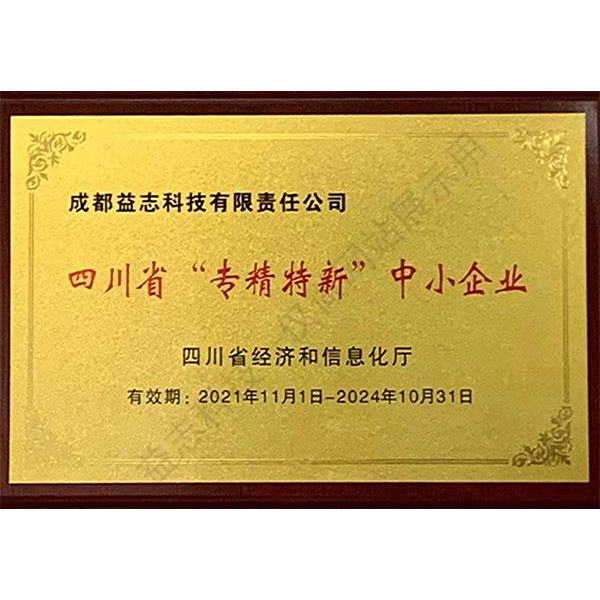
It is in these niche but critical areas that many Chinese design institutes are working. Take, for example,Chengdu Yizhi Technology Co.- this is not just “another engineering company?”. This is a structure created with a registered capital of 120 million yuan for in-depth development of technological solutions. Their approach is often based not on selling a ready-made “black box”, but on jointly modeling the process with the client so that the technology “takes root” to specific conditions.
Modularity and scalability: trend or forced necessity?
There's a lot of noise here. Everyone talks about modular plants (mid-scale, small-scale LNG) as a panacea. But in reality, modularity is not just about bringing and assembling blocks. The main problem is integration. You can buy an excellent liquefaction module from one vendor, a purification module from another, and a storage system from a third. And then, for months, bring them together into a single control system that does not go crazy from out of sync.
I saw a project where, due to differences in valve operation patterns on modules from different suppliers, water hammers occurred in common pipelines. The solution was more software than hardware - we had to completely rewrite the PLC logic, introducing artificial delays. Is this the same “dirty” one? work that is not written about in brochures, but without which the new technology does not work.
Chinese companies are now actively developing complex modular solutions, trying to control the entire chain. The goal is not just to sell equipment, but to offer a standard, but highly customizable technology package. This reduces risks for the customer. If we go back to the exampleChengdu Yizhi Technology Co., Ltd., then their strength as a design institute created by Huaxi Technology lies precisely in the ability to lead a project from concept and process simulation to commissioning, using the accumulated database of the behavior of various technological schemes in real conditions.
Refrigeration cycles: is the old friend better than the new two?
New, ultra-efficient liquefaction cycles are constantly being published in academic circles. But the industry is conservative. Dual Mixed Refrigerant (DMR), Propane Pre-Refrigeration (C3MR) - these proven designs remain the basis. Innovations in them follow the path of optimizing the composition of refrigerants and improving heat transfer.
At one of the recent installations I visited, engineers were experimenting with adding isobutane to the refrigerant mixture for a cascade cycle. Theoretically, this should have provided benefits when working with feed gas of unstable composition. Practice has shown an increase in efficiency by 2-3% in normal mode, but difficulties arose with control when the load changes sharply. We had to refine the algorithms. It's a typical story: a small improvement on months of painstaking tweaking.
Therefore, when they talk about “new liquefaction technologies,” they often mean not a new physical principle, but a new level of control and adaptation of the old principle to new conditions. This is less impressive, but more in demand by the market.
Energy efficiency: where to look for reserves?
The main energy consumer is, of course, compressors. The trend here is obvious: variable speed drives (VSD), more efficient compression stages, improved cooling systems. But there are also less obvious points.
For example, cold recovery. In many old plants, the cold from the evaporation of commercial LNG was simply lost during regasification. Now this is a whole direction. I have seen the successful integration of a mini-LNG plant with a dry ice production plant or with a warehouse cooling system. The economic effect of the project strongly depends on such “related” decisions.
Another point is the accuracy of analytical equipment. Modern chromatographs and spectrometers that monitor gas composition in real time make it possible to fine-tune the process and avoid excessive purification, which also costs energy. Sometimes investing in the best analytical hardware? and software for processing it pay for themselves faster than replacing a turbine.
Challenges and the future: not only technology
The implementation of any new solution depends not only on engineering, but also on personnel and regulation. The most advanced modular installation will sit idle if there are no operators on site who understand its logic and are not simply pressing buttons according to instructions.
Hence, the demand is growing not just for technology, but for technology with a full package of training and long-term technical support. Companies that can provide not only blueprints but also operator training simulators have a major advantage. This is the “practical” one. the part that distinguishes the real project from the picture in the catalog.
If we look into the future, the main efforts, in my opinion, will be concentrated in two directions. The first is further digitalization and the use of data for predictive maintenance and adaptive optimization. The second is the development of solutions for ultra-small volumes of gas, for example, associated petroleum gas at remote wells, where the key is not efficiency, but the general possibility of cost-effective utilization. And here there are no simple, ready-made answers yet - what is needed is an individual, project-based approach, which is the essence of the work of many specialized institutes on the market.