Is China the leading exporter of hydrogen from methanol?
2026-03-02
A question that is often heard at industry meetings, but the answer is not as clear-cut as the headlines of analyst reports make it seem. Many people immediately imagine giant factories and tankers heading to Europe, but the reality, as usual, is more complicated. If we talk about potential and technological capabilities, yes, China is certainly among the first. But when it comes to the commercial export of hydrogen obtained specifically from methanol, nuances begin that only those who directly worked with logistics, standards and specific customers know about. I’ll try to sort it out based on what I saw and what I encountered.
Where does this statement come from?
The idea of Chinese leadership is based on several pillars. The first is the colossal production capacity for methanol. China is the world's largest producer of methanol, and it is logical that the infrastructure for its conversion into hydrogen is extremely developed here. The second pillar is government strategy. China's hydrogen roadmap places a strong emphasis on hydrogen from industrial by-products and specifically from methanol as a transition solution. The third is the export of technologies and installations. This is where China truly is a world leader.
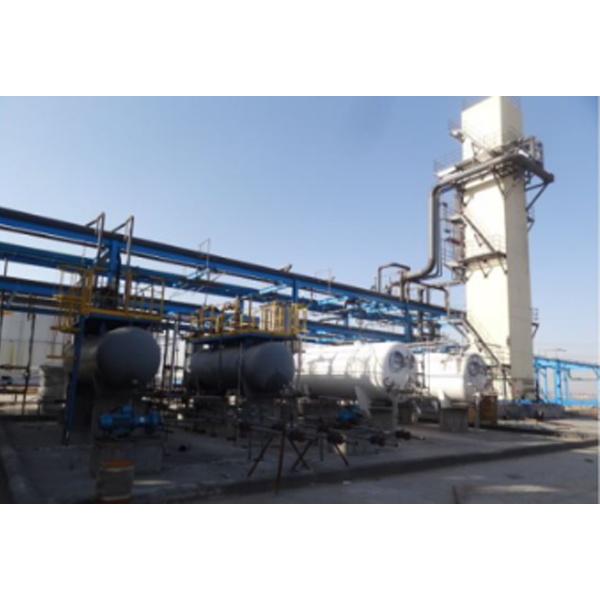
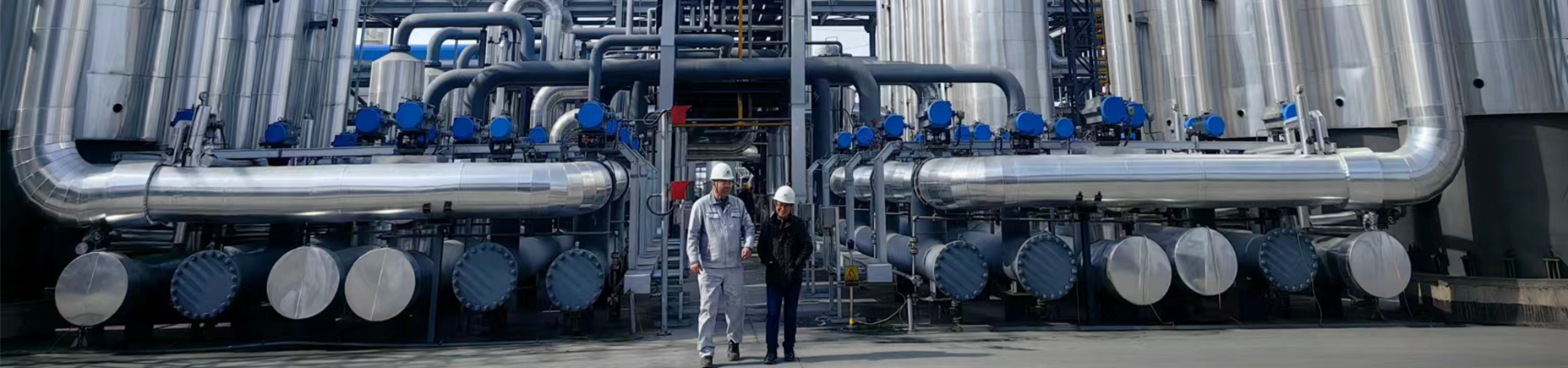
A striking example is Chengdu Yizhi Technology Co., Ltd. (https://www.yzkjhx.ru). This is a design institute established by Huaxi Technology back in 2013. Their profile is a full cycle: from the design of methanol steam conversion plants to their “turnkey” construction. Their plants for producing hydrogen from methanol operate not only throughout China, but are also supplied abroad. When they talk about export potential, they often mean precisely this aspect: the export of the technological chain, and not the hydrogen gas itself. This is a fundamentally important point.
Therefore, when the news writes “China exports hydrogen?”, concepts are often substituted. Technology, equipment, and engineering are exported. What about hydrogen itself? It's more difficult with him. Most of the hydrogen produced from methanol is consumed domestically at refineries, in the chemical industry, and in ammonia production. It is needed for the domestic economy.
Practical barriers to gas exports
And now about why not everything is so simple with sending hydrogen abroad. The first and most important thing is logistics. Hydrogen liquefaction is an energy-intensive and expensive process. Transportation in liquefied form requires special tankers with cryogenic temperatures. This is so far economically justified only for very large and long-term projects. An alternative is conversion to carriers, for example, methanol or ammonia, followed by transportation and reforming on site. But this adds steps, losses and costs.
The second barrier is standards and “greenness”. The European market, for example, is dividing hydrogen more and more strictly into “gray”, “blue?” and ?green?. Hydrogen from methanol, if the methanol is produced from fossil raw materials (coal or natural gas), is “grey”? hydrogen. Its carbon footprint is high. Demand for such hydrogen in premium markets will fall. So, you need to either use ?green? methanol (from biomass or synthesized using renewable energy sources), which sharply increases the cost of the product, or introduce carbon capture systems (CCS) to get “blue” hydrogen. Both are challenges for the economics of the project.
The third point is competition. The Middle East, Australia, Chile are actively developing green projects. hydrogen based on cheap solar and wind energy. Their future product may be more competitive in price and environmental friendliness than Chinese hydrogen from methanol, even “blue”.
What then is exported? Case of technology leadership
Let's get back to technology. This is where China really sets the tone. Companies such as the mentioned Chengdu Yizhi Technology Co. have a huge portfolio of completed projects. Their steam methanol reforming (SMR) plants are known for their high degree of automation, feedstock adaptability and energy efficiency. They don't just sell a reactor, they sell a complete solution with guaranteed hydrogen yield and purity parameters.
In my practice, I came across a project in Central Asia, where a Chinese contractor (I won’t name it) built a complex for producing hydrogen for a local refinery. The key argument in their favor was precisely the sophistication of the technology and the speed of commissioning. European proposals were more expensive and required a longer design cycle. The Chinese brought almost ready-made modules.
This is the main export product today: engineering services, know-how, equipment andhydrogen from methanolas a proven, reliable process chain. China is exporting the very opportunity to quickly and with predictable results set up hydrogen production. This is a huge market.
Outlook: Which way is the wind blowing?
Will China increase exports of gaseous or liquid hydrogen from methanol? My forecast is that in the medium term (5-7 years) this will be a niche story. The main directions are already visible. Firstly, supply to neighboring regions, where there is demand, but do not have their own capacities, through pipelines. Projects are being discussed with Russia and ASEAN countries. Secondly, the focus will shift to the export of energy resources based on hydrogen, ammonia or methanol, which are easier to transport using existing logistics.
But the main trend is the decarbonization of the chain. Projects will be developed where methanol is synthesized from captured CO2 and “green” CO2. hydrogen (e-methanol). Then the circle closes: ?green? methanol becomes a convenient carrier for the subsequent production of “green” or hydrogen. And this is where Chinese companies, with their experience in conversion and scaling, can get a second wind. They are already experimenting with such pilot projects.
A bet solely on “gray” may turn out to be a failure. hydrogen from coal-fired methanol for long-distance export. The global market is becoming increasingly sensitive to its carbon footprint. Tightening cross-border carbon regulations (such as CBAM in the EU) could make such exports economically unviable.
Conclusion for the practitioner
So is China the leading exporter of hydrogen from methanol? If by export we mean supplies of commercial gas in cylinders or tankers - not yet, and it is unlikely to happen on a massive scale in the coming years. Its domestic market is too large and voracious.
But if we talk about the export of competencies, technologies and ready-made industrial solutions for productionhydrogen from methanol- then here China is, of course, one of the global leaders, if not the most important. Their strength lies in their ability to quickly, efficiently and with a good price-quality ratio set up working production facilities. This is a lesson that many take to heart.
Therefore, when reading loud headlines, it is always worth clarifying: what kind of export are we talking about? About molecules or know-how? The answer to this question completely changes the picture. And it is in this diversification of approaches that the real strategic strength of the Chinese hydrogen sector lies. They cover all flanks: from cheap “gray”? hydrogen for its own industry to building modern plants for others and developing technologies for ?green? future.