China: LNG plants - new products?
2026-03-02
When they talk about Chinese equipment for LNG, many still think in stereotypes: they say they are catching up, copying, the price is low, but there are questions about reliability. But if you dig deeper into the last five to seven years, the picture begins to change dramatically. Not just ?new products? in the sense of a catalog, but rather a new approach to design and, more importantly, to adapting technologies to real, often non-ideal, operating conditions. This is not about revolution, but about evolution, which is visible only in detail and in practice.
From ?iron? to system solutions: where the real novelty lies
Previously, the focus was on individual devices - heat exchangers, expanders, tanks. Now, when communicating with engineers at sites, you hear more and more often about “circuit optimization?” and “scheme flexibility”. The novelty is not to invent a new type of refrigeration cycle, but to assemble known components into a system that, for example, tolerates fluctuations in raw gas composition or can operate efficiently at part load. This is a response to a request from places where gas fields are often shallow and the composition “floats”.
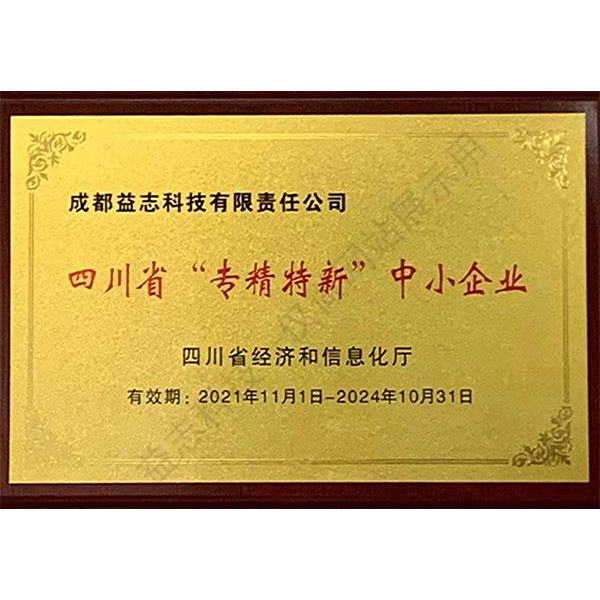
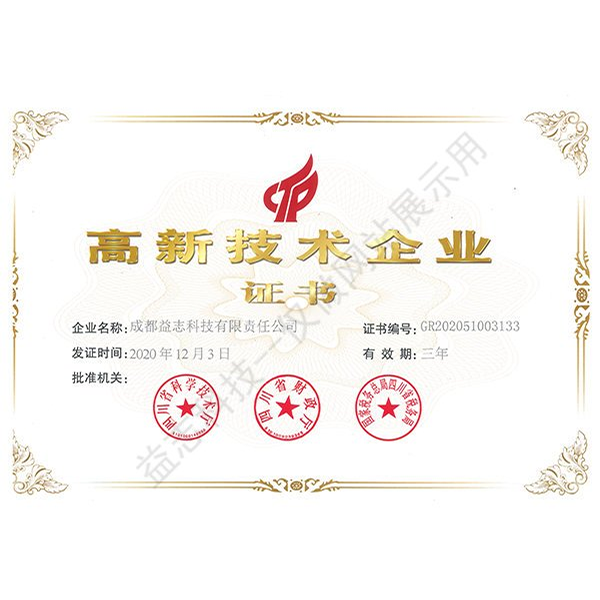
A striking example is modular installations of medium productivity. They are positioned as a product, but in essence it is packaged engineering. Chinese institutions, likeChengdu Yizhi Technology Co.(their website, by the way,https://www.yzkjhx.ru), reached an interesting level here. They don’t just sell blueprints, but test these modules on test benches, running them in different modes. A technologist I knew from one such institute once told me how they “tormented” me for six months. experimental module, artificially changing the pressure and dew point at the inlet, in order to then put smarter control logic into the controller ROM. This is no longer copy-paste, this is an applied modification for real tasks.
At the same time, it is often overlooked that the key challenge is not designing for ideal conditions, but for “how it will actually be?” For example, for working in regions with high seismicity or in permafrost conditions. Here, Chinese companies began to offer interesting details: not just reinforced supports, but calculation models that take into account not only static loads, but also fatigue stresses from periodic movements. This is the same “new product” - not in the unit, but in the package of documents and engineering solutions that are attached to it.
Implementation experience: between expectation and reality
Anyone who has been involved in commissioning knows that the gap between passport data and actual performance is the norm. There has been an interesting evolution in this regard with Chinese attitudes. About 8-10 years ago, the main headache was the compatibility of components from different subsuppliers. Let's say the management system from one company did not communicate well. with drive valves from another. This problem has now been largely solved through more rigorous engineering and proprietary test cycles.
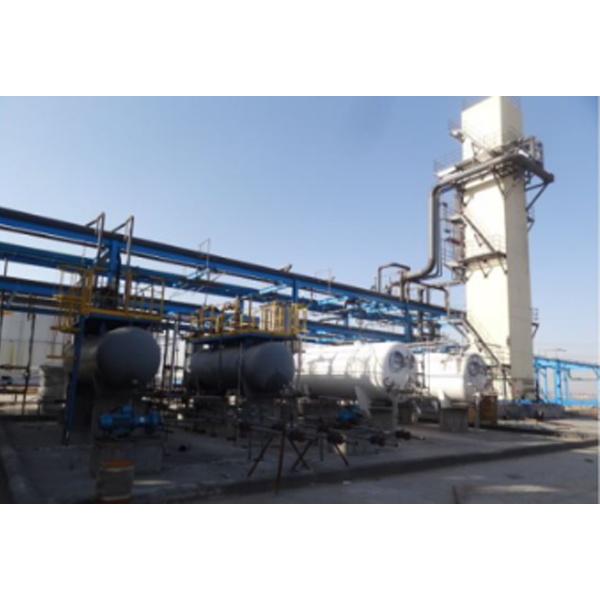
I will give a case with one low-capacity installation in Central Asia. The customer bought a standard module, but the raw materials turned out to have an unexpectedly high nitrogen content. The passport scheme was not designed for this. We had to change the settings of the distillation column and the temperature schedule on the fly, together with the visiting Chinese engineers. It was interesting to watch their work: they did not have a ready answer, they requested data, did a recalculation using their software (which, by the way, was their own development) and offered options. As a result, we reached a regime, albeit with a loss of 5-7% of productivity, but stable. Previously, most likely, they would have simply said “the gas does not comply with the technical specifications?” and would throw up their hands.
Another point is working with local personnel. In the past, instruction manuals were a weak point. Now the documentation has become better, but the main progress is in simulators for operators. Some suppliers, including the one mentionedChengdu Yizhi Technology Co., which is a design and development institute with a registered capital of 120 million yuan established by Huaxi Technology, began to supply the simulator program along with the installation. It can be used to practice normal and emergency modes. This incredibly increases the speed of putting a facility into operation and reduces risks. Such ?software? add-ons are a modern “new product”.
Where are the pitfalls? Unobvious difficulties
Despite all the success, problems remain, and they are systemic. The first is the long-term availability of spare parts. A Chinese manufacturer may produce an excellent centrifugal pump for cryogenic liquids today, but what will happen in 10 years if this line is discontinued? Guarantees of long-term support are still questionable. This is not a technical weakness, but a commercial and organizational weakness that is holding back many conservative customers.
The second is adaptation to local norms and standards. Let's say the installation is designed according to GB (Chinese GOST), and it will be built where compliance with ASME or EN is required. Translation of calculations and revaluation of materials is a huge layer of work that not everyone is ready to do efficiently. This often results in long approvals and delays at the permitting stage. I have seen projects where due to this the deadlines were delayed by a year.
And third, the simplest and most difficult is logistics and installation. Modules weighing hundreds of tons are not just boxes. They need to be delivered, unloaded, and installed with millimeter precision. Chinese companies have become good at making modules, but complex supply chain management abroad is often a risk area. Underestimating the condition of roads, the height of bridges, the lifting capacity of port cranes - all this can turn an advanced technological solution into a long-term construction project. Here the novelty of the product ends, and the harsh practice of international engineering begins, where experience is gained at a high price.
Looking to the future: where is development headed?
If we talk about trends, in addition to the obvious desire for greater energy efficiency, I see two interesting vectors. The first is digitalization, but not the kind for reporting, but applied. Implementation of IoT sensors for monitoring vibration, temperature in real time with predictive analytics. Some Chinese vendors already offer this as an option. The question is how good their data analysis algorithms are and whether they are trained on a large enough history of failures. For now it’s more marketing, but the direction is right.
The second vector is the development of installations for specific niches. For example, mini-LNG for refueling river and quarry transport, or installations for liquefying associated petroleum gas (APG) in small volumes. Here, at the intersection of technologies, where what is needed is not maximum performance, but maximum autonomy and simplicity, Chinese companies can get ahead. They have experience creating low-cost, functional control electronics, which is critical for such distributed solutions.
And of course, “green?” agenda. Hydrogen, biomethane - all this requires new liquefaction solutions. So far, most LNG plants in China are focused on natural gas, but in the research centers of major players, including institutes likeChengdu Yizhi Technology Co., work is already in full swing to adapt technologies for hydrogen mixtures. This is difficult from a materials (hydrogen embrittlement) and safety perspective. But the first person to bring this to a commercially viable project will have a huge advantage. For now, these are laboratory works, but behind them there is an eye on the market of the next decade.
Conclusions for practitioners: what to look for when choosing?
So are Chinese LNG plants new products? Yes, but with important caveats. Their novelty lies not in fundamental discoveries, but in engineering optimization, modularity and the growing maturity of the systems approach. For a practitioner when evaluating such a “product?” I would advise you to look not at the beautiful 3D model in the presentation, but at three things.
Firstly, for the availability and detail of pilot tests. Ask for a report not on whether the installation works, but on how it behaved when key parameters deviated from the norm. This will show the depth of development.
Secondly, on the composition and experience of the team that will lead the project from the supplier. Do they have a dedicated support engineer who understands not only their part but also related areas? How did they solve non-standard problems at previous sites? Project history is the best indicator.
And thirdly, the willingness and ability to adapt the project to your specific conditions, and not sell you a “boxed” product. solution. The willingness to recalculate, modify, and conduct additional tests is what distinguishes a modern supplier from an iron dealer. In this sense, design institutes with a serious research base, like the mentioned company, often turn out to be more flexible partners than large assembly-line-oriented manufacturing plants.
As a result, the market ceases to be black and white. ?Chinese? - is no longer a synonym for “secondary”. This is becoming a separate segment with its own development logic, where value is created through the speed of iteration, digitalization of the service and the willingness to take on complex, non-standard tasks. And this, perhaps, is the main novelty.