China: hydrogen from coke oven gas - prospects?
2026-03-01
Hydrogen from coke oven gas sounds like an obvious idea, right? Especially in China, where coke chemistry is not just an industry, but a whole layer of industrial culture. But when you start digging into it, you realize that there is something between the “obvious idea?” and real, cost-effective and safe practice - a chasm. Many people immediately imagine a pure hydrogen stream and green certificates, forgetting about CO, hydrogen sulfide, tars and the fact that coke oven gas is primarily a fuel for the coke plants themselves. Taking this gas away from them means rebuilding the entire energy production system. It’s perhaps worth starting with this paradox.
Not just a by-product: the reality of coke oven gas
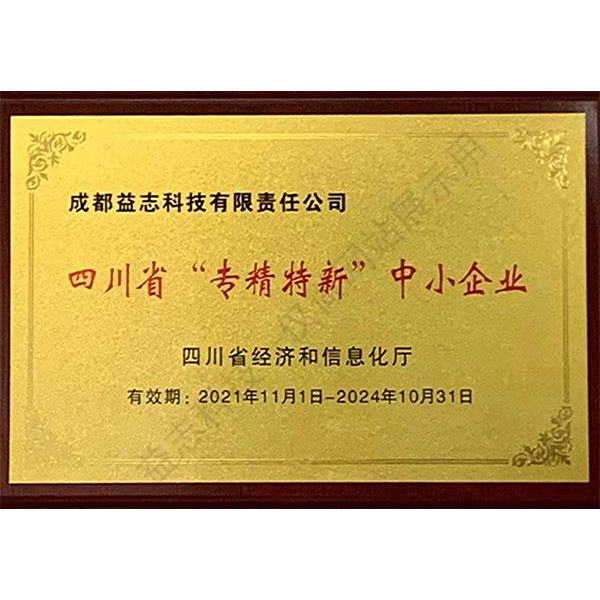
Working on projects in cooperation with institutions likeChengdu Yizhi Technology Co.(this is their website, by the way,https://www.yzkjhx.ru- a useful resource on separation technologies), you constantly come across the same request from metallurgists: “Yes, we have gas, but we don’t have enough for our own needs?” And this is the key point.Coke gas- not “waste”, which is simply waiting for disposal. This is a calibrated energy carrier, which is used to heat coke oven batteries, dry coal, and sometimes generate steam. Its composition is about 55-60% H2, 25-30% CH4, the rest is CO, N2, heavy hydrocarbons and impurities. Initial heating value is important for the process cycle.
Therefore, the conversation about hydrogen begins not with “how to isolate it?”, but with “how to compensate for the energy balance?”. If you take gas tohydrogen, you need to offer something in return - say, reconstruct furnaces for natural gas or introduce heat recovery. These are capital costs that immediately eat up part of the project’s economics. At one of the factories in Shanxi I saw an attempt to install a membrane unit for selecting hydrogen directly from the general network. It seems that everything was calculated, but they did not take into account fluctuations in pressure and gas composition when changing batches of coal. The membranes quickly coked and the project was frozen. The experience is expensive, but revealing.
And one more thing about the composition. In addition to the main three (H2, CH4, CO), there is naphthalene, hydrogen sulfide, and hydrogen cyanide. Any installation for hydrogen recovery - be it pressure-cycle adsorption (PSA) or membranes - requires deep and multi-stage cleaning at the inlet. Otherwise, the catalysts are poisoned and the membranes fail. Standard chain: cooling, electrostatic precipitators, resin removal, then desulfurization. It’s not just “installing a filter”, it’s a whole chemical workshop. And its cost often comes as a surprise to customers who thought only about the PSA unit.
Technology Crossroads: PSA, Membranes or Something Else?
China has historically gravitated more towards short cycle adsorption (SCA). The reasons are clear: the technology has been proven, it makes it possible to obtain hydrogen with a purity of 99.999% and higher, and along the way it is possible to isolate the methane-hydrogen fraction. Such installations, for example, are designed and supplied byChengdu Yizhi Technology Co., Ltd.— this design institute created by Huaxi Technology has solid experience in gas separation. I saw their installations in operation - they are reliable, but require proper operation. The key point here is the correct selection of adsorbents for a specific gas composition and the ability to work with residual gas (raffinate).
But CCA is not a panacea. The installation is bulky, energy-intensive (compressors are needed to create pressure), and requires high-quality automation to switch valves. For small gas flows it can be unreasonably expensive. This is where membrane technologies come into play. They are more compact and easier to operate, but there is a nuance: the purity of hydrogen at the output rarely exceeds 99% in one pass, and strongly depends on the pressure and composition of the raw material. For many applications - for example, for hydrotreating in the petrochemical industry - this is enough. But if you need ultra-pure hydrogen for electronics or fuel cells, you cannot do without subsequent purification.
An interesting hybrid approach, which is currently being tested at several sites, is a combination of membrane pretreatment and PSA. The membranes remove bulk hydrogen, reducing the load on the more expensive adsorption unit. This seems logical, but in practice difficulties arise with synchronizing the operation of two systems with different dynamics. For now these are rather pilot solutions. Personally, I tend to believe that the choice of technology is always a compromise between the required product purity, available capital and the qualifications of local personnel. Sometimes it is easier and cheaper to supply two stages of membranes of different selectivity than one complex PSA.
Where to put this hydrogen? Market vs. domestic consumption
So we isolated hydrogen. And what? The easiest way is to use it at the same plant or at a neighboring production. The coke industry has its own hydrogenation processes, and oil refining has its own hydrotreating processes. This is the best option, minimizing logistics and costs for compression and storage. But often the allocation capacity exceeds local needs. Then the question arises about entering the foreign market.
And here the most difficult part begins. The hydrogen market in China is just emerging. Transportation infrastructure (pipelines, pressurized tankers) is sorely lacking. The cost of transport over 200 km may make the product uncompetitive compared to locally produced steam methane reforming hydrogen. Therefore, many projectshydrogen from coke oven gastoday they are tied to the creation of local clusters: a coke plant + an oil refinery + possibly a chemical enterprise. Geography is everything.
Another potential consumer is steel production. Experiments are underway to use hydrogen in blast furnaces to partially replace coke. But these are technologies of the future, still in their infancy. A more realistic scenario is to direct hydrogen to synthesize ammonia or methanol, if there are corresponding production facilities nearby. But here again we come up against economics: the cost of hydrogen from coke oven gas, even taking into account all the purification costs, is lower than from natural gas. This is his main trump card. But this advantage can only be realized if there is a reliable and stable distribution channel nearby.
Economics and pitfalls: what is not written in presentations
In feasibility studies, everything looks smooth: low cost of raw materials (gas is “free”), growing demand for hydrogen, government subsidies for “green” gas. technologies. Reality is harsher. First of all, it's ?free? raw materials. As I already said, gas extraction is a loss of fuel. We need to consider the real opportunity cost of this gas for the plant. Sometimes it turns out that it is more profitable to sell the coke oven gas itself to a neighboring plant as fuel than to invest in an expensive hydrogen separation plant.
Secondly, capital costs. A full-fledged complex - from cleaning to compression - costs tens of millions of dollars. The payback period highly depends on the final price of hydrogen, which is very volatile. Thirdly, operating costs. Replacing adsorbents, membranes, reagents for removing sulfur, energy for compression - this is a constant cash outflow. I saw a project where, due to the high content of hydrogen sulfide, it was necessary to install an additional oxidative desulfurization stage, which killed all profitability.
And the main stumbling block is stability. Coke production is cyclical. There are planned shutdowns for battery repairs, and there are fluctuations in the quality of coal. The composition and quantity of gas is not constant. The hydrogen installation must be flexible and resistant to such fluctuations, and this is a complex and expensive automation. Not all technology manufacturers take this into account when selling “standard” ones. solutions. ExperienceChengdu Yizhi Technology Co.is valuable here precisely because, judging by their projects, they are deeply immersed in the specifics of coke-chemical production, and do not offer abstract installations.
Looking ahead: is there light at the end of the tunnel?
Despite all the difficulties, the direction has prospects. There are several drivers. The first is the “dual carbon neutrality” policy. in China. It forces us to look for any opportunities to reduce our carbon footprint.Hydrogen from coke oven gasis the utilization of a by-product to produce low-carbon (not to be confused with “green?”) hydrogen. This is better than flaring the gas or simply using it as fuel without purification. Carbon credits or other preferences may appear.
The second driver is the development of hydrogen energy and mobility in certain regions. If a network of hydrogen filling stations is created in the provinces of Shanxi or Hebei, where the main coke-chemical capacities are concentrated, then local production from coke oven gas will become strategically important. For now these are targeted initiatives.
The third factor is technological. Cheaper and impurity-resistant membranes, adsorbents with a larger capacity, and effective cleaning methods are appearing. Process energy consumption is reduced. This improves the economy. But the fundamental conclusion, based on practice, is this: successful will not be the project that simply technically extracts hydrogen, but the one that is initially built into a comprehensive scheme for energy and resource supply of the entire industrial cluster, with a thoughtful balance and reliable sales. This is a complex system task, not just purchasing equipment. And it is in this systematic approach, it seems to me, that the main prospect for hydrogen from coke oven gas in China lies.