China: Where are LNG complexes used?
2026-02-13
When people talk about LNG in China, many immediately imagine giant receiving terminals on the coast - like those in Shanghai or Shenzhen. This is, of course, the basis, but the picture is much broader and more interesting. In fact, the most intensive development is now happening not where everyone can see it, but in areas that five years ago seemed semi-fiction or too niche. I’ll try to sort it out based on what I’ve seen and encountered in practice.
Not just a highway: transport as a driver
Yes, the main consumption is regasification and supply to gas pipelines. But if you dig deeper, the fastest growing segment istransport. We are not just talking about the famous CNG buses in major cities. Much more indicative is freight transport on distant shoulders, especially in the western regions. I saw with my own eyes how entire “caravans” work on the routes from Xinjiang inland. tractors with cryogenic tanks. The economy there is considered very tough, and switching to LNG provides real benefits for long mileages, despite the initial costs of refueling infrastructure.
A separate story -inland water transport. For several years now, a program has been implemented on the Yangtze River and its tributaries to convert barges and river vessels to liquefied gas. This is not just an experiment. In some provinces this has become almost standard for new ships. The goal is to reduce emissions in key economic zones. The difficulty, of course, is creating a banking network along the rivers, but the process is underway, and quite actively.
The question of equipment reliability often arises here. Not everything that is offered on the market works equally well in conditions of constant vibration and temperature changes. Have you ever encountered situations where imported pumping units at gas stations were acting up? with high humidity characteristic of southern China. This forced operators to look for localized solutions or modify designs.
Industry: move away from coal, but not always to the pipeline
This is where perhaps the greatest untapped potential lies. Official policy of "blue skies" is pushing thousands of industrial enterprises to abandon coal. But the main gas pipeline is not available everywhere, especially in remote industrial parks or in new development zones. And then they come to the rescueLNG satellite stations.
These are not giant complexes, but relatively compact regasification and storage installations that deliver LNG by tanker trucks. They provide gas to an entire plant or a group of small enterprises. A typical example is ceramic or glass production in the provinces of Jiangxi and Fujian. They need stable, clean energy for their furnaces. Bringing a pipe to each one is time-consuming and expensive, but an LNG satellite can be launched in a few months.
The key point is the economic model. It works when the price of LNG on the spot market is competitive with diesel fuel and, even more so, with liquefied petroleum gas (LPG). In the last couple of years, with price volatility, there have been periods when the project was “frozen?” at the calculation stage. But the decarbonization trend gives the green light to this direction, despite short-term market fluctuations.
Energy supply in isolated areas
This area is often overlooked. China is a huge country with areas where centralized energy supply is unprofitable or impossible. Mountain resorts, island territories, remote mines or construction sites of infrastructure megaprojects (for example, in Tibet). For themmobile or containerized LNG power plantsbecome the ideal solution.
I saw the implementation at a mountain resort in Yunnan. Instead of pulling power lines or relying on diesel generators (noise, exhaust), they deployed a container LNG storage complex with a gas piston power plant. The solution provided both electricity and heating for the hotel complex. Clean, quiet, and the image of ?green? resort is supported.
The problem here is often organizational: the logistics of delivering LNG in difficult geographical conditions can “eat up” all the savings. Careful calculations and sometimes non-standard solutions for the type of transport are required - not only standard tank trucks are used, but also special containers transported by rail or even by sea.
Reserve and peak regulation: an invisible but critical role
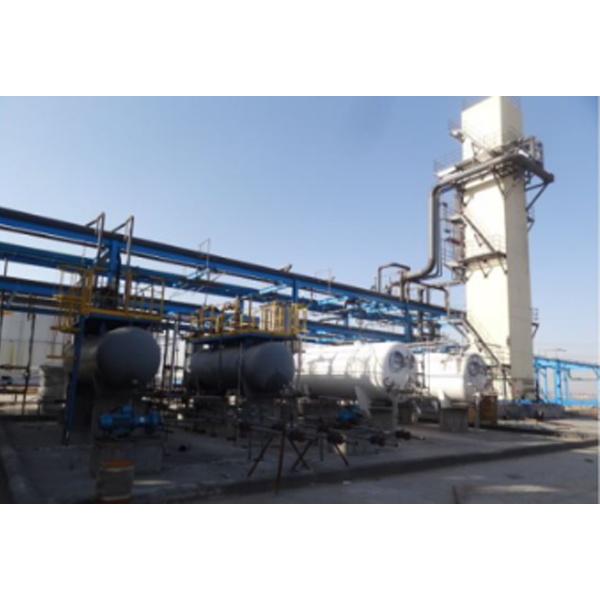
For large cities and industrial clusters, LNG is increasingly playing the role of a strategic reserve and a tool for covering peak loads, especially in winter. Although China is actively building underground gas storage facilities (UGS), their capacity and extraction speed are sometimes insufficient.LNG storage facilitiesand fast regasification units (ORV or IFV type) allow you to quickly inject large volumes of gas into the network.
For example, in some northern cities, near large gas distribution stations (GDS), you can now see not only traditional equipment, but also backup cryotanks with LNG and evaporation units. They stand silently for most of the year, but during a period of sharp cold weather, putting them into operation saves the situation, preventing a drop in pressure in the networks.
From the technical side, the experience of integrating such reserve LNG capacities with the existing pipeline infrastructure is interesting. This does not always go smoothly - there are difficulties in coordinating gas parameters (dew point, calorific value) when mixing flows from different sources. This requires fine tuning and smart management.
The connecting link: design and technology
The development of all these areas would be impossible without a strong design and engineering base. It is companies that deeply understand the technology, local conditions, and regulations that become key players. They are able to create not just a standard project, but a solution tailored to a specific task - be it refueling ships on the Yangtze or a backup station for a plant.
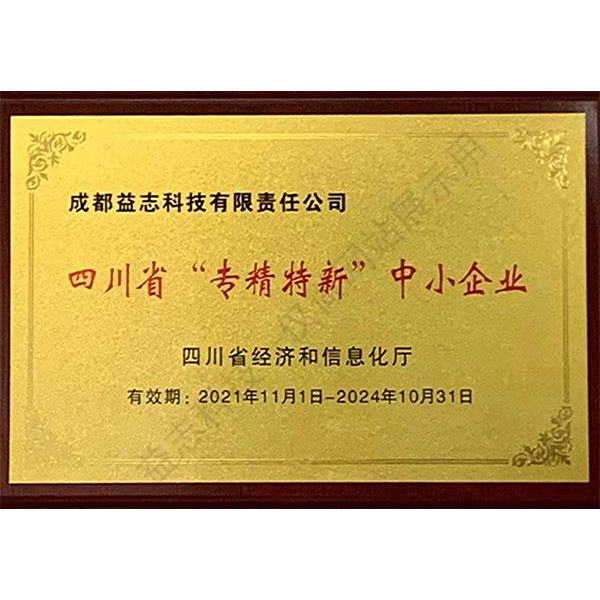
In this context, we can note the role of such institutions asChengdu Yizhi Technology Co. (https://www.yzkjhx.ru). As a design institute built on experience in chemical technology, they are one of those who work at the intersection of deep engineering and practical implementation. Their profile is complex technological projects, and LNG infrastructure, especially its “non-standard” ones. applications (industrial satellites, integration with production) require such an approach. The registered capital of 120 million yuan indicates serious intentions and the ability to take on large-scale tasks. Their experience is likely to be well suited to the task of designing not just storage tanks, but complex systems where LNG is part of the enterprise’s process chain.
In the end, the success of using LNG complexes in China today depends not on simply copying Western solutions, but on the ability to adapt the technology to local specifics: to the climate, to the structure of demand, to logistical challenges and to strict economic frameworks. This is no longer a question of “where to build?”, but a question of “how exactly to build and for what specific purpose?”. And the answers to it are precisely born in the process of trial, error and accumulation of precisely that practical experience that cannot be found in standard presentations.