China: new methods for liquefying LNG?
2026-02-13
When you hear about new methods in Chinese LNG, you immediately think about breakthrough technologies or secret developments. But often behind the loud headlines lies the usual, painstaking work of adapting and optimizing known processes to local realities. It is this kitchen that we will talk about - not about sensations, but about how it looks from the inside, adjusted for the specifics of raw materials, logistics and... the Chinese approach to engineering.
Where does the legs of novelty come from?
Many colleagues from abroad expect China to introduce something radically different, like a completely new liquefaction cycle. Not yet. The main focus is the deep modernization and hybridization of existing technologies, primarily cascade and mixed refrigerant cycles. Why? The answer is banal: you need to quickly increase capacity, and experiments with completely new physics of the process involve huge risks and time. Time is something China often doesn't have, given the rate at which gas demand is growing.
But here's where it gets interesting. The novelty often lies not in the process itself, but in its binding. For example, in adapting installations to a wider range of incoming gas composition. After all, we have gas coming from fields in Xinjiang, through pipelines from Central Asia, and in the form of imported pipeline gas. The composition is dancing. Therefore, the key task is to make the process more flexible and resistant to fluctuations. This results in fine tuning of heat exchangers, control algorithms, and selection of refrigerants. This does not sound loud, but in practice it is a colossal amount of computational and experimental work.
I remember one project where they tried to use a standard scheme for gas with an unexpectedly high nitrogen content. On paper everything matched, but at the commissioning stage the efficiency dropped. We had to adjust the profiles in the main air-cooling units on the fly, and spent almost days working with the engineers on the controller logic. As a result, we reached the parameters, but with a loss in the overall productivity of the line. Such combat situations are the source of those very new developments, which are then replicated to other objects. This is not a patent for a new method, but rather a bank of solutions for non-standard situations.
The role of engineering: between Western licenses and local specifics
Here we cannot fail to mention the role of design institutes. Many key technologies are licensed - from Air Products, Linde, Shell. But simply buying a license is not enough. It needs to be planted on a specific site, taking into account local standards, climate, availability of equipment and personnel qualifications. This is where the real field of activity for local engineering companies unfolds.
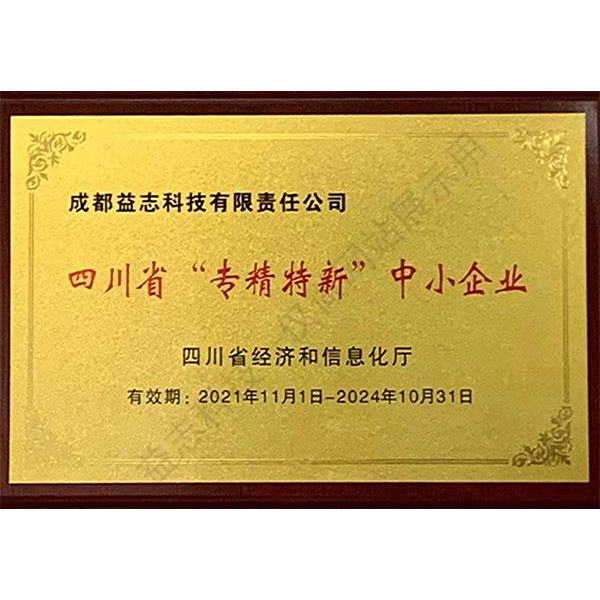
Let's take, for example,Chengdu Yizhi Technology Co.(their website ishttps://www.yzkjhx.ru). This is a typical example of a strong regional player. The company was established in 2013 as a design institute under the technology company Huaxi, with a solid registered capital. Their strength lies not in creating their own liquefaction cycles from scratch, but in their deep competence in the complex implementation of projects. They can take the licensed core and build the entire infrastructure around it: from gas preparation andliquefactionto storage and loading systems, and with a strict link to Chinese standards and equipment supply chains.
In practice, it looks like this: a Western partner provides a basic technology package and, possibly, key heat exchangers. And everything else - compressor stations, cleaning systems, automation, construction part - falls on the shoulders of local engineering. And here the same new methods are often born in a broad sense - methods of integration, methods of reducing capital costs through localization, methods of accelerating construction. Sometimes these methods lead to problems at the operational stage, but more often they allow quite complex objects to be put into operation in a short time.
Focus on energy efficiency and digital
If there is one area where China is actively trying to get to the forefront, it is energy optimization. Liquefaction is an extremely energy-intensive process. Even a small increase in efficiency at a large terminal results in enormous savings. Therefore, huge amounts of money and effort are invested in digital modeling of processes, predictive analytics and smart management.
At one site in Guangdong province, I saw the implementation of a system that analyzed tens of thousands of parameters in real time, predicted the load on compressors and suggested that operators adjust the mode to operate at the point of maximum efficiency. From the outside it looked like an ordinary SCADA interface, but behind it were years of data accumulation and model training. This is not a revolutionliquefaction methods, but a revolution in their management. The result is a reduction in specific energy consumption by several percent. On a national scale, there are gigantic savings.
However, there are pitfalls here too. Digital requires high-quality data and competent specialists. There have been cases where an expensive optimization system was simply turned off because operational staff did not trust its recommendations or did not understand them. The implementation of such solutions is always a battle not only with technological, but also with human factors.
Equipment: the race for localization
Another driver of change is the desire for maximum localization of critical equipment. Reliance on imported turboexpanders, specialty pumps or high-efficiency heat exchangers is a vulnerability in terms of logistics, cost and timing. State policy strictly encourages the use of domestic analogues.
This leads to an interesting effect. On the one hand, truly competitive Chinese manufacturers are emerging, capable of making, for example, large heat exchangers forLNG liquefaction. On the other hand, not everything goes smoothly. I remember a story with a series of centrifugal pumps for cryogenic service from one local plant. During testing, everything was perfect, but in real conditions, after several months of work, problems with vibration began. It turned out that the seal material did not behave quite correctly during long cold-heat cycles. We had to urgently look for a compromise: install imported seals on a Chinese pumping unit. Such hybrid solutions are now common practice.
Localization is not an instant process. This is a process of trial and error, which, however, directly affects the architecture of new projects. Engineers, already at the FEED (preliminary design) stage, are forced to consider the possibility of using several options for key equipment, calculating the risks and consequences for the entire technological cycle.
What's in the bottom line? A look into the near future
So are there new methods? If we talk about fundamental physical and chemical principles - not yet. China is following the path of confident catching-up development, mastering, adapting and improving global experience. But the novelty in the Chinese context is the novelty of scale, speed and integrated approach.
The main trends of the coming years are already visible. Firstly, this is the further hybridization of technological chains for working with unconventional gas sources, including associated petroleum gas and biogas. Secondly, the emphasis on mobile and modular solutions of lower power to supply remote areas - here we can expect more experimentation with loops. And thirdly, total digitalization and robotization to reduce operating costs.
Will there be a breakthrough? Perhaps, but it will mature not in academic laboratories, but at the intersection of practical problems, powerful government orders and the growing competencies of engineering companies likeChengdu Yizhi Technology Co.. Their experience, accumulated in the implementation of dozens of turnkey projects - from foundation to commissioning - is the very new method: a method for quickly, flexible and pragmatic expansion of national gas liquefaction capacities under strict time and cost requirements. This is not as romantic as the opening of a new cycle, but for the industry here and now it is much more important.