China: new LNG technology for export?
2026-02-13
When you hear about “new Chinese LNG technologies,” the first thought is again marketing, again promises. We've all seen those presentations with beautiful graphs. But if you dig deeper, especially in the context of export ambitions, the picture becomes much more interesting and not so clear-cut. This is not about a breakthrough at one point, but about a comprehensive, sometimes chaotic, build-up of competencies along the entire chain - from liquefaction to logistics and final application. And there are nuances here that are often overlooked in general reviews.
Not just large installations: where real experience comes from
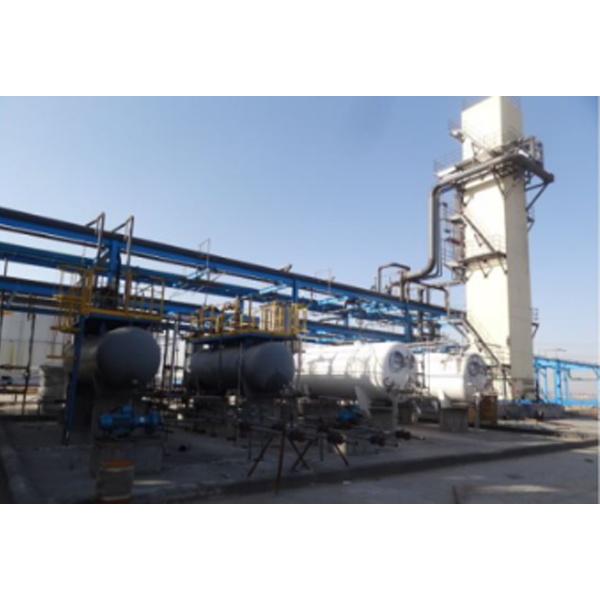
Everyone is talking about mega-factories like those in Shenzhen or Qingdao. Of course, they are the face of the industry. However, my practical interest has always lay away from the giants - in the field of medium and small solutions, modular liquefaction plants. This is where, in my opinion, many technological approaches are tested and then scaled up or, conversely, rejected. This is a testing ground for engineering.
I remember one project several years ago - the supply of equipment for liquefying associated gas at a remote field. Not for export, for domestic use. The task seemed standard. But it was there that they encountered the fact that Chinese compressors, declared as an analogue of Western ones, behaved capriciously in a specific climate and with an unstable composition of raw materials. We had to modify the cleaning and automation system on the go. It was a valuable, if expensive, lesson. He showed that even with ready-made technology licenses, adaptation is an art in its own right, and China is learning this quickly, through trial and error.
Now this experience has transformed. The same companies that were then making their mark at domestic facilities now offer already “tested” ones. modular solutions for Asia and Africa. It's not always revolutionary, but it's often reliable and, critically, with a full package of service and training. Export technology as a service, not just equipment.
Focus on chain efficiency, not just liquefaction
Talking aboutLNG export, many people get hung up on the efficiency percentage of a liquefaction plant. This is important, but the entire subsequent chain is no less important. The Chinese understood this perfectly. Their activity in the construction and modernization of regasification terminals around the world is not just an investment in infrastructure. This is a way to deeply study the requirements of different markets for the final product.
For example, specifications for calorific value, composition, line pressure. Receiving this data from the “receiving” On the other hand, engineers can also optimize liquefaction technology “at the start”. It turns out to be a closed cycle. I saw how specialists from a Chinese design institute, likeChengdu Yizhi Technology Co.(this, by the way, is a subsidiary of Huaxi Technology, with a registered capital of 120 million yuan), analyzed in detail the operating reports of one terminal in Southeast Asia in order to propose modifications for a new turnkey plant in another region.
Their websiteyzkjhx.ru, by the way, is quite ascetic, but it is clear that it is tailored to a professional request - there are sections on specific technological blocks, and not just general words. This is typical for many actually working engineering companies from China now - a minimum of pathos, a maximum of business. They don't just sell, they integrate into the customer's process.
Intermediate links: storage and transportation
A separate story is small and medium-sized containers for storage and transportation. Cryogenic tanks, ISO containers. Here progress is noticeable to the naked eye. If previously the main challenge was vacuum insulation and its durability, now the focus has shifted to real-time monitoring and safety systems. Chinese manufacturers, drawing on their vast experience in related industries (shipbuilding, heavy engineering), offer very competitive solutions. But again, the key word is “competitive”, not “advanced”. Their strength is often in the optimal ratio of price, quality and service life for specific, not always ideal, operating conditions.
Raw material flexibility as a competitive advantage
Another point that rarely makes headlines, but which is extremely important for the export of technologies, is working with unconventional or “dirty” ones. raw materials. Many potential markets for Chinese technology exports are deposits with high levels of CO2, nitrogen or sulfur compounds.
China, with its own complex fields, has actively invested in pre-treatment and separation technologies. Therefore, now their offer often includes not just a liquefaction unit, but an entire preliminary process flow. This is a serious argument. I know cases where winning a tender was ensured precisely by the willingness to take on the entire complex of gas treatment, and not send the customer to another supplier of cleaning equipment.
True, there are problems here too. Sometimes the desire to pack everything into one contract leads to the fact that the project uses not the most suitable, but “our own” ones. or cheaper solutions for some minor nodes. This then results in increased operating costs for the client. But the market is teaching us that contracts now increasingly contain strict requirements for long-term performance indicators, and not just for the delivery price.
Regulations and standards: the invisible barrier
But this is perhaps the most difficult thing. You can have excellent technology, but if it is not integrated into the system of international standards and, more importantly, into the standards of a particular host state, the project will stall. Chinese companies have come a long way from completely ignoring this aspect to becoming painfully aware of it.
Now on large projects they almost always work in consortium with Western engineering companies or actively hire certified international inspectors. But for medium and small projects this places a heavy cost burden. I saw how an entire direction for the supply of small LNG plants to one Latin American country was frozen for a year and a half only because of the coordination of environmental and industrial safety issues. It turned out that local noise and emissions regulations are interpreted completely differently.
This is the area wherenew technologymust be not only effective, but also “paper?”. There is progress here too, but it is uneven. Some, like Chengdu Yizhi Technology, judging by their projects, focus on this, immediately offering documentation for different standards. Someone still hopes to reach an agreement “on the spot”.
What's in the bottom line? Not a “breakthrough”, but a sustainable evolution
So is there a new technology to export? If you're waiting for a single stunning invention that will turn the market upside down, then most likely not. But if you look at the technology as a complex - from the well to the end consumer - then yes, it is being formed and is already being exported.
Its essence is not in fantastic efficiency, but in flexibility, adaptability and complexity. The ability to assemble a reliable, often not the most advanced in every component, but well-balanced system, for specific, sometimes very complex, customer conditions. And back it up with a full package of services, financing and training.
Will they be world leaders? In some niches, yes, especially in the segment of small and medium-sized capacities and in logistics solutions. In large, flagship projects, they are still catching up, but they are catching up very quickly, learning from their own and others’ mistakes. The main thing is that they have two powerful drivers: a huge domestic market for testing and a clear understanding that the future lies in the export of not only gas, but also competencies. And this is stronger than any single “new technology?”.