China: leader in LNG plant technology?
2026-02-13
When you see this headline, the first thought is again these loud statements. Everyone is now a “leader”. But if you put aside the hype and dig into the details of design, procurement and construction, the picture becomes much more interesting and not so clear-cut. Yes, Chinese companies have come a long way, but leadership is not only about scale, it is about technological depth, adaptation and, what is often missed, about the ability to work in conditions where others give up.
From ?iron? to the process: evolution of the approach
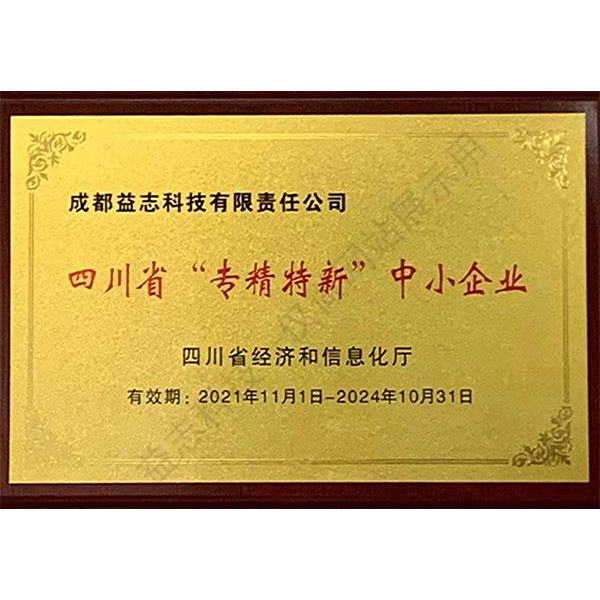
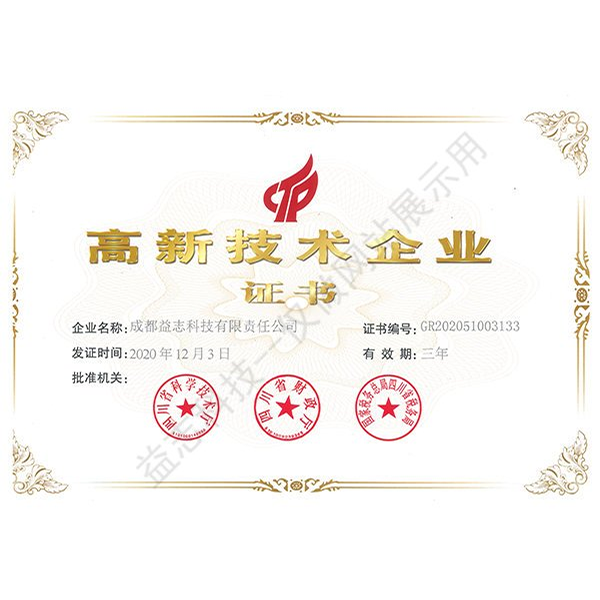
Previously, the focus was on equipment. Buy a license, assemble, launch. Now, looking at the latest projects, we can see a shift towards integrated technological solutions. This is not about copying, but about deep adaptation. Take, for example, low-temperature liquefaction technologies. Chinese engineering companies such asChengdu Yizhi Technology Co.(their portfolio can be viewed athttps://www.yzkjhx.ru), are actively working on optimizing classical cycles such as mixed refrigerant (MRC) for specific feedstock parameters. Not an ideal gas from a landfill, but a real one, with composition fluctuations.
This is where the first nuance lies. Many people think that success is super-efficient thermodynamics. In practice, the key often becomes ?non-heroic? work: system integration, refrigerant management, design for specific climate zones. In Siberia and the Far East, the requirements for materials and logistics are completely different. Chinese designers quickly learned this.
I had experience in one of the medium-power projects, where a standard solution was initially planned. But the analysis showed a high nitrogen content in the gas. We had to revise the pre-cleaning scheme and the configuration of the heat exchangers on the fly. This is not a breakthrough innovation, it is precisely the same practical work that determines the reliability of the plant. And such cases in the briefcaseChengdu Yizhi Technology- not uncommon, as can be seen from their realized objects.
Speed vs. Quality: Debunking the Myth
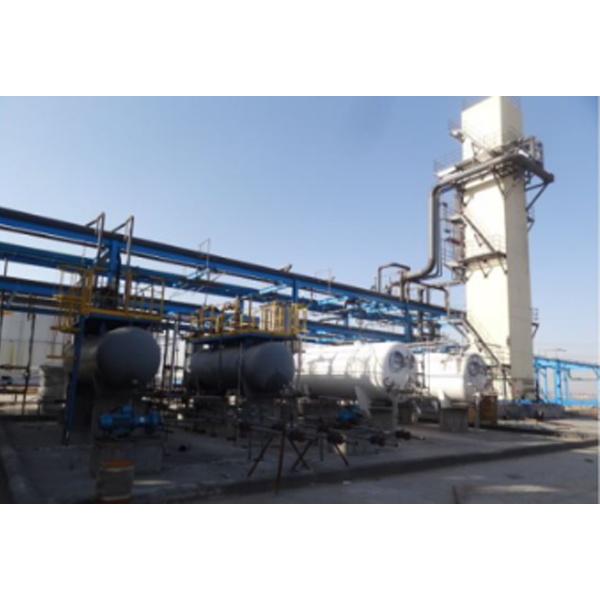
There is a persistent stereotype: Chinese companies win only on speed and price, sacrificing quality. This is a dangerous oversimplification. Yes, the speed of construction is impressive, but it is based on something else - total modularization. Almost the entire plant is divided into blocks, which are assembled at shipyards in parallel. This reduces risks and costs at remote sites.
But this is not without problems. I remember the story with the delivery of a cryogenic cleaning module. On paper, everything is perfect, but when joining on site, discrepancies were discovered in the flange connections - the standards are different. Trifle? On paper yes. There was a week of downtime and negotiations at the industrial site. This is the price you pay for global supply chains. Now many, includingYizhi Technology, are setting up local assembly and inspection centers closer to their markets to catch these things earlier.
The quality of materials, especially steels for cryogenics, is now at the level. Competition forces. The question is different: the depth of expertise. For example, in dynamic simulation of plant operation at partial loads or in rapid restart after shutdown. There is still room for growth, and Chinese engineers recognize this, actively gaining experience in operation, and not just construction.
Local solutions for global calls
The true test of technology is in non-standard conditions. Small-scale LNG plants, floating units (FSRU), use of associated gas in remote fields. This is where Chinese players show flexibility. Their approach is often less dogmatic than that of Western veterans.
Let's consider small liquefaction plants. Not the large-scale savings of 5 million tons per year, but the need to make a project of 50-100 thousand tons profitable. Here, Chinese companies are experimenting with simplified cycles, nitrogen expansion, and combinations with energy generation. It doesn't always come out perfect the first time. There was a project where an attempt to use a locally produced turboexpander resulted in vibrations and constant shutdowns. I had to return to proven but expensive imported solutions. This is an important lesson: you cannot rely only on the internal chain for everything.
But there are successful cases. The same mobile installations for APG recycling. They may not be the most efficient in terms of specific energy consumption, but they work and solve a specific customer problem here and now. This is a pragmatism that is highly valued in emerging markets.
Engineering as a system, not a set of services
This is perhaps the main difference between the modern Chinese approach. Previously, it was a sale of ?boxed? solutions. Now we offer a full cycle, from FEED to commissioning and training. And what is critically important is with a focus on the life cycle of the object.
Let's take a design institute as an exampleChengdu Yizhi Technology Co., Ltd.This is not just an “office with drawings”. It is a structure established with a registered capital of 120 million yuan for in-depth project work. Their strength is their ability to carry out Detailed Design, taking into account all local regulations, which is invaluable for international projects. They can adapt the technology to the requirements of a specific customer, and not just say: “Here is our standard scheme, take it or leave it?”
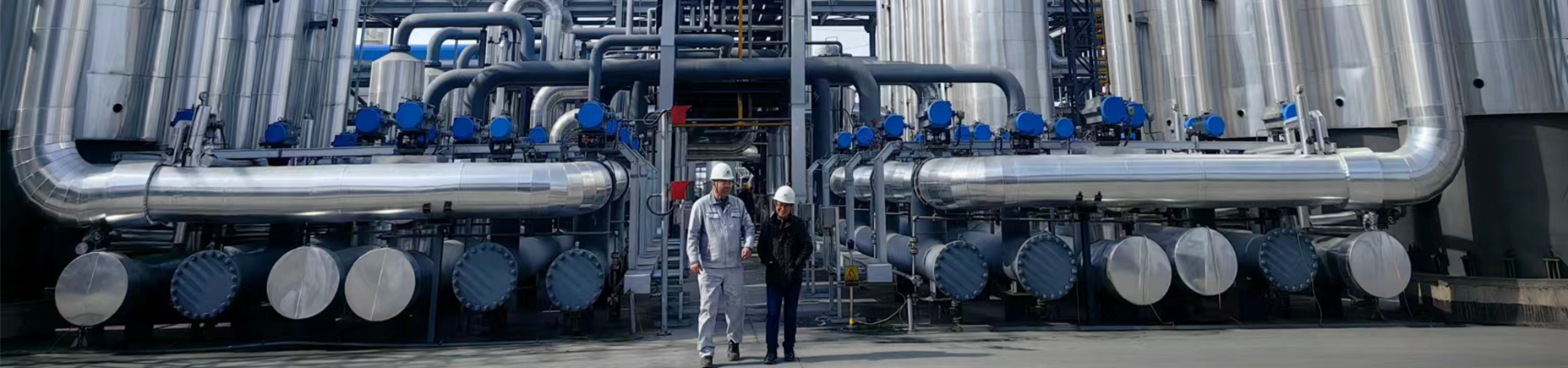
In practice, this means that their engineers can spend months on site solving integration problems. I saw how they redid the wiring diagram of the refrigerant pumps right “in the field”, because the geodesy gave a discrepancy of half a meter. This is the very “practice” that distinguishes a real contractor from a license seller.
However, there are also systemic weaknesses. There is often a lack of experience in long-term maintenance and modernization of old plants. Culture ?built-passed-left? has not yet been completely overcome. But the motion vector is correct.
The future: competition in the field of intelligent systems
So is China a leader? In terms of construction volumes, of course. In some liquefaction technologies, especially for medium and low power, it is among the first. But the next battle will not be for metal, but for data and algorithms.
We are talking about digital twins, predictive analytics, and real-time optimization. So far, Western technology giants and software companies are leading the way. Chinese players understand this and are actively investing in R&D in this direction. But create a ?smart? a plant is more difficult than building a physical one. We need synergy between IT and OT specialists, we need access to big data from operating installations.
My prediction? China will not catch up in the classical sense. It will follow its own path, perhaps through the integration of artificial intelligence to manage energy consumption or through the creation of flexible, easily reconfigurable modular designs. Their strength lies in their scale and speed of implementation. If they can apply this to digital technology, then leadership can be talked about without any reservations. For now, he is a confident and very competent player who makes everyone else move faster. And this may be his main role at the current stage.