China: LNG liquefaction pressure - trends?
2026-02-15
Everyone is talking about the growth of imports, terminal capacity, contracts. But when you sit at the site, delve into the parameters of the compressor station or look at the pressure graphs in the pipeline in front of the turboexpander, you understand that the key challenge is often not in volumes, but inliquefaction pressure. The stability of this parameter in real, not ideal conditions. Many reports miss this nuance, reducing everything to numbers in millions of tons.
Where is the real bottleneck?
Let's take a standard process for example. Everyone knows about mixed refrigerants (MR) and cascade cycles. The theory is smooth. But in practice, especially when adapting technologies for specific raw materials from Chinese fields, the composition of gas is not constant. Even small fluctuations in nitrogen or heavy hydrocarbon content require fine adjustment of the pressure at different stages. The separation temperature is wrong - and that’s it, efficiency drops, energy costs rise. This is not a problem that can be seen from analysts' reports, it can be seen from the daily graphs of energy consumption per ton of product.
There was experience on one of the projects in the early 2010s, when they tried to too strictly optimize the pressure for the ideal design composition. The equipment, mostly imported, was working to the limit. And when did the “real” one come? gas with differences, I had to urgently make adjustments to the control algorithms, almost manually. We lost almost a month to reach the planned targets. It was a lesson: stock onliquefaction pressureand the flexibility of the process chain is sometimes more important than the maximum performance rating.
Now, of course, control systems have become smarter. But fundamental physics has not gone away. This is especially true for medium and small-scale installations, the interest in which is growing. There is no such reserve of power as in giant factories, and every bar of pressure counts. A mistake in the design or selection of equipment will come back to haunt you quickly and strongly.
Equipment and ?local adaptation?
There are two layers to the story here. On the one hand, key technological lines - turboexpanders, heat exchangers - have been foreign for a long time. Companies like GE, Siemens, Air Products. Their reliability is not discussed, but the cost and logistics of maintenance are a separate article. On the other hand, over the past 5-7 years, Chinese manufacturers have made a serious breakthrough. This is not about copying, but about real engineering to suit local requirements.
These requirements often revolve around the sameliquefaction pressure. For example, the ability of equipment to operate stably with unstable input parameters. Or the ability to scale modular solutions. I have seen projects where imported “hearts” were successfully combined. installations (the same expander) with domestic gas treatment and automation systems. This gives flexibility and reduces capital costs.
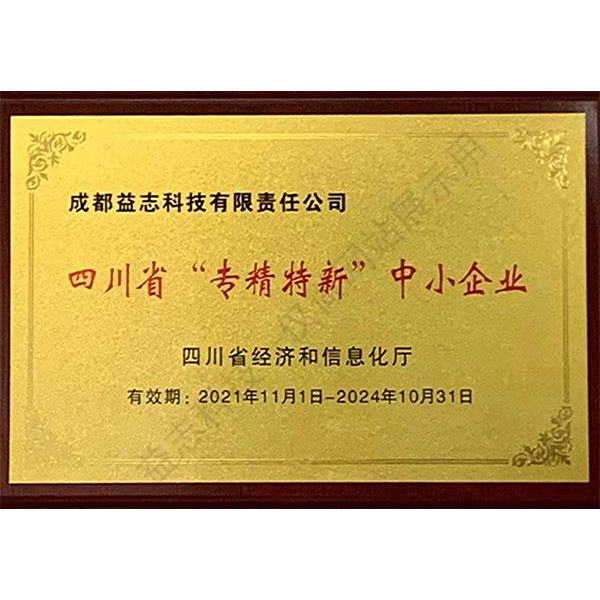
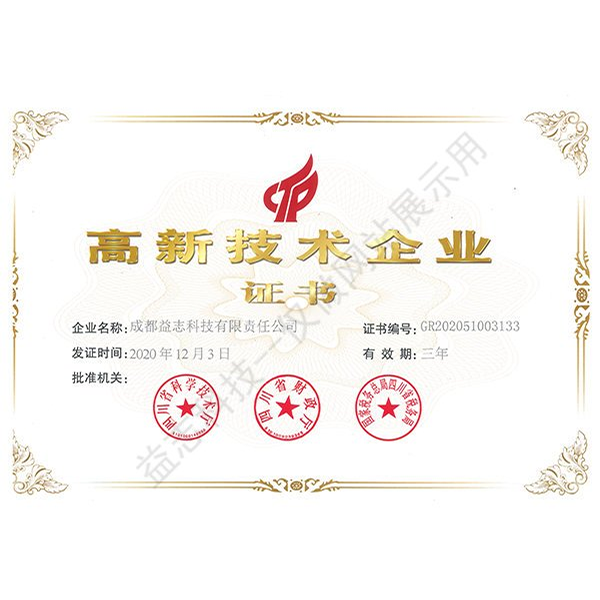
An interesting case is working with companies that are deeply immersed in chemical and gas engineering as a basis. Here, for example,Chengdu Yizhi Technology Co.(their website isyzkjhx.ru). This is not just a supplier, it is a design institute that grew out of the chemical technology company Huaxi. Their approach is often based not on a general blueprint, but on the chemical composition of a particular gas stream. They can offer a custom solution for the cleaning and drying scheme before the liquefaction stage, which directly affects the pressure stability in the main cycle. For them, technology is not a box that was sold, but a process that needs to be customized for the client. The registered capital of 120 million yuan for such an institute is an indicator of serious investment in competencies, and not just in assets.
Trends: flexibility instead of gigantomania
If previously the trend was to build huge base terminals, now the vector is shifting. Floating liquefaction plants (FLNG), small-scale LNG plants (SSLNG) for supplying remote regions or refueling vehicles. This dictates other requirements for the process. Pressure should be optimized for mobility and possible frequent stops and starts, and not for round-the-clock operation at a constant flow.
In such projects, the integration of all turnkey systems is critical. Because if gas treatment technologists, liquefaction engineers and automation specialists work separately, the result will be disastrous. We need a unified design approach, where the pressure in the system is a common variable for everyone. I saw how, due to disagreements between contractors at the junction of phases, the installation could not reach its nominal level for weeks. They then decided through the intervention of a third, integrating company, which rewrote part of the management logic.
Another trend is digitalization and predictive analytics. Sensors monitor thousands of parameters, including the slightest fluctuationspressureat different stages. Artificial intelligence learns to predict the need for maintenance or adjustments before failure occurs. But there is also a pitfall here: these systems need to be trained on real data from specific installations. There are no universal solutions. And this opens up the field for those who know how to work with a “digital twin?” specifically the technological process, and not just with a 3D model of the plant.
Energy efficiency as the main driver
Ultimately, it all comes down to energy consumption. The liquefaction process is extremely energy-intensive. And every extra bar of pressure that is not optimally set or maintained is megawatts of wasted electricity. Therefore, now all the talk about technology is, in fact, talk about reducing specific energy costs.
New developments in the field of heat exchangers, such as the use of compact spiral-wound heat exchangers, make it possible to more accurately control temperature and, as a result, pressure gradients. This is not a revolution, but an evolution, but it gives an increase in efficiency of several percent, which is a colossal saving on the scale of a plant.
It is interesting to observe the adaptation of technologies to renewable energy sources. Pilot projects where part of the energy for liquefaction comes from the sun or wind are already a reality. But here again the question of stability arises. A wind turbine does not provide constant power, and the liquefaction process requires even parameters. This means that we need buffers, smart load distribution systems that regulate compressor operating modes in real time in order to maintain the sameliquefaction pressurein a narrow optimal corridor, despite surges in energy supply. This is a huge management challenge.
What's the result? Practical view
So, back to the original question about trends. Yes, the trend is not just an increase in the number of factories. The trend is a movement towards liquefaction technology that is smart, flexible, energy efficient and maximally adapted to local conditions. The key parameter around which this optimization is built remains control and management of pressure at all stages.
This requires deep interdisciplinary expertise: from gas chemistry and mechanical engineering to digital control systems. Successful players will be those who can offer not just equipment, but technological solutions that have proven their sustainability in real, rather than laboratory, conditions. Those who went from drawing to launching and eliminating “childhood diseases?” at an existing facility.
Therefore, when you read news about new contracts or commissioning of capacities, now you always look deeper: what is the technological scheme? Who is the integrator? How is the issue of stability of process parameters resolved? Because it is in these details that the future efficiency, and therefore the competitiveness of the entire project, lies. And in this sense, the experience of such institutions as the mentionedChengdu Yizhi Technology Co., whose work has been tailored from the very beginning to complex design solutions in the chemical and gas industry, is becoming more in demand than ever. This is no longer just a trend, but a necessity.