China and Russia: joint LNG technologies?
2026-02-15
When people talk about joint projects between Russia and China in the field of LNG, they often immediately imagine the “Power of Siberia-2?” or the giant Yamal LNG plants. These are, of course, important points on the map, but real joint technological work is much deeper and, frankly, not always linear. There is a lot of talk about “strategic partnerships,” but in practice there are a lot of nuances regarding standards, approaches to design, and even what is considered a “ready-made solution?” It is these pitfalls and, more importantly, the real points of contact that I observed in practice that I would like to speculate about.
Not just pipes: where the real technological niches lie
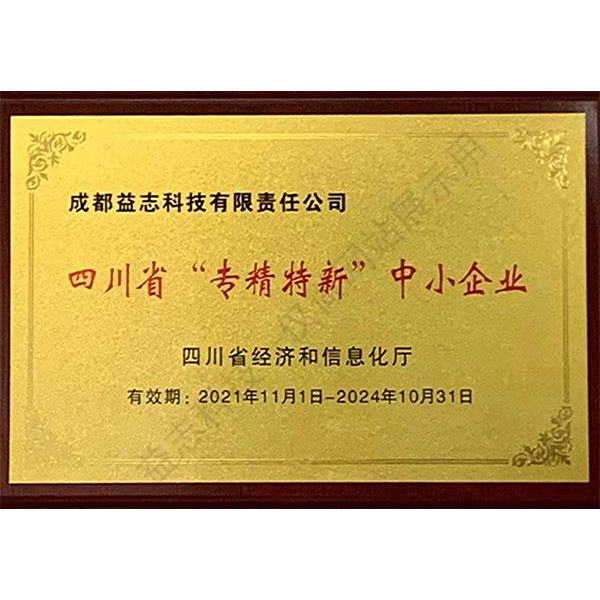
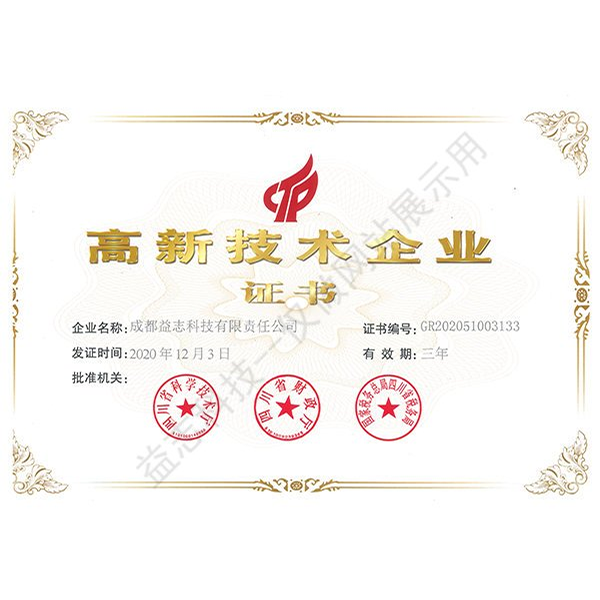
It is obvious that China is interested in access to resources, and Russia is interested in markets and investments. But the technological exchange is not just about buying Chinese turbines for Arctic conditions. It's about putting entire segments of the value chain together. For example, modular construction. Chinese contractors such asChengdu Yizhi Technology Co., have gained enormous experience in the design and supply of modular plants for gas processing and petrochemicals. Their websiteyzkjhx.ru- this is essentially a showcase of their competencies as a design institute. For Russian projects in remote or difficult climate zones, this may be the key to reducing costs and schedules. But here the question of adaptation arises: their standards (GB, ASME) and our GOST, PB, FNP. Coordination of just one package of documentation is a separate project.
I had experience with one small-scale LNG project in the Far Eastern Federal District. We considered an option with a gas treatment module from a Chinese vendor. The price is attractive, the delivery time is a dream. But when did they start? their documentation to our industrial safety requirements of Rostekhnadzor, especially regarding explosion protection and emergency stop systems, revealed discrepancies. Their logic for building an ESD (emergency shutdown) system was different, more centralized. This didn’t work for our experts; a deep rework was required. In the end, the project didn't go ahead, but the lesson was valuable: collaborative technology begins not with a contract, but with a joint working group of engineers who will "translate" each other's requirements into the practical language of drawings and specifications.
Another niche is cryogenic equipment and materials. Chinese manufacturers are actively developing lines of cryogenic pumps, heat exchangers, and Dewar vessels. Their competitiveness lies in price. But for the Russian market, especially for Arctic applications, the key issue is reliability verification. It is no secret that some Russian operators are skeptical about such equipment, preferring proven Western brands. However, the situation is changing. I saw how Chinese cryogenic pumps for pumping LNG from bunkering vessels are successfully operated at one of the terminals near Vladivostok. Through trial and error, we selected the correct modes and adapted the maintenance regulations. This is what “collaborative technology” is all about. at the micro level - not a loud agreement, but engineering tuning of the hardware. under specific conditions.
Arctic challenge: adaptation vs. fundamentally new solutions
The Arctic is a litmus test for any technology. Here, the Chinese experience, frankly speaking, is not so rich. But that doesn't mean they have nothing to offer. Their strength lies in rapid prototyping and production scaling. The question is whether we can formulate the terms of reference so that they create not just a “cold-resistant version”, but a product born for Arctic conditions. So far, existing solutions are being adapted more often.
Take, for example, insulation materials for LNG pipelines and tanks. China is the largest producer of polyurethane foams and vacuum insulating panels. But their durability during cyclic freezing and defrosting and in permafrost conditions is a big question. I know about joint testing programs that were carried out at testing sites in Yakutia. Results were mixed, with some samples showing cracking after 50 cycles. This forced Chinese engineers to reconsider binder formulations. Such feedback is invaluable for both them and us.
An interesting case is monitoring systems. Chinese companies offer comprehensive IoT solutions for monitoring equipment status. In theory - ideal for remote objects. In practice, there are problems with the stability of data transmission at high latitudes, cybersecurity issues (Russian FSTEC requirements) and, again, operation at low temperatures for sensors. I saw a pilot project at one drilling rig, where the Chinese pump vibration monitoring system worked intermittently during the first winter. Then we jointly finalized the case design and firmware. It worked. This is the way: not importing ready-made products, but joint fine-tuning.
Financing as a technological factor
What is often overlooked is that Chinese funding is also part of the technology package. Loans from Chinese banks (Exim Bank, BRD) are often tied to the purchase of Chinese equipment and contractor services. This can be both a driver for technology adoption and a limiter. On the one hand, this gives access to relatively cheap capital. On the other hand, it narrows the technological choice.
For example, when constructing an energy center, a Chinese gas turbine unit may be selected to supply an LNG plant. It is cheaper and delivered on a turnkey basis. But its integration into the overall plant control system, which may be based on Siemens or Emerson, creates additional complexities. The development of gateways and protocols is required, which increases customization costs and, critically, risks during commissioning. We have to look for a compromise: somewhere to accept the Chinese standard, somewhere to insist on our own.
Here is the role of companies like the one mentionedChengdu Yizhi Technology Co., may be intermediary. As a design institute with a registered capital of 120 million yuan and experience with Huaxi Technology, they can act as an integrator that understands both Chinese technological capabilities and Russian requirements. Their task is not just to sell the module, but to design interfaces for its seamless inclusion in the Russian project. This is the pinnacle of teamwork.
Human factor and experience sharing
Technology is dead without people who understand it. One of the main problems is the language and regulatory barrier in the engineering environment. Russian engineer, brought up in the Soviet and “conservative” school of mechanics. security, and a Chinese engineer focused on optimization and speed often speak different languages. The language is not only Russian and Chinese, but the language of technical solutions.
The most successful projects I have seen have always had bridge workers on staff. specialists - Russian engineers who have worked in China for a long time, or Chinese who have undergone internships at Russian enterprises. They translate not words, but meanings. For example, our requirement is “increased vibration resistance?” for the pumping unit can be interpreted by the Chinese side as a certain standard test. But our specialist, knowing the specific operating conditions (crushed ice falling on the foundation), will be able to explain the need for additional, non-standard tests.
Exchange programs for young engineers, joint courses at universities (for example, between NEFU in Yakutsk and Chinese oil and gas universities) are not just diplomacy. This is an investment in future collaborative technologies. When a graduate who has worked at Yamal LNG comes to the Chinese company to design a new module, he will already have an understanding of the Arctic context.
Looking forward: from adaptation to co-development
Today's stage can be characterized as the adaptation and verification of Chinese technologies to Russian conditions. But the future lies in co-development. We are talking about creating products that are initially born for Russian-Chinese projects. There are prerequisites.
Firstly, this is a request for small-scale and distributed LNG production for gasification of remote regions of Russia. What is needed here is not giant lines, but compact, fully modular and automated solutions. Chinese companies can offer production flexibility, and Russian companies can offer the requirements and conditions of the “field”. The joint development of such a plant with a capacity of, say, 50-100 thousand tons per year is an ideal testing ground.
Secondly, this is digitalization. Platforms for digital twins, predictive analytics, life cycle management. Here China has a strong position in software and big data, while Russia has deep subject knowledge of physical processes in gas production and liquefaction. The merging of these competencies can provide a unique product for LNG asset management.
Thirdly, ?green? vector. Hydrogen, ammonia as hydrogen carriers, carbon capture. These are new technological fronts where the rules of the game have not yet been written. Here, Russia and China have a chance not to catch up, but to immediately create joint standards and solutions. The first progress is already visible in the form of memorandums between Novatek. and Chinese partners on hydrogen issues. But the memorandum will only become technology when engineers on both sides sit down at the same table with blank sheets of calculations.
The result? Joint LNG technologies between China and Russia are not a myth, but also not a fait accompli. It's a difficult, iterative process, full of technical disputes, failed tests, and rare, but all the more valuable, breakthroughs. It moves not at the level of big headlines, but in the details of specifications, in test reports and in the daily work of mixed engineering teams. And it is in this routine, unglamorous work that real, and not declarative, technological partnership is born.