China: domestic LNG for export?
2026-02-25
This is a question that has recently come up more and more often on the sidelines and on industry forums. Many, especially in the West, imagine Chinese LNG as something monolithic, exclusively for domestic consumption, a kind of “fortress”. But reality, as always, is more complex and interesting. In fact, the conversation about the export of Chinese liquefied gas is not science fiction, but a whole tangle of technological, logistical and, most importantly, economic “buts”. Let's go in order.
Where did this idea even come from?
It all started with the rapid growth of internal capacities. Over the past ten years, China has built a huge number of small and medium-sizedLNG plants, often modular, scattered across inland regions, far from main pipelines. Their task was to gasify remote areas and use associated gas from fields. And they completed their task. But what happens when local demand is saturated and the plant continues to operate? There are surpluses. And this is where the thought arises in the minds of engineers and businessmen: why not sell this to the foreign market?
It would seem logical. But the first and biggest ?but? - this is gas quality and standardization. Not all Chinese LNG, especially from smaller plants, meets the stringent calorific value and composition requirements of, say, European networks. I remember how one shipment, intended for a test shipment to Asia, “got stuck?” at acceptance precisely because of composition fluctuations. We had to redirect it to a less demanding domestic market. It was a good lesson: producing for yourself and producing for the world are two very different things.
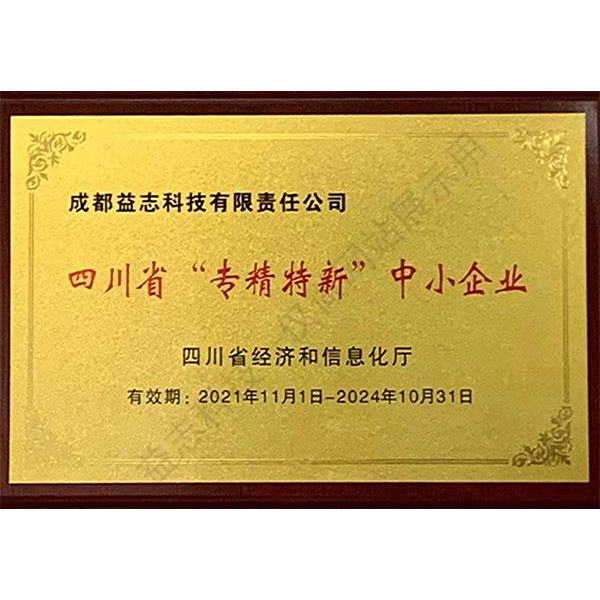
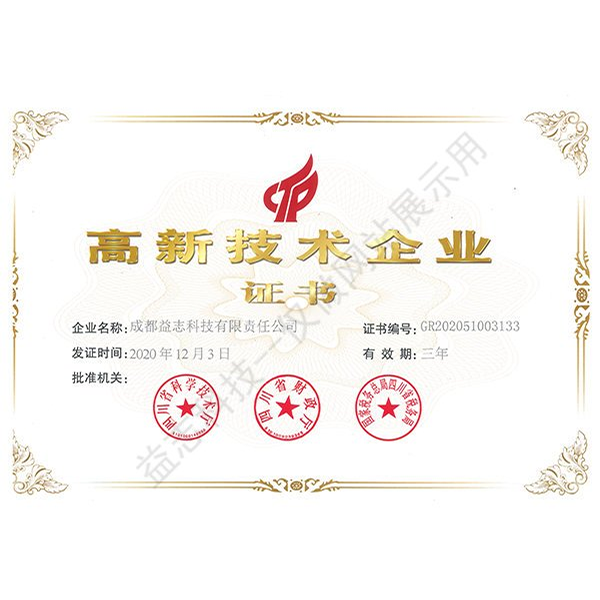
And here we cannot fail to mention the role of such design institutes asChengdu Yizhi Technology Co.(website:https://www.yzkjhx.ru). This company, established in 2013 with a substantial share capital, is one of the companies behind many of these regional LNG projects. They design and implement technologies. Their experience is precisely the experience of adapting technologies to specific, often complex, Chinese conditions. And now their experts, with whom I had the opportunity to communicate, are just racking their brains over how to modernize existing installations in order to reach an export standard. This is not just a theory, these are specific calculations for replacing cleaning sections and adjusting cryogenic units.
Logistics: the main stumbling block
Let's say the gas meets the standard. What's next? Logistics. The main capacities are located inside the continent. Delivery to the coast is either expensive transportation by cryogenic tank trucks (which kills the entire economy), or requires access to an internal gas pipeline network with subsequent liquefaction at a large export terminal. But networks are often overloaded, and domestic consumption is the priority.
There was an interesting, but ultimately unsuccessful experiment in northern China. They tried to organize the collection of small batches of LNG from several plants onto a railway cryogenic platform, and then deliver it to the port of Dalian. Technically it worked, but it was a commercial failure. There are too many stakeholders, too complex coordination, tariffs are “eaten?” the entire margin. This case clearly showed that without a systematic, infrastructural approach, one-time operations are meaningless.
Therefore, the conversation is now shifting towards coastal or large navigable river facilities. Those that were originally intended for export. But there are not many of them, and they, as a rule, are already tied to long-term contracts. Window of opportunity for spot sales of domestic products. LNG supply is very narrow and depends on seasonal fluctuations in domestic demand.
The role of technological solutions
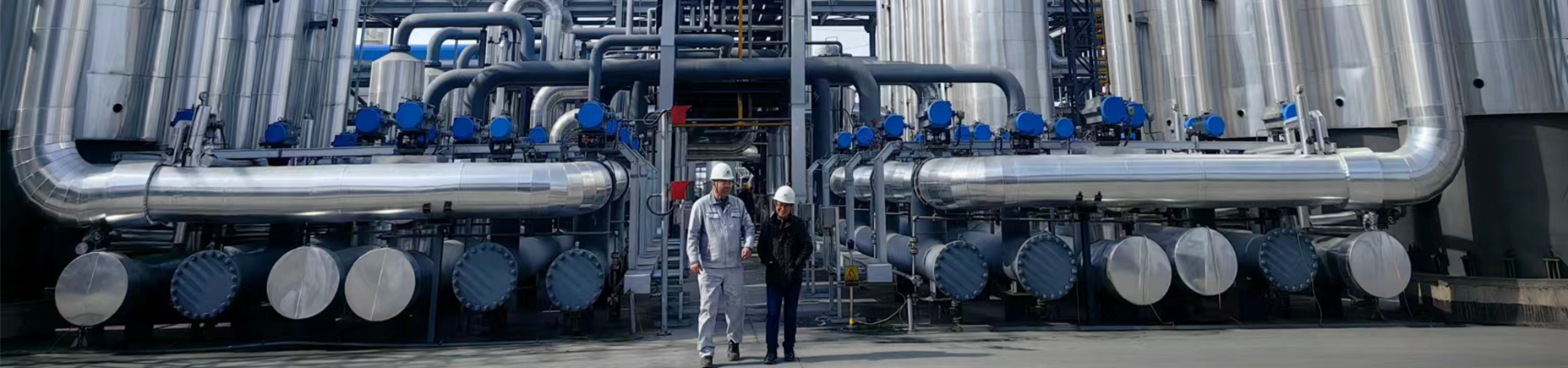
Here we return to the designers again. The goal is to make small factories more flexible. We are talking about technologies that allow you to quickly switch between production for the domestic market (with less stringent standards) and for export. These are issues of deep purification of raw materials and precise control of the liquefaction process. Institutes like the mentioned Chengdu Yizhi Technology are engaged in such optimizations. Their website is not just a business card, it is a reflection of a deep engineering culture, where each project is a search for a balance between cost and quality of the final product.
Economics: when the numbers say no?
It all comes down to price. The cost of production at many domestic plants, especially those using gas from small fields, can be low. But once you add the cleaning costs up to the standardLNG, logistics to the port, freight of a gas carrier - all competition evaporates. Especially compared to the same cheap American or Qatari LNG.
There are niche opportunities. For example, deliveries to neighboring countries of Southeast Asia in small quantities on special small gas carriers (ISO containers). This is a market where it is not so much the absolute price that is important, but the speed and flexibility of delivery. Chinese manufacturers could take over, but they need a well-functioning chain and an understanding of the specifics. So far there is more trial and error than system contracts.
Another factor is government policy. The priority is China's energy security. Will the plant receive permission to export if there may be a shortage in the country? The question is rhetorical. Everyone remembers last year’s restrictions on the domestic market, when there was no talk of any export.
The future: scenarios, not forecasts
So is the idea dead? No, she's just transforming. It is unlikely that we will see Chinese LNG exported to Europe en masse or in large volumes. The real scenario is the development of regional trade in Asia. China can become an important balancing player, supplying surpluses to Korea, Japan, and Vietnam during peak periods.
The second scenario is the export of technologies and services. The experience gained from building and operating dozens of small plants in challenging environments is a valuable asset. Companies that have it can offer ready-made solutions to other countries. This is also a form of “export”, but not of gas, but of competencies. And in this sense, design institutes are in a very advantageous position.
Finally, everything will depend on the development of internal infrastructure. If China creates an effective system for collecting and transporting gas from small fields to large export hubs, the picture may change. But this is not a matter of one year.
Instead of a conclusion: a look from the inside
Working with this question, you come to the conclusion that ?? - this is not a question? Yes? or not?. This is a question of “how?”, “how much?” and ?where?. This is a story about finding niches, about technological adaptation and about strict economic feasibility. Yes, there will be games. Yes, someone will try to make money from this. But there is no talk yet of a new global player in the LNG market in the form of Chinese domestic producers. There are too many links in the chain that need to be closed at the same time. For now, this is rather an interesting experiment, a laboratory of possibilities where ambitions and the harsh reality of the world market collide. And observing this from the outside, and even more so participating in this process, is incredibly interesting.