Is China a new exporter of LNG technologies?
2026-02-25
In recent years, you have been hearing this question more and more often on industry platforms. Many, especially in the West, still perceive China in the context of LNG only as a giant importer or, at best, as a market for foreign liquefaction technologies. This is a great simplification, if not misleading. In fact, over the past decade, an entire ecosystem has grown here - from the design and production of cryogenic equipment to complex turnkey engineering. And this potential is no longer just for internal use.
From importing knowledge to own developments
It all started, of course, with technology transfer. Large projects, such as the first receiving terminals, were built with the active participation of Western engineering companies and suppliers of basic equipment. But Chinese engineers learned quickly. I myself saw how the composition of technical specialists at the sites gradually changed - at first there were mainly foreign supervisors, and after a few years, key decisions were already made by local engineering teams.
The turning point, in my opinion, was the emphasis on localization of critical equipment. Not just assembly production, but development. Take, for example, heat exchangers - the heart of any liquefaction line. Just seven years ago there was no talk about domestic spiral-wound heat exchangers for large-scale projects. Now several Chinese manufacturers are not only covering domestic demand for medium-tonnage units, but are also beginning to offer them for international projects. Quality? The question is complex. Early samples, of course, raised questions about reliability in cyclic modes, but iterations are moving very quickly. In some respects, especially price and production time, they are already serious competition.
It is worth mentioning here the role of such design institutes asChengdu Yizhi Technology Co.(their website ishttps://www.yzkjhx.ru). This is just an example of a structure that grew out of a large technology company, Huaxi Technology. They do not just draw projects under license, but are engaged in the adaptation and integration of technologies for specific, often more complex conditions - for example, for liquefying associated gas in remote fields with a high content of impurities. Their experience is a practical answer to the question of the depth of technology development within the country.
Field tests: where Chinese solutions are already working
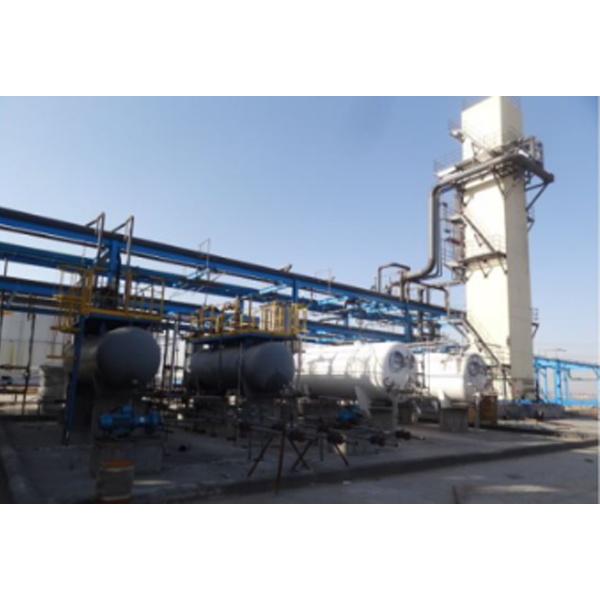
Theory is theory, but practice decides everything. The most convincing argument is working objects. And they are. We are talking not only about mega-factories, but about niche, but demonstrative projects. For example, modular LNG plants of low and medium capacity. Chinese companies here have become one of the world leaders in terms of the number of implemented projects. They are installed at remote power plants and gas fields for use as motor fuel.
One technical director I know, who worked on such a project in Central Asia, talked about the pitfalls. The installation supplied to the Chinese side generally worked, but there were some nuances with the automation - the control system was too “closed”; at the slightest emergency, a specialist from China was required to be called, which led to long downtimes. This is classic growing pains - great hardware, but poor after-sales service and lack of flexibility. However, they learn from this. With newer contracts it is already clear that the software is becoming more open, and local engineers have begun to be trained more deeply.
Another case is participation in the modernization and expansion of old terminals in Southeast Asia. The Chinese come there not with ready-made Air Products technology, but with their own comprehensive solution, which often turns out to be cheaper and faster to implement. Albeit sometimes through the use of more standardized modules, rather than a completely custom design. For many customers on a budget, this is an acceptable compromise.
Weak links in the chain
When talking about technology exports, we cannot turn a blind eye to problems. The main one is the still insufficient track record in the large-tonnage segment. Building a plant with a capacity of 0.5 million tons per year is one thing, but taking on an EPC contract for a plant with a capacity of 5 million tons with, say, C3MR or DMR technology is a completely different level of risk and responsibility. Banks and insurers on international projects are very conservative; they need proven solutions with decades of reliable operation.
The second pain is standards and the regulatory framework. Chinese companies are accustomed to working according to their own GB standards, which, although harmonized with international ones, are still different. For a buyer in Africa or Latin America, this creates additional difficulties with certification and future service. It is necessary to either prove equivalence, which takes a long time, or redesign to ASME or EN, which negates the cost advantage.
And third is the cultural and communication barrier. Engineering is not only about drawings, it is about constant negotiations, changes, and solving unexpected problems on the spot. The rigid hierarchy in Chinese companies sometimes leads to the fact that an engineer on site cannot quickly make a decision without approval from the head office, which slows down the entire process. Western competitors are more flexible in this regard. But there is progress here too: the international departments of Chinese engineering companies are actively recruiting local staff and delegating more authority.
What's the result? Not black and not white
So is China the new exporter of LNG technology? The answer is yes, but with important caveats. It is an established and very aggressive exporter of solutions for small and medium tonality, as well as for niche applications. Its strengths are speed, cost and willingness to take on projects that are complex in terms of raw materials.
In the market for large-scale basic liquefaction technologies, it is still more of a potential player. But this potential is enormous. Government support in the form of loans from Chinese banks, the Belt and Road policy, which opens the door to infrastructure projects, and, most importantly, the internal engineering experience accumulated over the years of the construction boom - all this creates a powerful foundation.
In five to seven years, I am sure, we will see the first fully Chinese EPC contract for a large LNG plant abroad. Most likely, this will be a project closely linked to Chinese funding and interests. And then, you see, the technology of our own development for mega-factories will mature. So the question in the title is already outdated. It is more correct to ask not “is it?”, but “how quickly and in what segments will China change the current balance of power?” The process is already underway, and ignoring it means making mistakes in forecasts for the entire next ten-year cycle in the industry.