Has China created an Arctic LNG cascade?
2026-02-25
The question that has been popping up in discussions lately is often taken too literally. No, of course, somewhere in the snows of Yamal, a giant factory with a Chinese flag, built from scratch, did not suddenly appear. Chinese engineers. We are talking about something else - about deep integration into the value chain, about technological modules, logistics schemes and, most importantly, about a long-term strategy for working in extreme conditions. Many colleagues at first thought that this was simply financing or buying shares in projects like Yamal LNG. or ?Arctic LNG 2?. But if you dig into the details of the supplies, especially in terms ofcryogenic equipmentand modular solutions, the picture becomes much more interesting.
Not just an investor, but a solution provider
Take, for example, the story of modules. Chinese factories such as Bomesc Offshore Engineering or Wison Offshore & Marine began supplying heavy process modules forArctic LNG projects. These are not just steel boxes - these are pre-assembled and tested blocks, where part of the technological lines are already installed inside. The difficulty was in adapting to the arctic design: steel, welding, insulation - everything must work at -50°C and below. I remember that in the first batches there were complaints about the quality of the control and measuring equipment in such modules; the sensors “fell asleep?” earlier than necessary. Chinese engineers had to sit together with Russian technologists and rewrite the specifications and add thermal shock cycles to the tests.
And this is where the difference between a simple subcontractor and one who integrates into the process is visible. Delivery of the module is not the end of the story. The stage of installation supervision and commissioning begins. And Chinese specialists were present there, not only in the summer, but also during the winter windows. I personally saw how they worked at the Yamal LNG site: unaccustomed to local conditions, but with clear methods for heating communications inside the module. This gave them invaluable experience, which was then used in subsequent projects.
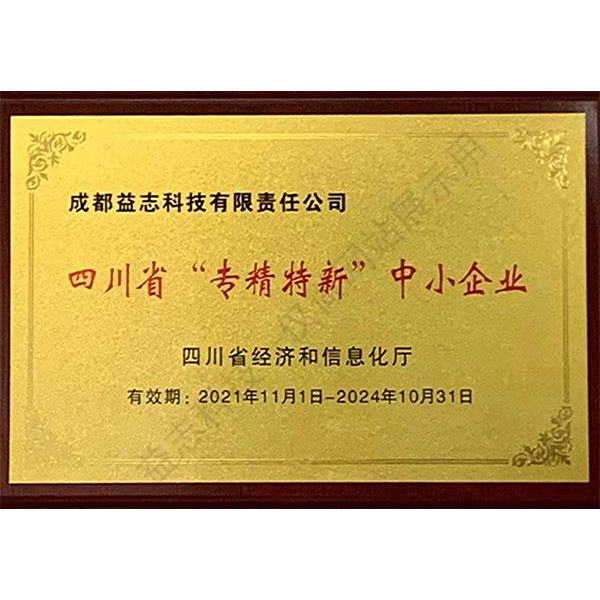
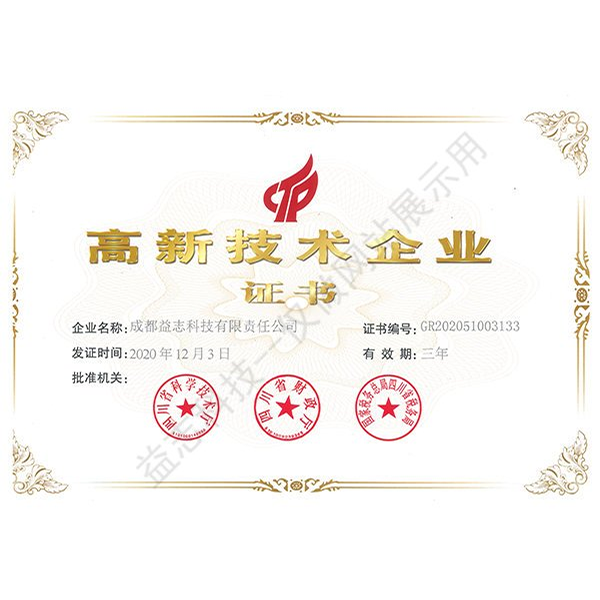
By the way, about design institutes. In China, there are a number of organizations that specialize in adapting technologies for complex environments. One of these isChengdu Yizhi Technology Co.(their website ishttps://www.yzkjhx.ru). This is a design institute established by Huaxi Technology back in 2013. They do not build factories, but are engaged in engineering, designing units and systems for the chemical and gas industries. Their registered capital of 120 million yuan shows serious intentions. In the Arctic context, their role could be in strength calculations for equipment or in optimizing heat transfer processes for cold weather operation. This is the same “think tank” that solves non-obvious problems behind the loud headlines about the “Chinese cascade”.
What is a “cascade”? in Beijing's understanding?
For us, ?cascade? is often a sequence of plants. For Chinese strategy, it is rather a cascade of competencies and assets. The first stage is financing and a share in the project (gaining access to the resource and operational data). The second is participation in the supply of not the most complex, but critically important equipment (tanks, heat exchangers, modules). The third is working out logistics, including the icebreaker fleet and gas carriers. And the fourth, most difficult one is the transition to the supply of high-tech nuclear processes, such as liquefaction systems, where companies such as Air Products dominate.
Now China is firmly entrenched in the second stage and is actively testing the third stage. Their vessels are of the type ?Vladimir Rusanov? have already become commonplace on the Northern Sea Route. But it’s still difficult with the fourth stage. Attempts to copy or develop proprietary liquefaction technology comparable in efficiency to AP-SMR or DMR face challenges of scaling for Arctic conditions. The energy efficiency of the process in the cold is a separate headache. I heard about pilot installations somewhere in Xinjiang, where they tried to simulate Arctic cold, but the difference between the test site and the real industrial site in the Gulf of Ob is colossal.
Therefore, when they say “created a cascade?”, it is worth clarifying - has it created a full-fledged, closed cycle from production to shipment of the final product using its own technologies? Not yet. But has it created an influential, deeply integrated infrastructure and technology platform in the Arctic? Absolutely yes. And this is perhaps a more significant achievement.
Problems that are not advertised
It hasn't all been a smooth road. There were also failures that rarely make it into analytical reports. One of the key problems is personnel. It takes years to train an engineer who understands not only cryogenics, but also the peculiarities of permafrost and ice loads. The Chinese actively recruited international talent, including from Canada and Norway, but cultural and managerial gaps sometimes offset the benefits. Conflicts on construction sites due to different approaches to safety (the Chinese approach is often more “flexible” in interpreting standards) is a reality that everyone who has worked there knows about.
Another problem is the dependence on Western components at the very ?heart? technologies. Even if the module is assembled in China, key valves, control systems, and special steel for the most critical components could be European or Japanese. The 2022 sanctions have sharply exacerbated this issue. Now Chinese companies had to urgently find or grow their suppliers for these niche products. The process is painful and long.
And, of course, logistics. Experience withicebreaker fleetand wiring of caravans - this is know-how that cannot be bought. It takes years to develop, often through trial and error. There were cases of delays in module deliveries due to incorrect calculations of ice conditions, which entailed multimillion-dollar fines under contracts. These lessons, I am sure, have been carefully studied and incorporated into the new protocols.
Looking to the future: what's next?
So what do we have? China has not built its own separate “cascade of factories” in the Arctic. in the classical sense. He created something more flexible and perhaps more viable - a distributed production and technology network woven into existing projects. His next goal is clear: to reduce the last remaining dependencies, especially in the areas of liquefaction and automation technologies.
Organizations such as the aforementioned Chengdu Yizhi Technology Co. can play a role here. Their experience in designing for challenging environments may be needed for the next generation of Arctic LNG capacity, which will be smaller, more modular and more adaptable. Perhaps the next step is not a giant 16.5 million ton plant, but a network of smaller but efficiently connected production facilities, where Chinese engineering companies will offer turnkey solutions. solutions.
So, to answer the question from the title: yes, China has created its ownArctic LNG cascade, but it is a cascade of influence, competence and complicity, not just concrete and steel. And this is his strength. Rather than trying to replace existing players, it is becoming an almost indispensable partner to them in a number of critical areas. And this, in today's geopolitics, is often more valuable than formal ownership of assets.