Chinese LNG technologies in Russia: success?
2026-02-25
When people talk about Chinese technologies in Russian LNG, they often immediately think about giant plants or large-scale contracts. But the reality, in my experience, is often in the details - in specific equipment, in adaptation to our conditions, in those very “bottlenecks” that are not visible in press releases. Success? It's not binary? Is it? or not?. This is a process where there are breakthroughs and painful lessons.
From expectations to reality: cold starts
I remember a few years ago there was active interest in Chinese cryogenic pumps and heat exchangers. The price was attractive, the documentation looked solid. But the very first winter in one of the projects near Tyumen showed weakness - materials, apparently designed for a milder climate, behaved capriciously at -50. Not a disaster, but simple, recalculations, urgent improvements. This was a general lesson: Chinese engineering companies were still poorly aware of the depth of our “disadvantages”. and duration of load cycles.
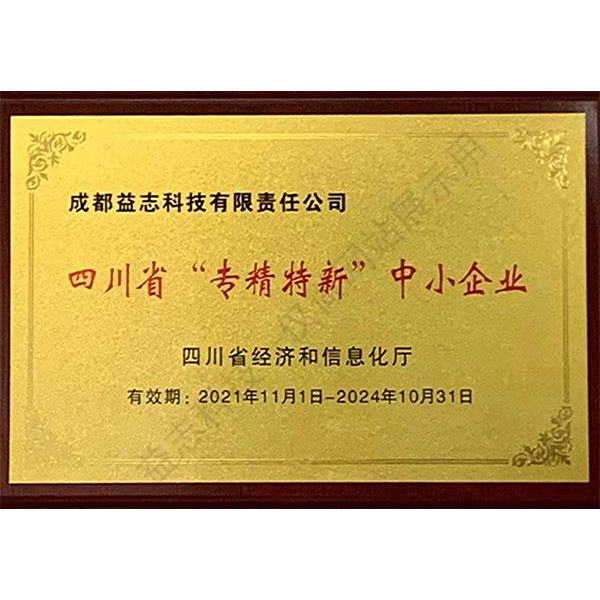
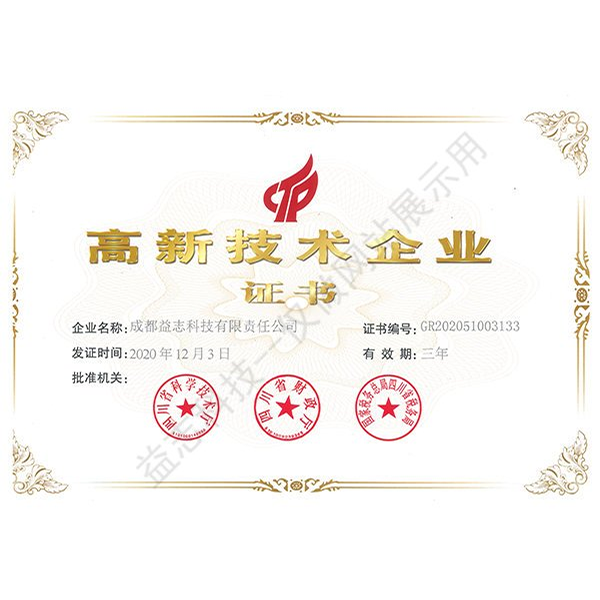
It is important not to generalize here. For example, experience withChengdu Yizhi Technology Co.(their website isyzkjhx.ru) was different. This design institute established by Huaxi Technology, with a registered capital of 120 million yuan, was initially positioned not as a simple supplier, but as a solution development partner. In their case, we faced a different problem - their engineers were too rigid in their standard process flow charts, they needed time to understand why our approach to, say, tank piping was different. But the dialogue worked out.
It is situations like these that form the picture. The success of Chinese technology in Russia often begins not with triumph, but with a similar engineering dialogue, sometimes difficult. Some of their specialists learn quickly, others resist. But those who have learned - and Yizhi Technology is one of these - become truly valuable partners in the local market.
Case: unobvious strengths
When talking about strengths, everyone immediately remembers the cost. Yes, that's a factor. But I would highlight something else - the speed of iterations in the design of non-standard units. We had a project to modernize a small associated gas liquefaction plant. A compact pre-treatment module for a specific composition was needed. European vendors set a deadline of 9-10 months for design. The Chinese team we worked with (I won't name it, but it's not Yizhi) produced a basic prototype of the circuit in 6 weeks. Of course, then there was a sea of approvals and 3 iterations, but the pace itself was set differently.
This is their cultural feature - the willingness to quickly sketch out an option “on the knee”, show it, get feedback and redo it. For our service companies working with rotational fields, where time is the main resource, this quality is priceless. But there is also a risk here: sometimes this speed is achieved by simplifying the durability analysis. We need strict technical supervision on our side.
And this is where more reputable players appear, like the mentioned design instituteChengdu Yizhi Technology. Their approach is less fast-paced, but more thorough. They do not so much “scribble” as they request volumes of data for modeling, which can ultimately save time during the commissioning phase. This is the next level of maturity.
Failures that teach more than victories
I had personal experience with the supply of a monitoring and control system for an LNG station. The Chinese platform, on paper, is fully compatible with our sensors. In fact, the data exchange protocols turned out to be “a little open”, and not completely open. Several critical parameters were simply not output in the required format. Trifle? At the acceptance stage, this resulted in a two-week downtime, while our programmers and their specialists “directly” via video calls they didn’t include crutches in the code.
This is a classic mistake - underestimating the depth of integration. Chinese manufacturers often optimize their systems for the closed cycle of their own equipment. And in Russia there is often a vinaigrette? from equipment of different generations and origins. Technology should not just be cutting-edge, but flexible and open.
After this incident, we always include in the contracts the stage of “test integration into hardware?” before shipment of the main equipment. Many Chinese partners now understand this and offer such conditions themselves. This is progress - when the mistakes of the past form more reliable procedures for the future.
Localization is the key to real success
The success of any foreign technology in Russia depends on localization. And it's not just about assembly. We are talking about creating an engineering pool here that can support and adapt this technology. I see how some companies, includingChengdu Yizhi Technology Co., Ltd.are taking steps in this direction. They don’t just bring ready-made specialists on duty, but begin to train our engineers in their design standards and, importantly, involve them in finalizing these standards to comply with Russian SNiPs and safety rules.
For example, their approach to designing foundations for cryogenic equipment was initially different from ours. Instead of insisting on their own, their engineers, together with ours, conducted a comparative analysis of loads during seasonal soil heaving. As a result, a hybrid method was born, which they now use in other projects in the Siberian Federal District. This is the synergy that turns the simple borrowing of technology into its rooting.
Without this, the next stage - the creation of service centers with a full cycle of repairs and production of spare parts - is impossible. This is a sore spot for now. Spare parts often take 40-60 days to arrive by sea. Until at least SKD assembly of key components is established in Russia, it is too early to talk about complete success. But I am already seeing movement in this direction.
Looking forward: where is the potential and where are the illusions?
The potential, in my opinion, does not lie in the area of “large LNG?” (Western technological chains proven over decades still dominate there), and in the segment of medium and small solutions: mobile liquefaction plants, bunkering terminals, solutions for gasification of remote villages. Here, customization requirements are high and budgets are limited - this is an ideal niche for flexible Chinese engineering companies.
It’s an illusion to think that you can take a “boxed” one. Chinese solution and just put it here. It won't work. Climate, regulations, qualifications of local service personnel - everything requires adaptation. Those who come with a “sell and forget” attitude will fail. Those who, like some design institutes, are ready to invest in a long cycle of training and joint improvement stay and build up their portfolio.
So, back to the title question. The success of Chinese LNG technologies in Russia is not a status, but a direction of movement. This is the path from the first problematic deliveries to the creation of joint engineering solutions. There is success where the technology ceases to be purely Chinese and becomes suitable for our conditions - tested, refined, rooted. The process is underway, and it is much more interesting than the simple answer “yes?” or not?.