China's conditions for LNG exports?
2026-02-26
When it comes to LNG exports from China, many immediately imagine giant terminals and long-term contracts with Gazprom. But the reality, especially for average players or those who want to work with Chinese equipment manufacturers, is much more complex and interesting. It is often overlooked that China itself as an exporter is still an emerging phenomenon, and the basic “conditions” lie not so much in customs rules (although they are important), but in the interweaving of industrial policy, technological capabilities and practices of specific state-owned companies. I’ll try to sort it out based on what I’ve encountered myself.
Not the export of raw materials, but the export of the technological complex
A key point that many do not immediately grasp. China does not seek to become a massive exporter of liquefied gas as a commodity. Its strategic goal is full-cycle export: liquefaction technologies, plant construction, supply of critical equipment. The conditions for the foreign market are created precisely around this. If you come with a request to simply buy Chinese LNG, you will be politely directed to ?CNPC?, ?Sinopec? or ?CEFC?. But if your project involves the construction of a plant, this is where the fun begins.
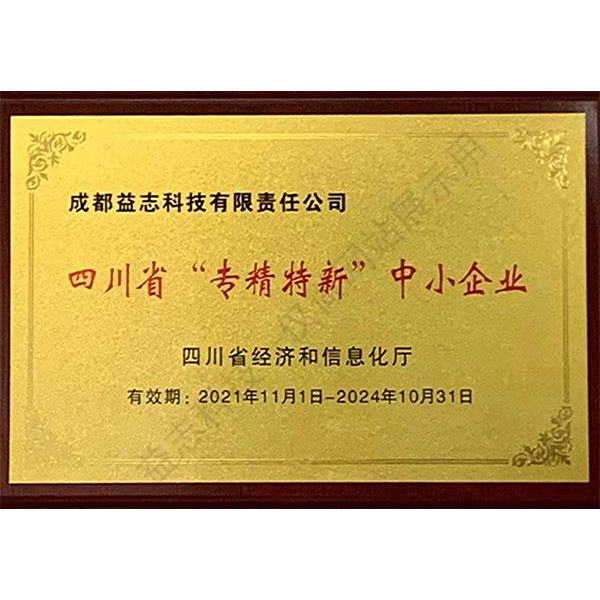
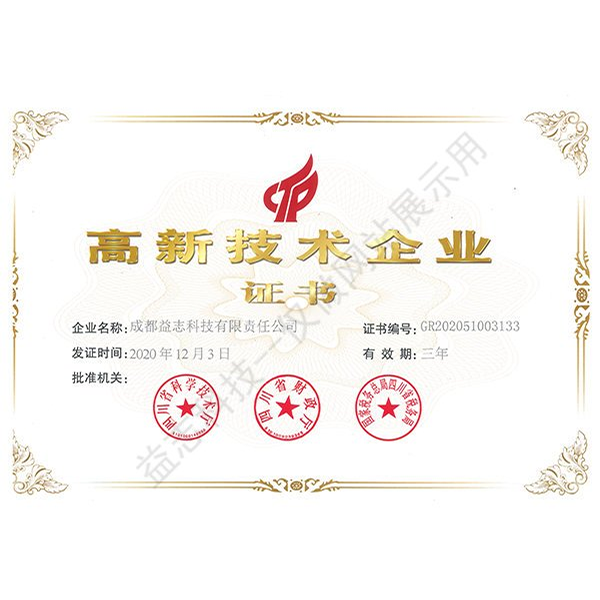
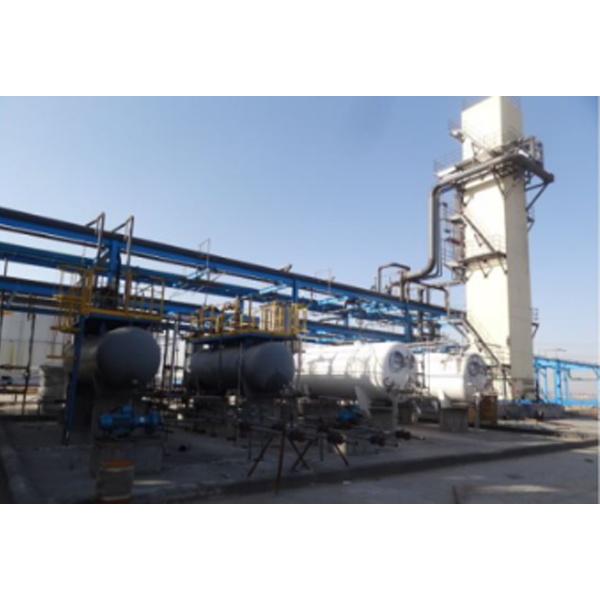
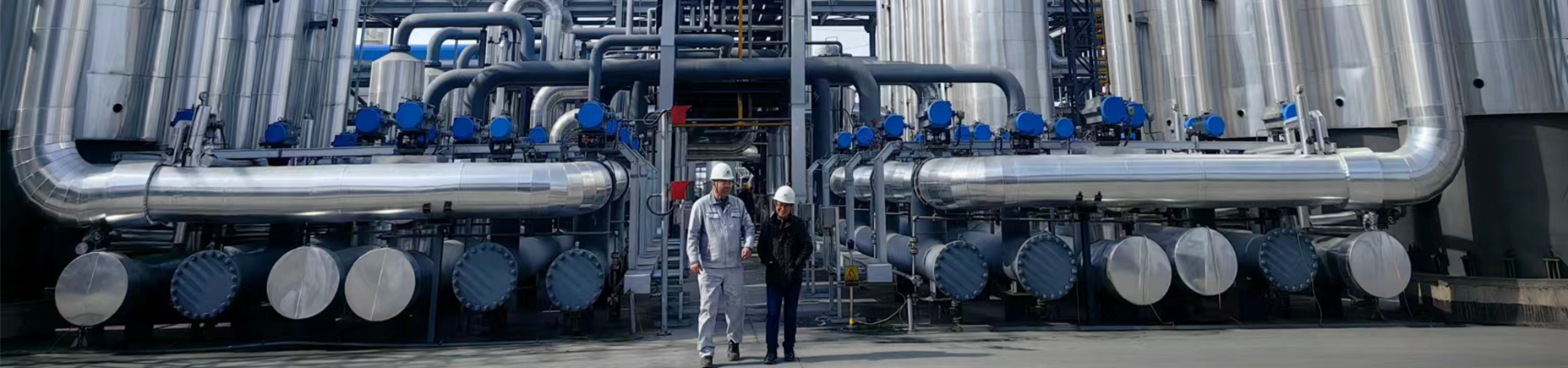
For example, a standard requirement is the use of a certain proportion of Chinese equipment and technology. This is not just protectionism. Over the past 10 years, Chinese companies, partly through structures likeChengdu Yizhi Technology Co., have made a serious breakthrough in the development and testing of their own technologies for medium-scale liquefaction, cryogenic heat exchangers, and control systems. Their websiteyzkjhx.ruis a good example of such a technology portfolio adapted for the Russian-speaking market. They position themselves as a design institute, and this is the key word: they sell not just equipment, but a turnkey engineering solution.
Practical nuance: even if you buy this technological complex, the Chinese side often insists on the participation of its construction and commissioning teams in the project. This is both a guarantee condition, a method of control over technology, and an element of “soft power”. On the one hand, this provides certain quality guarantees, on the other, it creates dependency and requires careful drafting of contracts. I had an experience where, due to disagreements on the interpretation of one point during commissioning, the project stalled for three weeks.
The role of state-owned companies and policy frameworks
Any serious project related to the export of Chinese LNG technologies somehow passes through the filters of large state-owned companies or receives approval at the provincial level.Chengdu Yizhi Technology Co., Ltd., as a subsidiary of Huaxi Technology with a registered capital of 120 million yuan, is a typical example of such an ?authorized? player. They are the conductor and executor of policy, not an independent seller.
This implies the most important condition: the project must fit into the logic of Chinese foreign policy and the “Belt and Road” strategy. The chances of successful approval increase dramatically if your project is located in a BRI partner country. Financing from Chinese banks (Exim Bank, China Development Bank) is also often tied to this. An attempt to push through a purely commercial project in a region that is not part of Beijing’s strategic interests may encounter silent but insurmountable resistance.
In practice, this means that the preparation of a project begins not with a technical specification, but with the search for a “patron?” among Chinese state-owned corporations and understanding of current political priorities. Sometimes it is more useful to conduct several rounds of negotiations in Sichuan Province (where Chengdu Yizhi Technology is based) in order to gain local support, which will then help in Beijing.
Technical standards and adaptation
There are a lot of pitfalls here. Chinese standards (GB) for LNG equipment often differ from Western (ASME, EN) or Russian (GOST) standards. A condition for the export of technology is the frequent requirement to apply Chinese standards or, at best, to recognize their equivalence. This is not always a whim - behind these standards there is a huge amount of accumulated test data and operating experience in specific conditions.
For example, cryogenic pumps or “cold box” heat exchangers. from Chinese manufacturers may have different material tolerances or welding methods. Acceptance of such equipment on site requires the involvement of experts familiar with these standards. We once encountered a delay due to a dispute over the method of non-destructive testing of welds: the Chinese side insisted on its own protocol, which was not agreed upon in advance.
Another aspect is climate adaptation. Chinese installations were originally designed to work in Chinese conditions, from the tropics of Hainan to the cold north. This is their advantage. But when exporting, say, to Central Asia with its dust storms or to regions with high seismicity, additional improvements to the filtration systems and structural reinforcement are required. Chinese engineers usually agree to a meeting, but this increases the cost and time frame. You need to be prepared for this and put it into your plan.
Logistics, finance and “soft” conditions
Delivery conditions are a different story. The Chinese side, especially represented by such engineering companies, prefers FOB or even EXW conditions, shifting the issues of international logistics and customs clearance to the buyer. This is due to the desire to minimize your risks and not plunge into the legal jungle of each specific country. Although there may be exceptions for strategic projects.
Financial conditions often look attractive: lines of credit under government guarantees, installment plans. But it's important to read the fine print here. Part of the payments may be tied to construction stages determined by the Chinese contractor. There are cases when payment for the stage ?delivery of equipment on board the vessel? requires confirmation from a Chinese inspection company. This creates certain dependencies.
The most “mild”, but critical condition is staff training. The Chinese almost always insist on training your specialists in their homeland, in existing production facilities. This is not a formality, but a deeply thought-out step. Firstly, they convey precisely their culture of exploitation. Secondly, it creates long-term connections and a channel for future service and parts sales. You shouldn't give up on this, but you need to plan long business trips for key technical personnel.
Perspectives and personal conclusions
So, the conditions for exporting LNG technologies from China are a complex cocktail of technopolitics, adapted standards and specific business practices. This is not a quick purchase of a product on Alibaba. This is a long path of negotiations, mutual concessions and deep immersion in the partner’s logic.
Is the game worth the candle? From my point of view, yes, especially for medium-power projects where Western technologies may be overpriced. Chinese solutions offered by companies of the same levelChengdu Yizhi Technology, have become significantly more mature and reliable. Their design institute, created back in 2013, has accumulated serious experience, which is visible in the details - from the layout of the installation to the interfaces of the control system.
The main conclusion that I have made over the years of work: success depends on the understanding that you are not just buying equipment, but entering into a long-term technology partnership. The conditions are dictated by this. You need to be prepared for such a model, actively participate in all stages - from design to commissioning - and have patience. Then cooperation can be extremely effective and mutually beneficial. And the question of “conditions?” will turn from a barrier into clear rules for playing together.