China: innovations in oxygen utilization?
2026-03-14
When you hear about “oxygen utilization,” many people immediately think of large metallurgical or chemical plants, or giant air separation units (ASU). But the reality, at least what I have observed over the past ten years in China, is much more interesting and, let’s say, “more down to earth”. We are talking not so much about global collection and processing, but about local, almost point-by-point optimization of processes, where this “oxygen” is. - often a by-product, excess or, conversely, scarce resource - becomes a point for innovation. And here Chinese engineers, especially in private design institutes, show amazing flexibility. Sometimes their approaches seem non-standard, even risky, to their Western colleagues, but they make it possible to solve problems that would be considered unprofitable within the framework of classical schemes.
Where does the “extra” come from? oxygen?
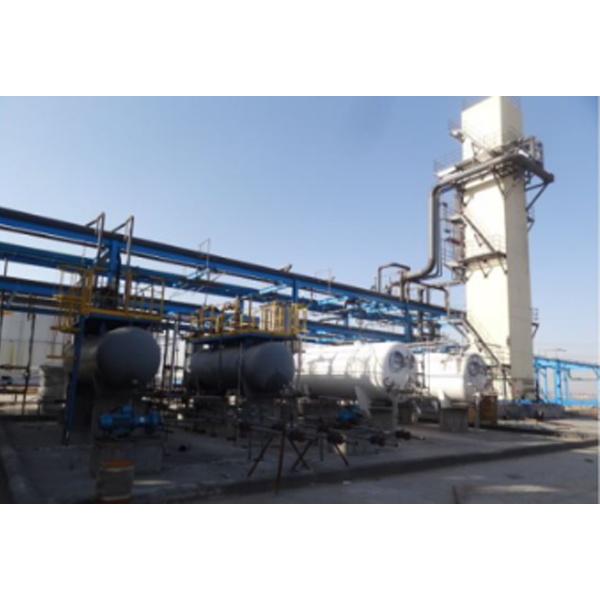
The first and most obvious source is those same settingsair separation. Cryogenic or adsorption. They produce mainly nitrogen, with oxygen often being a by-product. Previously, it was simply... released into the atmosphere. Nowadays this is considered wasteful. The second source is technological processes, for example, in the chemical industry, where gas with a high O2 content is released. The third, less obvious one is oxygen-enriched flows in industries where parameters are fine-tuned. The task is not to let this gas disappear.
But here is a key point that is often missed in theoretical articles: gas itself is not a resource. It needs to be brought to the required purity and pressure, ensure a stable supply and, most importantly, find a consumer within walking distance. Logistics of liquefied or compressed oxygen is a separate headache and cost-driver. Therefore, the most successful recycling projects that I have seen are always tied to the symbiosis of enterprises on one site or in one industrial park.
For example, there was a project for a polysilicon production plant. There, the process produced a by-product oxygen-containing gas. On the one hand, it could be purified and used to enrich the blast in the furnaces at the neighboring metallurgical site. On the other hand, questions arose regarding the stability of the composition and safety. The solution turned out to be not in super technology, but in a flexible system for monitoring and mixing flows. Engineers fromChengdu Yizhi Technology Co.They just specialize in such “non-standard” ones. integrations. They don’t just sell the installation, but design the system for a specific technological puzzle.
Failures and lessons: when is ?innovation? depends on the economy
I'll tell you about an incident that taught me a lot. About four years ago there was an attempt to introduce an oxygen recovery system with a small ASU at a cement plant. The idea was beautiful: use excess oxygen to enrich the air in the furnace, increase combustion temperature, reduce fuel consumption and emissions. Technically, everything worked in the pilot plant.
But at full scale, unexpected complications arose. Firstly, corrosion in gas ducts accelerated due to the increased content of oxygen and water vapor. We had to urgently change the material in certain areas - this ate up the lion's share of the savings. Secondly, the automation responsible for mixing could not cope with pressure fluctuations in the main oxygen flow from the ASU. As a result, the process became unstable. The project was frozen. The main takeaway is that recycling cannot be viewed in isolation. We need a system audit of all associated equipment and a built-in safety margin in terms of money and time for such “surprises”.
It was after such cases that companies like Yizhi Technology began to pay more attention to pre-project risk analysis, especially for non-standard applications. Their websiteyzkjhx.runow, by the way, reflects this approach: there are many cases on the integration of gas flows into complex technological chains, and not just a catalog of equipment.
Where does the recycled oxygen actually go?
If we ignore high-level matters like medicine (where the requirements for cleanliness are prohibitive), the main application is, of course, industry. But there is evolution here too. Previously, the main consumer was metallurgy. Now I see growth in two directions.
The first is wastewater treatment (aeration). It would seem trivial. But new membrane and adsorption technologies make it possible to obtain oxygen at the required concentration (85-93%) on site cheaper and more reliably than importing cylinders. For large wastewater treatment plants in new eco-parks in China, this has become almost a standard. The second direction is small-scale chemistry and the production of new materials, for example, graphene or high-purity oxides, where control of the atmosphere in the reactor is critical. What is needed here is not thousands of cubic meters per hour, but stable 10-50 cubic meters with the highest stability of parameters.
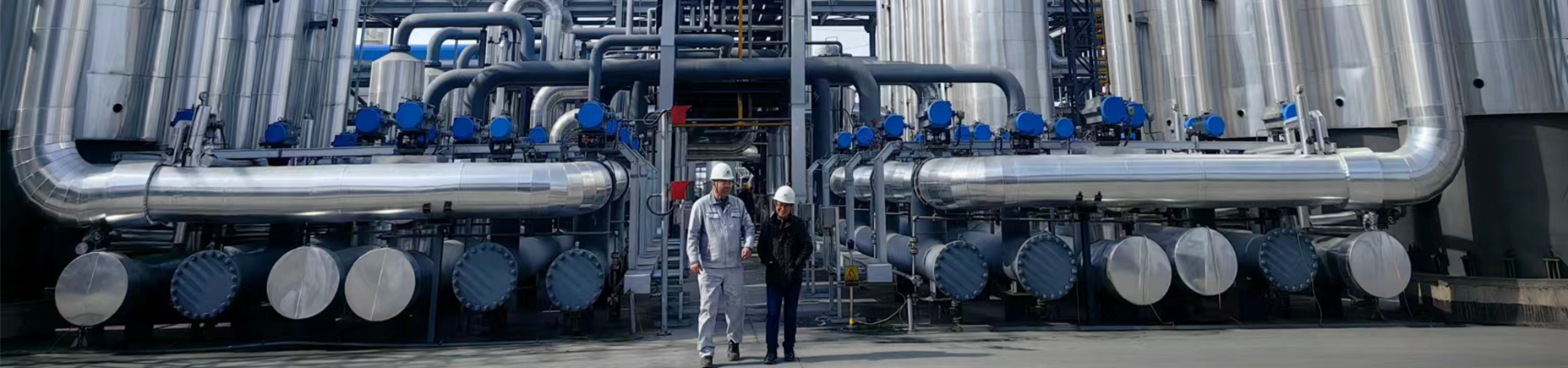
And here’s what’s interesting: large cryogenic installations are ineffective for such needs. Compact PSA (adsorption) or membrane units, which can be integrated directly into the process line, are coming to the fore. They are designed and configured by institutes such as Yizhi Technology. Their niche is not gigawatt capacity, but precise adjustment to the process.
The role of design institutes: why did they become a driver?
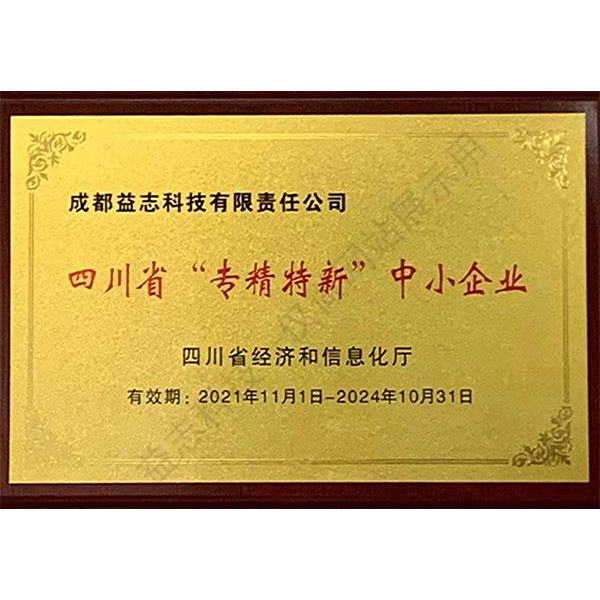
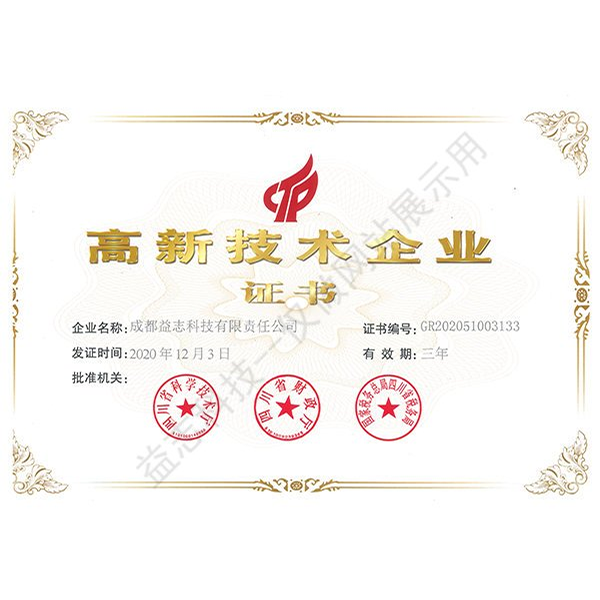
The Chinese model, where a strong design institute with a registered capital of 120 million yuan (likeChengdu Yizhi Technology Co., Ltd.) works in conjunction with a technology company (Huaxi Technology), and has shown its effectiveness in such niche areas. State giants are good for large-scale standard projects. And when non-standard engineering thought, quick adaptation and a willingness to take technological risks are needed, such players come into play.
They work on the principle of “from problem to solution”. A client comes to them not with the request “buy us an oxygen recovery unit?”, but with the task: “we have this gas flow with such and such parameters, we need to reduce the cost of this process, or utilize this emissions?”. And the institute begins to model and offer options: in some places it is possible to get by with additional tuning of existing equipment, in others a new module is needed, and in others it is more economically profitable to completely change part of the basic technical process.
This is the very “innovation in recycling”? in practice. It is not always associated with breakthrough technology for oxygen production or purification. More often it is an innovation in systems thinking and engineering integration. On their website it is clear that they position themselves specifically as a project integrator, which is fully consistent with my observations of the market.
What's next? Trends and limitations
If we look at the next 5-10 years, the trend will be towards further decentralization and “smart” integration. IoT-based systems that balance the flow of several gases (oxygen, nitrogen, argon) between different workshops or even neighboring plants in real time. Something like energy networks, but for process gases. This will raise the overall efficiency of resource use at the industrial site to a new level.
But there are also serious limitations. The first is safety. Oxygen is a dangerous oxidizing agent. Any system for its disposal, especially with the use of compressors and complex fittings, requires impeccable design in terms of explosion safety. The second is economic volatility. Today it is profitable to supply oxygen to a neighboring plant, and tomorrow it will close or switch to another technology. Therefore, modern projects include the possibility of redirecting flows or even changing the final product (for example, from gaseous to liquid for longer-distance logistics).
As a result, answering the question from the title: yes, there is innovation. But they are not so much about creating something fundamentally new from scratch, but about flexible, pragmatic and systematic application of known technologies to solve specific industrial problems. And the drivers here are precisely those teams that are deeply immersed in the technological processes of their clients, are ready for iterations and are not afraid of non-standard solutions. Like those mentioned above. This is, in my opinion, the main Chinese know-how in this seemingly narrow area.