China exporting hydrogen purification technology?
2026-03-14
This is a question that has recently come up more and more often in conversations at conferences and in correspondence with customers from the CIS. Many people immediately imagine ready-made installations packed in containers, sent somewhere to Kazakhstan or Belarus. But reality, as usual, is more complex and interesting. Exporting technology is not just selling hardware. This is the transfer of know-how, adaptation to local raw material flows (the same associated petroleum gas, which is different for everyone) and, most importantly, the transfer of operating experience. China here is not just a seller, but rather a partner who has gone from importing Western technologies to their deep processing and creating their own, tailored to specific, often more stringent, economic conditions. And when they talk about exports, it is this adaptation layer that is often overlooked.
What is really hidden behind the “export of technology”?
In my understanding, these are three interconnected layers. The first is, of course, the basic equipment: adsorbers, compressors, heat exchangers, control system. Chinese manufacturers here have reached a very competitive level in terms of price and reliability. But it’s one thing to buy a column, and quite another to know how to “educate” it. for a specific composition of raw materials. The second layer is the design one. This includes the entire package of documentation, calculations, and process modeling. And the third, most valuable one is operational experience. How to quickly bring the installation to parameters, how to react to fluctuations in inlet pressure, which sorbents to change first and how to extend their life. This complex is technology. And they really do convey it.
Let me give you an example from practice. Several years ago, we participated in a tender to modernize a hydrogen purification unit at a petrochemical complex. Local experts were sure that the problem was in outdated compressors. Our engineers, having studied historical data, paid attention to seasonal fluctuations in the content of sulfur compounds in the feed stream. It turned out that the pre-treatment system could not cope during peak periods, poisoning the main catalytic layer. The solution lay not in replacing the “iron”, but in refining the technological scheme and introducing an additional adsorption stage at the inlet. This is a typical case when it is not the product that is exported, but the analysis and methodology.
This is where misunderstandings often arise with customers. They are waiting for a magical “Chinese box” that will solve all their problems. But without a deep audit of existing production and training of local personnel, even the most advanced installation will not produce certified performance. We have to spend time explaining that the key stage is pre-project research, which we insist must be carried out. Sometimes this is intimidating, but those who agree thank you later.
Adaptation as a Key Competitive Advantage
Why are Chinese solutions in demand in regions with developed mining industries? I think the main reason is flexibility. Western technology packages are often a “black box”: they are optimized to work in ideal or close to ideal conditions. Chinese industry grew in a situation where conditions were not ideal. Raw materials could be of low quality, infrastructure weak, capital expenditure requirements strict. This experience of ?survival? and finding non-standard solutions has become our strength.
For example, the classic schemehydrogen purificationthe method of short-cycle heat-free adsorption (PSA) assumes stable pressure and composition. But what to do if the pressure in the network fluctuates, and chlorine periodically appears in the raw materials? In Europe they simply will not allow such a situation at the entrance of the installation. We have developed and tested hybrid schemes that combine PSA with membrane separation or a system of catalytic hydrogenation of impurities at the inlet. This increases the cost of the project by 10-15%, but increases its survivability and reduces operational risks for the customer significantly.
One of our projects for a plant in Siberia just encountered a chlorine problem. The design institution initially did not take it into account; the analysis data was incomplete. When, during commissioning, the sensors began to signal a problem, the pre-treatment line had to be urgently modified. It was stressful, but it was the fact that our team had similar experience and backup solutions that made it possible to solve the problem in two weeks, rather than in three months. Such cases are not written in beautiful brochures, but they form a reputation.
The role of design institutes and the example of Chengdu Yizhi Technology
When it comes to complex solutions, it is not manufacturing plants that come to the fore, but design institutes. They are the bearers of that very systemic knowledge. They take on the role of an integrator: they select equipment from different suppliers (sometimes both Chinese and European in one scheme), develop technological regulations and, what is critically important, accompany the project at all stages.
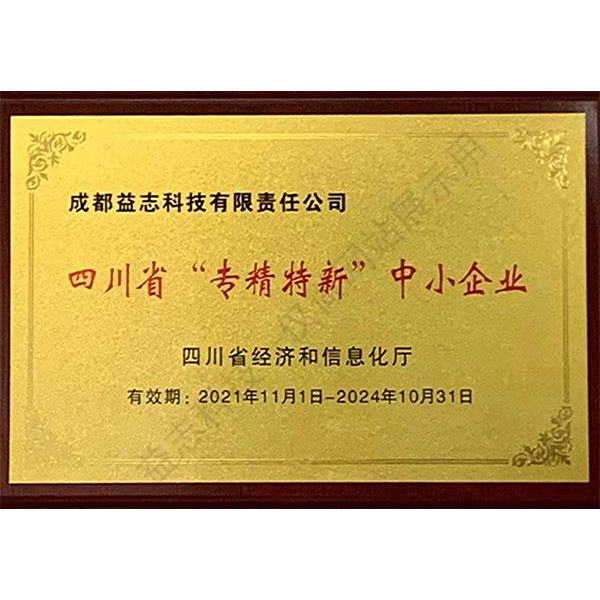
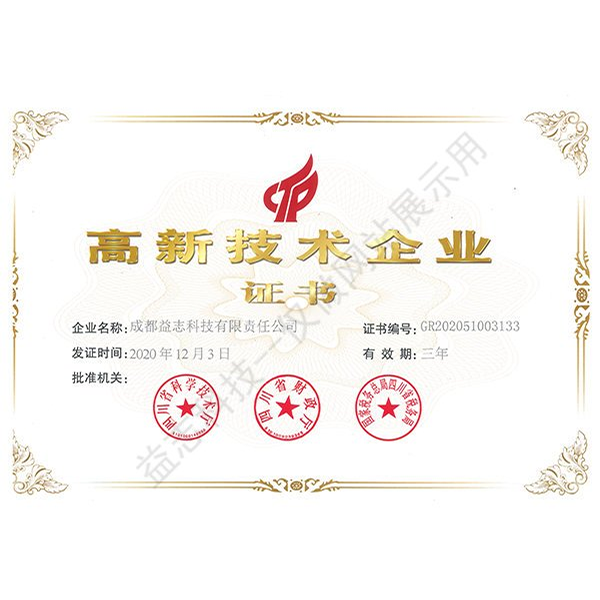
Let's take, for example,Chengdu Yizhi Technology Co. (https://www.yzkjhx.ru). This is not just a trading company. It is a design institute established on the basis of Chengdu Huaxi Chemical Technology Co. With a registered capital of 120 million yuan, they have serious R&D resources. Their profile is precisely complex projects in the field of gas separation and purification. The important thing is that they grew up from a chemical technology company, which means that their DNA contains an understanding of not just the operation of the installation, but its place in the overall technological chain of the enterprise. For the customer, this means that it will not be a sales manager who will talk to him, but technologists who think in terms of the final product - pure hydrogen for hydrotreating or ammonia synthesis.
Their portfolio includes interesting cases of hydrogen purification from methane conversion streams with a high proportion of CO, where it was necessary to ensure a purification degree above 99.999% with minimal pressure losses. The solution was found in a combination of systems: first coarse purification to remove the bulk of CO2 and moisture, then fine purification using proprietary zeolite molecular sieves. They did not reinvent the wheel, but were able to optimally combine known methods, achieving the desired result at an affordable price. This is the essence of practical engineering.
By collaborating with such institutes, a customer from the CIS gets access not to one specific technology, but to a whole ecosystem of solutions. At the same time, and importantly, communication and documentation are often conducted in Russian, which removes a lot of barriers and reduces the risk of errors in the interpretation of technical specifications.
Limitations and pitfalls
Of course, not everything is so smooth. Exporting technology is always a story about trust and mutual adaptation. On the Chinese side, sometimes there is some haste, a desire to adapt a standard solution to all conditions. I myself witnessed when a standard design was proposed for an installation in Uzbekistan, without taking into account the high content of aromatic hydrocarbons in the gas, which led to rapid coking of the adsorbents in the first year of operation. The problem was solved, but time and money were wasted.
Another stumbling block is service and supply of consumables. Chinese companies are actively developing service centers in key regions, but the logistics of spare parts, especially large ones such as columns or heat exchanger units, can take months. Smart players are now proposing the creation of local spare parts warehouses or even the establishment of production of some consumables (the same molecular sieves or valves) on the territory of importing countries. This is a strategic move that indicates seriousness of intentions.
It's also worth keeping regulatory barriers in mind. Technologyhydrogen purification- This is often an object of increased danger. Obtaining all necessary permits and certifying equipment according to local standards (for example, TR TS 032) is a long and bureaucratic process. Successful projects always take this factor into account from the very beginning, investing time and resources in approvals. Companies like the aforementioned Chengdu Yizhi Technology usually have specialists on staff who are familiar with these procedures, which makes life much easier for the customer.
Looking to the future: what's next?
The trend is obvious: exports will shift from the supply of equipment to the supply of complex technological solutions on a turnkey basis. with a full range of services, including training, digitalization and remote support. Hydrogen topics, especially “green” hydrogen will add a new twist. Here, China is also actively increasing its competencies, and soon we may see the export of technologies not only for purification, but also for the production of hydrogen by electrolysis.
Negotiations are already underway on joint projects, where the Chinese side provides technology and key equipment, and the local partner provides infrastructure, construction work and personnel. This is a model that reduces risks for both parties and appears to be the most sustainable.
So, back to the title question: yes, China is exporting hydrogen purification technology. But it is more accurate to say that it exports proven, adaptive engineering that can work in real, rather than laboratory, conditions. And this ?product? It turns out to be extremely popular where practicality and economic feasibility are valued above high-profile brands. For a specialist from Russia or Kazakhstan, this means the appearance on the market of a real alternative with a good ratio of price, quality and, no less important, flexibility to suit your needs.