China: fine sulfur removal from coal gas?
2026-03-15
When people talk about fine sulfur purification in China, many people immediately think about large coke plants or standard scrubbers with MEA. But the reality, especially with coal gas, which in our country is often used for synthesis gas or in the energy sector, is much more complicated. The most common mistake is to think that it is enough to bring H2S to 20-30 ppm, and everything is in order. And then they wonder why the catalysts at the next stage are quickly poisoned or the tubes in the heat exchangers corrode. It's not just mostly H2S, but also those nasty organic sulfur compounds - COS, CS2, mercaptans. Removing them is a whole other level of task.
Where it's thin, it breaks: the specifics of coal gas
Coal gas is not natural gas; its composition is a real “cocktail”. In addition to the main CO and H2, there can be anything there: resins, dust, hydrogen cyanide, and of course, sulfur in different forms. If we talk aboutfine sulfur removal, then the first problem is pre-cleaning. If heavy impurities are not removed, any expensive zeolite or finishing membrane will quickly fail. At one installation in Shanxi I saw how they tried to install an adsorber with molecular sieves immediately after the scrubber. After three months, the sorbent turned into a lump because polyaromatic compounds from the resins settled on top.
Therefore, the Chinese approach is often built on a cascade. First, rough cleaning - say, wet enzymatic desulfurization or chemical scrubbers to remove the bulk of H2S. Then heating and catalytic hydrogenation to convert COS and mercaptans into the same H2S. And only then - the finishing stage. It is at this final stage that the fun begins.
In the past, zinc oxide was often used. Reliable, but only for small volumes and at low temperatures. For large synthesis gas streams this becomes prohibitively expensive due to frequent sorbent replacement. Now I’m increasingly looking towards processes likeAdsorption Desulfurization (ADS)on specially selected zeolites or hybrid sorbents. They allow achieving sulfur content of less than 0.1 ppm, which is critical for modern methanol or ammonia synthesis processes.
Experience and rake: from implementation practice
A couple of years ago, we participated in the modernization of an installation at a chemical plant in Sichuan. The goal is to ensure gas purity for the new catalytic reformer. Local coal gas after gasification had a stable 200 ppm H2S plus about 50 ppm COS. The old cleaning system with sulfoferrite no longer worked. We decided to introduce a combined scheme: an enzymatic scrubber (quite cheap to operate) + a hydrogenation reactor + a fine adsorber based on a modified zeolite.
The biggest headache was the hydrogenation stage. The cobalt-molybdenum catalyst required strict temperature maintenance and the absence of oxygen leaks. The slightest deviation and the COS conversion dropped from 99% to 80%, overloading the final adsorber. It was necessary to install an additional analyzer at the outlet of the reactor in order to quickly monitor the breakthrough.
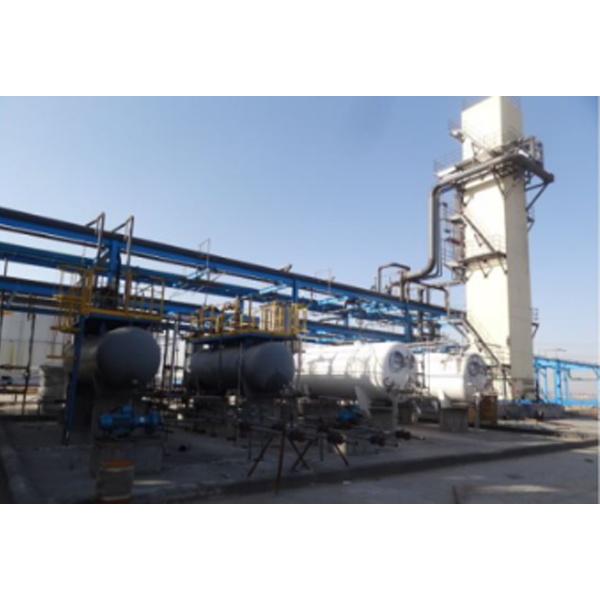
We then ordered the final adsorber from a specialized institute -Chengdu Yizhi Technology Co.(their website, by the way,https://www.yzkjhx.ru). This is their specialty - the design and supply of fine gas purification systems. They proposed a non-standard packaging of the adsorbent in layers with different selectivity: the bottom layer caught residual H2S, the top layer was aimed at trace amounts of methyl mercaptan. The solution worked, but required very precise timing of the adsorption/regeneration cycle.
Technological choice: not only efficiency, but also economics
In China, when choosing technologyremoving sulfur from coal gasThere is always a tough question of cost. You can supply ultra-modern membrane modules or PSA installations, but their Capex is too heavy for many plants. Therefore, they often make compromises.
For example, for gases going for combustion in a gas turbine unit, it may be enough to bring the sulfur to 10-15 ppm, and here liquid oxidation processes of the LO-CAT type perform well. They are relatively inexpensive to operate, but require disposal of the resulting sulfur.
But for chemical synthesis, where tenths or even hundredths of ppm are needed, solid sorbents cannot be used. The trend in recent years has been the development of sorbents with high dynamic capacity at elevated pressure. This makes it possible to reduce the size of adsorbers. I saw prototypes from Huaxi Technology (the parent company of the mentioned Chengdu Yizhi Technology) - these are composite materials based on iron oxide and activated carbon with promoters. The declared capacity is impressive, but the question is always stability after many regeneration cycles.
Regeneration, by the way, is a different matter. Most often it is carried out with hot inert gas or vacuum. But if there were heavy hydrocarbons in the gas, they can polymerize on the sorbent when heated, irreversibly reducing its activity. They constantly struggle with this by selecting desorption conditions individually for the composition of a particular gas.
Unobvious complications and details
In theory everything is smooth, in practice there are a lot of nuances. One of them is fluctuations in the composition of the source gas. There are different types of coal; the gasification mode can “float”. Today the gas contains 150 ppm of sulfur, tomorrow it will be 300. The purification system must be resistant to such surges. That’s why now projects often include “buffer” buffers right away. containers or backup lines of adsorbers.
Another point is control. Traditional gas chromatographs with frequent sampling are good, but there is a delay. Online laser analyzers are increasingly being introduced, which show H2S and COS content in real time. They are expensive, but can save millions by preventing sulfur breakthrough and poisoning of the expensive catalyst in the next stage.
And of course, the footage. Technologyfine cleaningrequires operators to understand the process rather than just push buttons. I remember a case where at one installation the operator, in order to save steam for regeneration, shortened the warm-up cycle. As a result, the sulfur was not completely desorbed, the sorbent quickly lost its capacity, and an unscheduled shutdown had to be made for replacement. Training and clear regulations are not bureaucracy, but a necessity.
Looking ahead: where the industry is heading
Now the main efforts in China are aimed not so much at inventing completely new methods, but at optimizing and hybridizing existing ones. The goal is to reduce energy costs for the cleaning process and increase reliability.
One of the promising areas is process integration. For example, combining the stage of sulfur removal with carbon dioxide removal in one hardware design. I have seen pilot plants where one reagent is used that selectively binds both H2S and CO2, but with subsequent separate separation. If this can be brought to an industrial scale, it will be a breakthrough.
Another direction is “smart” control systems. Based on data from multiple sensors and predictive models, the algorithm can select the optimal mode of adsorption and regeneration and predict the residual life of the sorbent. This is no longer science fiction; such systems are starting to be tested at large enterprises.
Returning to the original question: yes,fine removal of sulfur from coal gasin China this is a difficult but solvable task. The key is to understand the full picture of the gas composition, to choose a cascade technology without “weak links?” and in attention to operational details. This is not an area where you can buy a “boxed solution”. and forget. It's a full-time job, a balance between chemistry, engineering and economics. And judging by the number of new projects in chemical parks, this work is ongoing and quite successful.