Chinese CO2 exporters by adsorption at NPV?
2026-03-15
When you hear this question, the first thing that comes to mind is the huge installations at Chinese thermal power plants, where there is coal dust and process gases. But the point is not in scale, but in the details of the process and exactly how Chinese suppliers approach CO2 adsorption under vacuum-heatless desorption (NVD) conditions. Many people mistakenly believe that everything depends on the price of the sorbent, but in fact the key is the engineering of the entire system, from flow distribution to vacuum pump control. I myself worked on several projects where the customer bought seemingly excellent zeolites, but did not take into account the specifics of the humidity of the flue gases - as a result, the adsorbers were “blind?” per month. It is these nuances that are not written in catalogs that I would like to talk about.
What's Really Hidden Behind "Chinese Exports"?
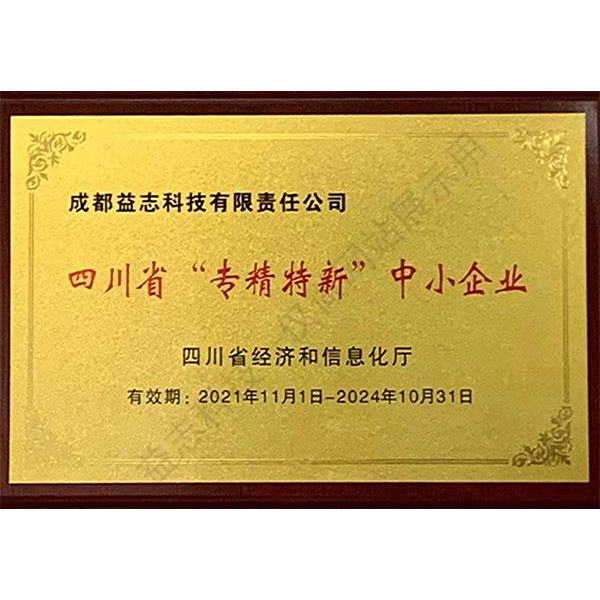
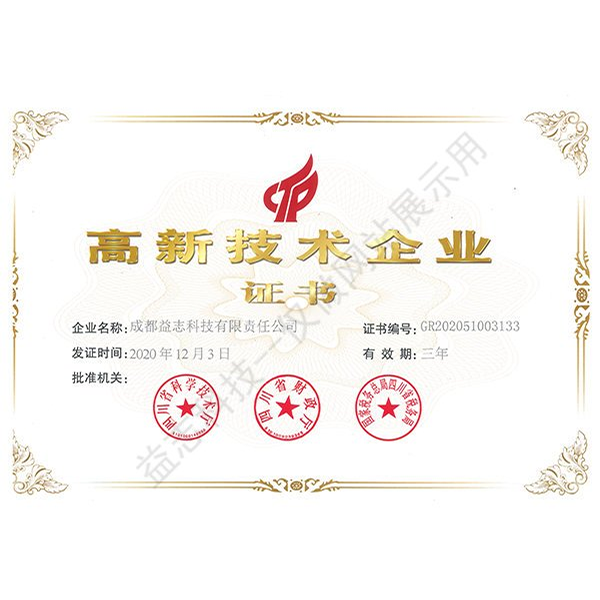
China is not a monolith. There are giants like some state-owned companies that rely on a full turnkey cycle. for their megaprojects. Their equipment is often oversized, with a large margin, which for an average plant in the CIS can be redundant and expensive to operate. And there are more flexible engineering companies that grew out of chemical holdings and understand the process from the inside. For example,Chengdu Yizhi Technology Co.- this is just such a case. They are a design and development institute established by Chengdu Huaxi Chemical Technology Co., Ltd., with a registered capital of RMB 120 million. This is not just a trading house, but a structure that was initially tailored for technological solutions. Their websiteyzkjhx.ruis focused on the Russian-speaking market, and this already says something - they are purposefully working to adapt their solutions to our, relatively speaking, post-Soviet realities: outdated infrastructure, problems with energy quality and specific requirements for automation.
What is their advantage as an exporter of technology? They often offer not just adsorbers, but an integration scheme into the existing process chain. I remember a project to capture CO2 from waste gases at ammonia production. Chinese colleagues from a similar company first of all requested not only the composition of the gas, but also detailed diagrams of the operation of the compressors and schedules for scheduled preventive maintenance of the entire workshop. Because the operating mode of the vacuum pump in the NPV system directly affects the load on these compressors. This is a level of understanding that only comes from actual commissioning experience, not from catalog sales.
And here lies the main point for the buyer. When choosing a Chinese supplier, you need to look not at a beautiful 3D model of the installation, but at its portfolio of completed projects with similar gas parameters. Ask not “what degree of purification?”, but “how will the system behave if the pressure in the plant network increases by 15%?” or “what will be the dynamics of the drop in sorbent capacity after 8000 working hours with our specific hydrogen sulfide admixture?”. The answers to such questions immediately separate those who make from those who only sell.
NPV is not a magic wand, but a tool with pitfalls
Heatless vacuum desorption is, of course, an energetically more favorable cycle compared to thermal swing adsorption (TSA). The main advantage is savings on heating. But in the practice of using it for CO2 there are a lot of “buts”. The first is the vacuum requirement. To effectively remove CO2 molecules from, say, zeolite 13X, you need a fairly deep vacuum. This means expensive, high-quality vacuum pumps (usually screw or rotary vane pumps with an oil sealing system) and absolute tightness of the columns. Chinese equipment manufacturers often compromise here by offering more affordable rotary vane pumps. But under conditions of constant work with an aggressive environment (even purified gas contains traces), the service life of such pumps can be 2-3 times lower than that of their European counterparts. And this needs to be included in operating expenses right away.
The second stone is moisture. If the gas in front of the CO2 adsorber is not properly dried, water will take up space on the sorbent faster than carbon dioxide. In NPV systems with its cyclic mode, this is especially critical, because it is more difficult to desorb water by vacuum. At one of the facilities in Kazakhstan there was exactly this problem: pre-drying on molecular sieves was unstable. As a result, the CO2 zeolite columns quickly lost efficiency. The solution was ultimately found not in replacing the sorbent, but in refining the purge mode and installing an additional, more sensitive inlet dew point analyzer. Chinese engineers, by the way, then promptly sent their specialist - he spent two weeks on the site, taking data. It's valuable.
The third point that is not talked about much is thermal effects. CO2 adsorption is an exothermic process, while desorption in a vacuum is endothermic. In fast BPD cycles (on the order of several minutes), local temperature changes may occur inside the column, which lead to mechanical stress in the sorbent layer and its destruction (formation of fines, dust). I saw how, after six months of work, the adsorber was opened - and the lower layers sintered into lumps due to constant cyclic heating and cooling, although according to the passport the temperature did not change. Designers from China later admitted that for such short cycles it was necessary to install a different type of gas distributor at the inlet so that the adsorption front would run more uniformly. Experience bought with blood.
Sorbents: manufacturers' promises vs. factory reality
The sorbent market in China is huge. You can buy zeolite from hundreds of small factories. But not everyone is suitable for the NPV cycle. Key parameters: not only CO2 capacity at low partial pressure (this is all shown in laboratory tests), but also sorption-desorption kinetics, mechanical abrasion strength (after 100,000 pressure differential cycles) and resistance to “poisoning?” other components.
Many Chinese exporters in their presentations refer to sorbents based on modified mesoporous materials or MOFs (metal-organic frameworks). They look revolutionary, the capacity numbers are impressive. But on an industrial scale, their use for flue gases is still rare. Expensive. The main workhorse is the same zeolites and, to some extent, impregnated activated carbon. CompanyChengdu Yizhi Technology, judging by their open materials, relies on zeolite sorbents of its own design, adapted specifically for the vacuum desorption cycle. An important point: they, as a design institute, often offer the sorbent as part of their technology package, and not as a separate product. This is logical - they are responsible for the operation of the entire system.
From practice: we once purchased a batch of “improved”? zeolite from one well-known Chinese manufacturer. In laboratory conditions everything was perfect. But in a real installation, where the vacuum desorption cycle lasted not 3 minutes (as in the test), but 7 (as it happened according to the technology), the sorbent began to quickly degrade. It turned out that with longer exposure to vacuum, incomplete removal of bound water occurred, and the structure gradually collapsed. The manufacturer, of course, said that we violated the regime. The dispute led nowhere. Conclusion: the sorbent and the technological regime are a single whole. It is better to buy them from one supplier who will guarantee the complete system.
Integration and “turnkey”: where the hidden difficulties lie
Chinese companies like to say “turnkey”. But for a buyer from the CIS, this concept requires more detail. ?Turnkey? — is this when they delivered the equipment, installed it using the imported installers, and started it up? Or does it include full integration with the customer’s instrumentation system, training of local personnel, supply of spare parts for 3 years in advance and remote support? The difference is colossal.
From experience, the most successful projects were those where not just a sales team worked on the Chinese side, but a dedicated process engineer who could make decisions on the spot. One day, during the startup stage, it turned out that the flanges on the customer’s gas supply pipeline had a different standard (GOST vs. ANSI). The Chinese installers, without thinking twice, suggested simply welding the adapters. But this would require shutting down neighboring production. As a result, their engineer essentially found ready-made adapter rings in a local city - the problem was solved without welding. This flexibility comes at a cost.
Another painful issue is automation. Often Chinese suppliers provide their control cabinets with an interface in Chinese and English. But for our operator, who has worked with Soviet devices for 20 years, this can be a barrier. Good exporters, aimed at long-term relationships, go for localization: translation of the interface, adaptation of signaling schemes to local standards, conducting trainings not through a translator, but with the involvement of a Russian-speaking engineer. On the websiteyzkjhx.ruit is clear that they are working on this - the information is structured for our audience. This is an indirect sign that they are investing in the market.
And last but not least on integration: ecology and documents. The supply of a CO2 capture plant is often part of a larger environmental project. Chinese suppliers must provide a full package of calculations, certificates and, critically, test methods for acceptance. There were cases when the installation worked, but it was not possible to prove by measurements that it achieved the declared 90% capture efficiency due to disagreements in the sampling methodology. All this needs to be agreed upon at the stage of technical specifications.
Looking forward: where technology and the market are heading
The demand for CO2 capture solutions will only grow, and China is one of the main players here. But the trend is not seen in giant installations for thermal power plants, but in more compact, modular solutions for the medium-sized industrial sector: cement plants, metallurgy, petrochemicals. This is where PDD technology, as it is relatively less energy-intensive, has an advantage.
Chinese companies are now actively experimenting with hybrid systems: for example, a combination of membrane pre-concentration of CO2 with final adsorption on zeolites in the PPV mode. This makes it possible to reduce the size of adsorbers and increase the purity of production CO2. Whereas previously captured CO2 was often simply thrown away, it is now increasingly being considered as a marketable product for the food industry, dry ice production, or injection into formations for ultraviolet injection. This changes the economics of the entire project.
For exporters, this means a shift away from selling “iron?” for the sale of “technology and services?”. There will be a demand for companies that can not only supply the installation, but also help with the business model for recycling captured CO2 and issuing carbon credits (if this is relevant for the purchasing country). Those who remain within the framework of simple engineering may lose.
With regard specifically to adsorption during NPV, the main directions of development are the creation of more durable and selective sorbents that operate under real, unpurified gas conditions, and the improvement of AI-based cycle control systems. Imagine a system that analyzes the composition of the inlet gas in real time and itself optimizes the duration of the adsorption and vacuum desorption phases to maximize efficiency and minimize wear. Chinese technology companies, especially those with a background in chemistry, likeChengdu Yizhi Technology, have every chance to be among the leaders in this field. Their strength lies in their proximity to large industrial sites at home, where they can test new solutions in the field. conditions, to gain that same practical experience, which then becomes their main export asset.
As a result, when choosing a Chinese partner for a CO2 adsorption project, you should look not at big names, but at the depth of understanding of the technology, willingness to share experience (including unsuccessful ones) and the ability to see in your project not just a sale, but joint work on a long-term result. It is these companies, even if they are not the largest, that ultimately win and bring real benefits.