Is China a leading exporter of precursor technology?
2026-03-15
Is China a leading exporter of stalker technology?
When you hear this question at conferences, you often catch yourself thinking: people confuse the scale of exports of equipment or finished products with real exportsproduction technologies. China is by far the largest supplier of many precursors, but when it comes to transferring complete process cycles—especially for complex, highly purified substances—the picture becomes much more nuanced. My experience suggests that we export not so much ready-made “box solutions”, but adaptive engineering competencies, and this is a fundamentally different story.
What is really hidden behind the “export of technology”?
In the industry, this is often understood as the supply of a turnkey technological line: from reactor design and selection of materials to commissioning and personnel training. But here lies the first pitfall. Chinese engineers, including us, have learned to brilliantly scale and optimize processes, often developed at the end of the last century. Our key export product is not a patent for a new molecule, butefficient and safe production technologywith the highest product yield and minimal waste. This is knowledge gained through practice: how to select a catalyst for a client’s specific raw material base, how to design a solvent recovery system to meet local environmental standards.
Let me give you an example from a project in the CIS several years ago. The client wanted to establish the production of one of the precursors for pharmaceuticals. They had outdated German documentation, but did not have an understanding of how to adapt it to the available local raw materials, which, as it turned out, had a consistently high content of specific impurities. Our role was not to copy the blueprints, but to conduct a series of experiments directly at their pilot plant to reconfigure the purification stages. We actually exported not the schema, butproblem solving methodology. As a result, the process was launched, but its economics were on the verge of profitability due to the logistics of the reagents - this is a typical story that is not written about in press releases.
A common mistake customers make is to expect the Chinese side to bring a “magic pill”: an ideal process that works in a vacuum. In reality, success depends 70% on pre-project analysis: a detailed study of raw materials, energy resources, qualifications of future operators and even the climatic conditions of the region. Without this, even the most advanced technology is doomed to chronic downtime. At one time, we stepped on this rake by installing a standard drying system in a region with extremely high humidity - the equipment could not cope, we had to urgently redesign the unit on site.
Player landscape: from giants to niche institutions
When people talk about Chinese exports, they usually mean large state-owned holdings. They are indeed closing large contracts for the construction of entire factories, especially in Asia and Africa. But there is another, less noticeable layer - design and technology institutes that grew out of large manufacturing companies. Their strength lies in their deep knowledge of specific chemical processes, developed in the parent company’s own production facilities.
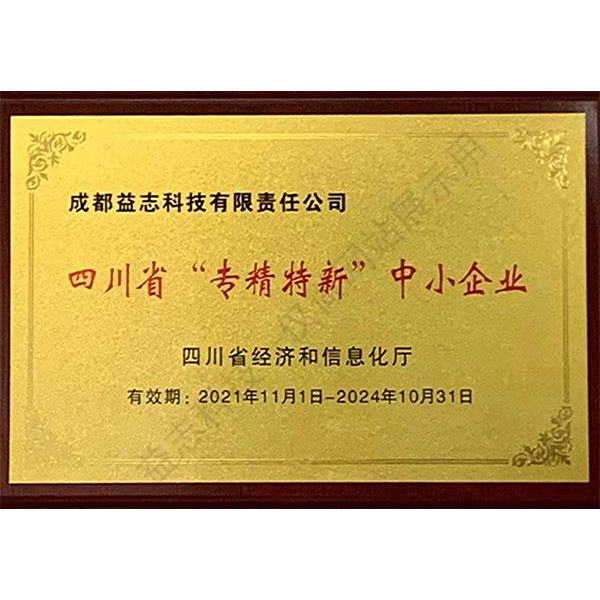
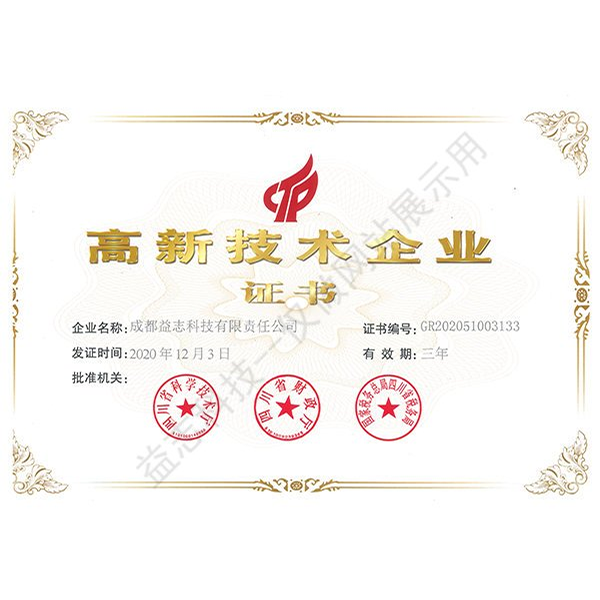
Let's take for exampleChengdu Yizhi Technology Co. (https://www.yzkjhx.ru). This is not an abstract engineering firm. The institute was established in 2013 by Chengdu Huaxi Chemical Technology Co., Ltd. with a registered capital of 120 million RMB. This is an important point: it was born inside a real chemical production (Huaxi Technology). Therefore, their competence in the field of precursor production technologies is not theoretical research, but knowledge verified at their own industrial facilities. When such an institute proposes a solution, it by default takes into account issues of scaling, security and cost that pure design firms often miss.
Working with such partners, you see their main advantage: they think in terms of the value chain. Their engineer may casually note in a conversation: “For this precursor, we tried three different brands of raw materials, and with this particular batch from Shandong province, the yield drops by 5%, but if you slightly adjust the temperature at the second stage, you can level out the loss?” This is the very “practical streak” that money cannot buy. Their website, by the way, is not replete with loud slogans, but rather resembles a technical portfolio - which, in my opinion, indicates a serious approach.
Barriers and unobvious difficulties
Exporting technology is always a story about overcoming barriers, and not only technical ones. The most obvious is normative. European REACH, American FDA requirements, local environmental standards are different in each country. Chinese technologists are often well versed in their GB (state standards), but deep knowledge of foreign standards is a separate expertise that not everyone has. Successful projects always include local lawyers and compliance auditors in the team.
Another barrier is ?cultural? in an engineering environment. For example, in some CIS countries a very strict, almost dogmatic adherence to certain instrumentation and automation schemes (instruments and automation) dating back to Soviet GOSTs has been preserved. An attempt to introduce a more modern, modular process control system may encounter resistance from local technologists. You have to not just install the equipment, but conduct real seminars, proving its effectiveness using numbers and cases. Sometimes we make a compromise, leaving the architecture they are used to, but saturating it with modern sensors and analytics software.
And of course, the eternal issue of intellectual property protection. Complete transfer of know-how is rare. More often these are licensing agreements with strict territorial and volume restrictions. In several projects we ourselves have used a model where the key stages of synthesis or catalyst formulations remain a “black box”. on our side, and the client receives a finished concentrate or intermediate product for the finishing stages. This reduces risks, but also limits the depth of real “technology export”.
Case: success that could have turned into failure
I would like to talk about a project for the production of a precursor for polymers in Eastern Europe. The customer purchased a standard package of documentation and a basic set of equipment from a Chinese company. On paper, everything was fine, but upon launch we were faced with a chronic discrepancy in the product’s granulometric composition (particle size). It turned out that the raw materials, although they corresponded to the chemical analysis, had different rheological properties due to microimpurities not specified in the specification.
The situation was on the verge of breaking the contract. Then they brought us in as third-party consultants. We had to urgently install a small experimental line right in the customer’s hangar and, within a month, go through dozens of parameters for the crystallization and drying process. The solution was found in a seemingly insignificant element - it was necessary to change the type of spray head in the drying tower and change the step heating schedule. This was not described in the original technology. This case is a vivid illustration of the thesis: it is not a folder with drawings that is exported, butability for technological improvisationand a deep understanding of the physical chemistry of the process.
After this project, the customer insisted on including the stage of “on-site adaptation studies” in the contract. using local raw materials. And this, in my opinion, is becoming the new standard. Leading technology exporters, including institutes such as the aforementioned Chengdu Yizhi Technology, now often include in their proposals not just installation supervision, but a mandatory cycle of pilot testing. This increases the cost of the transaction at the first stage, but reduces the risks by an order of magnitude.
The future: where is competence export heading?
Judging by the trends, just sell ?hardware? and the scheme becomes scarce. Competition is growing, and importing countries want not just a plant, but the opportunity for further independent development. Therefore, the focus shifts towards transmissionoptimization and digitalization methodologies. The point is to teach local specialists not just to press buttons according to instructions, but to use data acquisition systems (SCADA, MES) to constantly improve the process: reducing energy consumption, predicting catalyst wear, real-time quality management.
In this context, Chinese companies closely linked to large industries have a head start. They have huge amounts of historical data from their factories on which to train algorithms. In one of the latest projects, we implemented a simple predictive analytics system for a pyrolysis furnace - it predicted the need for cleaning based on indirect signs (an increase in pressure drop, a change in the composition of flue gases). This was a revelation for the client, since previously they had been cleaning the machine on a tight schedule, wasting both time and raw materials.
So, back to the original question. Is China the leading exporter of precursor technology? If we talk about replication of proven, effective and, what is critically important,economically verified industrial processes- definitely yes. But this export increasingly takes the form not of a static package of documents, but of a living, adaptive engineering service extended over time. The leaders will be those who can export not just reactors, but entire ecosystems for continuous technological improvement. And this race is won by players with their own powerful production background, where each technological parameter has been tested a million times in practice, and not in a laboratory flask.