China: technologies for extracting methane from biogas?
2026-03-15
When people talk about China and biogas, many people immediately imagine old underground reactors in villages. But this is already yesterday. Now we are talking about industrial scale and cleanmethane, which can be pumped into the gas pipeline. And here there are pitfalls, which are rarely written about in beautiful brochures.
From raw material to concentrate: where efficiency is lost
It all comes down to raw materials. Manure from a cattle farm is one thing, organic waste from food production is another. Composition, humidity, seasonality... On paper the technology has been proven, but in practice, each new object means new adjustments. A common mistake is underestimating the preliminary preparation of raw materials. If impurities, especially organosilicon compounds, are not removed, expensive membranes or adsorbents can quickly be damaged.
The process itselfmethane extraction(upgrading) is a whole zoo of technologies. Pressurized water (water scrubbing), PSA (pressure-pressure adsorption), membrane separation, cryogenics. In China over the last five years, the clear favorite is membrane technology. They are more compact, modular, and easier to manage. But their Achilles’ heel is sensitivity to the quality of the incoming flow. I have seen installations that, after six months of operation, showed a drop in selectivity by 15-20% due to non-ideal drying of biogas.
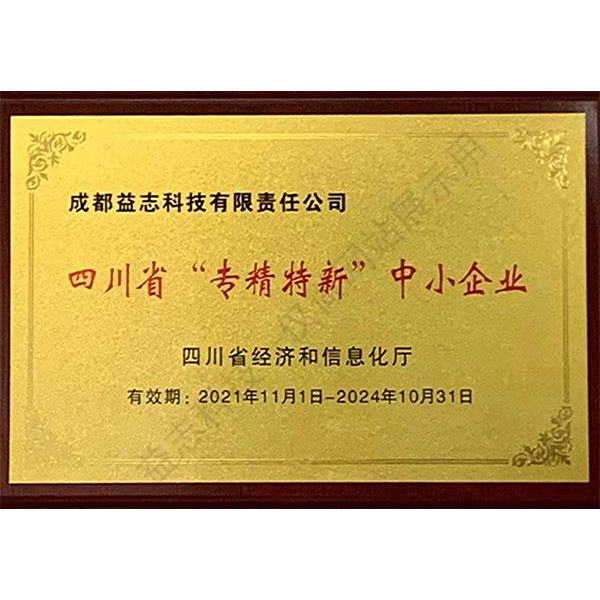
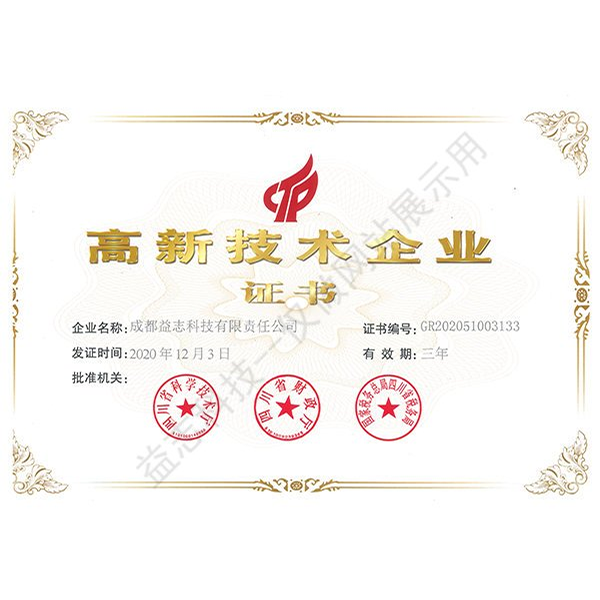
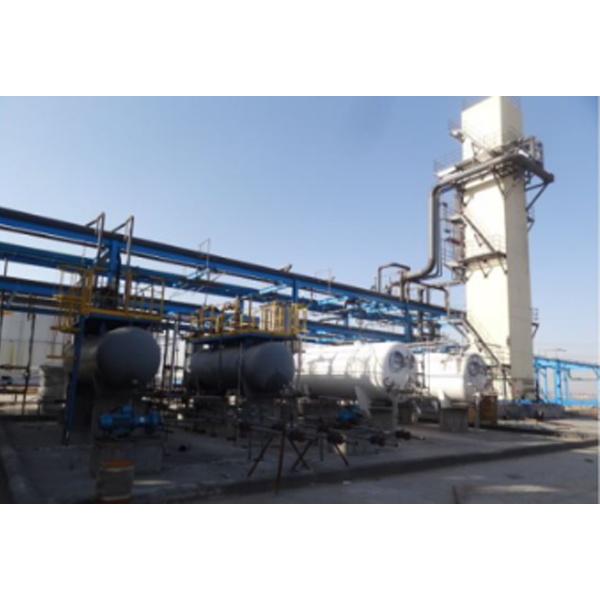
It is important to look at the full cycle, and not at one unit. For example, Chengdu Yizhi Technology Co. In his projects he often combines methods. First, rough cleaning and drying, then a cascade of membranes. Their approach, judging by the implemented projects, is based on flexibility: a scheme is selected for the specific composition of the gas and the required purity of methane (you want 96%, you want 99%). On their websiteyzkjhx.ruyou can find cases, but there are, of course, more successful stories. Life was different.
Numbers on paper and in the operation report
The declared efficiency of methane extraction is often marketing. Everyone writes more than 98%, but they rarely clarify that this is a laboratory indicator on an ideal gas. At a real station, with load fluctuations, 90-92% is already an excellent result. And this does not take into account the energy consumption of the installation itself. Sometimes the energy consumption of compressors and pumps eats up the lion's share of the benefits.
Another point is stability. I started the installation, brought it to mode, methane 97%. And after a week, the CO2 content in the product began to rise. The reasons may be in small things: changes in ambient temperature (affects the operation of the membranes), wear of the valves in the PSA, simple contamination of the filters. Local personnel are not always prepared for such a subtle diagnosis. We need a clear regulatory service, and this means additional operating expenses, which are often forgotten to be included in the estimate.
Therefore, when you see a project from an institute, the same Chengdu Yizhi Technology Co., Ltd., created by Huaxi Technology, with a registered capital of 120 million yuan, you understand that their strength is not in a single technology, but in the ability to calculate the entire chain. From the receiving pit for the substrate to the commercial metering unit for purified gas. Their niche is complete turnkey solutions where they can control all the variables.
Equipment: not always what it seems
The equipment market is overheated. Dozens of manufacturers offer innovative installations. But many simply assemble them from purchased components: a compressor from there, membrane modules from here, a control system from a third manufacturer. Problems begin with integration. There is no signal, the pressures are not synchronized.
Local Chinese manufacturers have become very strong in hardware. Their compressors and pressure vessels are up to par. Weaker so far with intelligent filling - real-time gas analysis systems and adaptive control. Simple chromatographs with long response times are often installed. Because of this, the system works blindly part of the time, without optimizing the parameters for the current composition.
It's interesting to watch the evolution. Previously, key technologies were licensed from Europeans. Now many companies, including Yizhi Technology, are developing their own membrane compositions and control algorithms. This reduces the cost of the project, but adds risks. Participated in the acceptance of one such home-grown membrane installation. The first three months are constant adjustments to the regime until the optimal pressure and temperature are found. It’s working now, but there was a lot of hassle at the start.
Economics: when payback is not the main thing
It is believed that the project pays off in 3-5 years. This is if you count only the sale of methane. But in China, the driving force is increasingly not direct profit, but environmental regulations. It is more profitable for an enterprise, especially a large one, to invest in a waste disposal system to obtainbiomethanethan paying huge fines or having problems renewing your license. This changes the approach. The customer is less picky about the payback period, but demands absolute reliability and compliance with strict emission standards.
Another trend is integration into the concept of waste-free production. The purified methane is used to refuel the enterprise’s own vehicles or to heat reactors. The solid residue after fermentation (digestate) is used as fertilizer. In such schemes, methane recovery efficiency is only one of many KPIs. What is more important is the overall stability of the cycle. I saw a project at a pig farm, where failures in the gas purification system paralyzed all logistics, because the trucks were refueled with the same gas.
This is where the value of design institutes manifests itself. They can calculate these relationships. Not just sell the installation, but include it in the plant’s technological map. On the websiteyzkjhx.ruat Yizhi Technology this is clearly visible in the project descriptions - the emphasis is on the synergy between different stages of processing.
Looking forward: what hinders and what moves
The main brake is not technology, but soft factors. Lack of qualified personnel for maintenance. Difficulties with connecting to main gas networks (there is a lot of bureaucracy here). Imperfection of the green gas certification and trade system.
But the drivers are stronger. Government support through subsidies and preferential loans. Clear carbon neutrality targets that flow down to regions and businesses. And, importantly, the emergence of real demand for carbon credits. A biogas project can generate them and sell them, which adds financial attractiveness.
Technologically, I think the future belongs to hybrid systems. For example, a combination of membrane technology for basic purification and short-cycle adsorption (PSA) for finishing methane to pipeline gas condition. This gives both high efficiency and stable output quality. Such solutions are already being tested in pilot installations, including in China.
So, returning to the main question... Methane extraction technologies in China are no longer a question of whether they exist or not. This is a matter of wise choice, integration and, most importantly, life cycle management of the entire system. Success is determined not in the laboratory, but on the site, among the pipes, compressors and daily data logs, where every deviation is visible. And this is where the experience of players like Chengdu Yizhi Technology Co. becomes critical - they have gone all the way from blueprint to operating station, having cut their teeth.