China: innovations in oxygen utilization?
2026-03-14
When do you hear about “oxygen utilization?” in China, the first thing that comes to mind for many is probably huge metallurgical plants and their VDU. But if you dig deeper, especially in the last ten years, the picture becomes much more interesting and... messier. It’s no longer just about simply “returning?” oxygen from exhaust gases, but about making this flow work to its fullest, and even with minimal losses. And here the most difficult part begins – not so much in theory, but in practice, on the court.
From ?iron? standard for flexible solutions
Traditionally, the lion's share of oxygen utilization technologies is tied to ferrous metallurgy. Converter gas, blast furnace gas - the concentrations there are more or less predictable, and the schemes have been worked out for decades. But the Chinese market, especially after all these “green?” initiatives, began to demand solutions for more capricious flows. For example, in the chemical industry, where one stream can contain oxygen, nitrogen, and a bunch of impurities that the catalysts “eat?” in a week.
I remember one project at one of the plants in Sichuan - they tried to adapt a standard pressure-cycle adsorption (PSA) unit for purifying gases from ammonia production. On paper, everything matched: oxygen was extracted, the purity at the output was 95%. But in fact, pressure fluctuations in the initial flow were such that the silica gel adsorbents had to be changed three times more often than expected. The economics of the entire project hung by a thread. This was a good lesson: ready-made solutions from the West do not always take root without serious, I would say, targeted modifications.
It was here that the locals began to appearinnovation. Not loud discoveries, but rather an engineering “fine-tuning”. For example, they began to experiment with hybrid systems: membrane pre-separation plus adsorption. The membrane took on the main burden of composition fluctuations, and the PSA unit ensured cleanliness. Noisy, requires more space, but in the end - stability. These things rarely make it into patent reviews, but they are the ones that determine whether a plant will run 8,000 hours a year or need to be repaired every six months.
Dips as a data source
You can't talk about innovation without talking about what didn't work. One of the most illustrative cases that is heard by everyone in narrow circles is an attempt to implement technologies on a mass scale.oxygen utilizationin small biogas processing plants. The idea was a beautiful one: extract oxygen to enrich the air in aerobic treatment reactors, increasing their efficiency.
But we ran into a problem of scale. Equipment that was economical for a large metallurgical plant turned out to be golden for a biogas station with a capacity of 5,000 cubic meters per day. Plus - raw materials. Biogas is unstable in composition, today hydrogen sulfide is 200 ppm, tomorrow – 2000. Membranes and adsorbents quickly failed. I have seen several such abandoned installations - rusting on the outskirts of enterprises, like a monument to incorrect calculations.
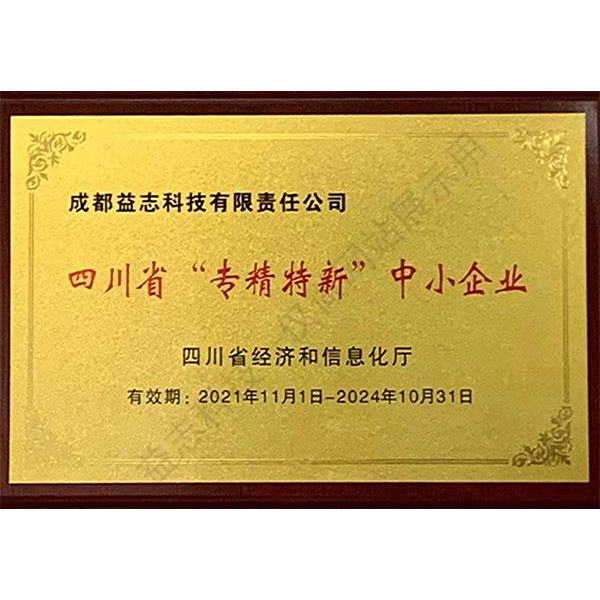
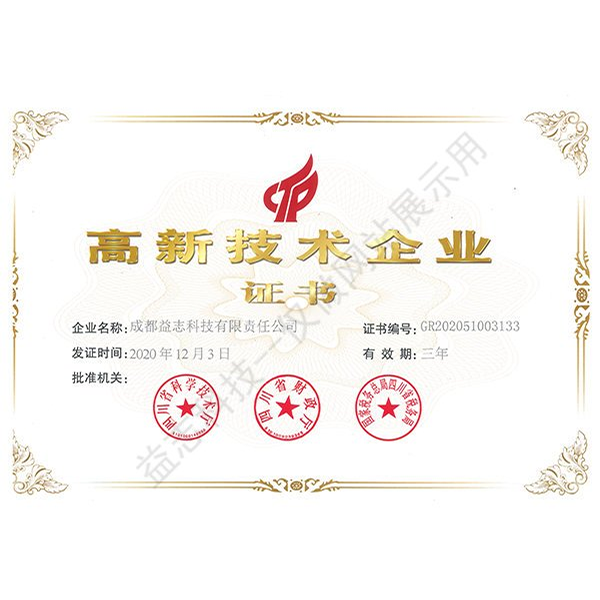
From this, however, another direction was born - modular, container solutions. Not universal, but tailored for a specific type of pollutant and concentration range. This is closer to a “turnkey” approach, but with an important nuance: engineers first monitor your gas for a month, and then offer a configuration. It's more expensive at the start, but it saves you from disaster later. Companies likeChengdu Yizhi Technology Co.(their website isyzkjhx.ru) just one of those who followed this path. They don't just sell installations, but position themselves as a design institute (as indicated in their description: a design institute created by Huaxi Technology), which implies deep analytics before offering anything.
The role of digitalization: not a panacea, but a tool
Now it is fashionable to talk about ?Industry 4.0? and digital twins in gas separation. In China, this trend was also picked up. But in practice, everything comes down to sensors and algorithms that can work with “dirty” ones. data. A recycling facility is not a laboratory; there is vibration, dust, and temperature changes.
At one of the new installations for purifying oxygen-containing tail gases at a polysilicon plant, we tried to implement a predictive analytics system. Sensors monitored pressure, temperature, and composition at the inlet and outlet. The AI model was supposed to predict a drop in the efficiency of the adsorbent. In theory, to change it not according to a schedule, but according to its actual condition, saving resources.
But the model constantly “stumbled” o sudden releases of impurities due to instability of the main production. We had to train it not on ideal data, but on real data, with noise and artifacts. The result is something between a smart system and an experienced operator who “feels”? installation. Now it works, but the economic effect is still difficult to assess - it’s too new. However, the approach itself - the creation of algorithms for real, not ideal conditions - this, in my opinion, is the essence of localinnovation.
Materials are the bottleneck
It all comes down to materials. You can come up with an ingenious scheme, but if there is no adsorbent that can withstand the impact of a specific impurity, or a membrane that is resistant to plasticizers in the flow, the project is doomed. China is betting big on its own developments here.
For example, carbon molecular sieves (CMS) for separating oxygen from air are a traditional niche for several world giants. But local manufacturers are actively developing their lines, trying to improve selectivity in high humidity conditions - this is critical for our southern regions. I saw reports on tests of new CMS from one laboratory in Chengdu - their resistance to water vapor is 15-20% higher than that of imported analogues, but at the same time the adsorption kinetics is slightly lower. The engineer has to choose: what is more important for a particular process – stability or speed.
The same with membranes. Imported polyimide membranes perfectly separate oxygen and nitrogen, but they are “afraid” organic vapors. Developments in the field of mixed matrix membranes, where inorganic nanoparticles are introduced into the polymer base, are trying to solve this problem. For now these are laboratory samples, but several pilot installations at chemical plants are already testing such modules. If they survive a year or two in an aggressive environment, it will be a breakthrough.
Economics vs. Ecology: where is the balance?
Ultimately, anyinnovation in oxygen utilizationcomes down to money. State emission standards are becoming stricter, fines are increasing - this is the driver. But the equipment itself must pay for itself, otherwise it will only be bought under pressure from the regulator, and it will work at half capacity.
Now the trend is to search for secondary benefits. Utilized oxygen? Great. But is it possible not only to return it to the process, but to sell it to a neighboring plant that needs technical oxygen? Or use it to produce ozone for wastewater treatment at the same plant? This requires complex logistics and arrangements, but such micro-clusters are starting to appear in industrial parks.
Companies like the one mentionedChengdu Yizhi Technology Co., with their project-based approach, often act as integrators in such schemes. Their role is not just to install the installation, but to calculate the entire chain: from gas analysis to possible consumers of the selected product. This is the next level – managing resource flows at the district or park level. The registered capital of 120 million yuan, as stated in their data, indicates serious ambitions in this direction.
Looking ahead: what's next?
Where is this all going? I think we'll see even more specialization. There will be no single “Chinese technology for oxygen utilization”. There will be a set of modules, materials and digital services that will be combined for an absolutely specific task: for metallurgy - some bundles, for fine chemicals - others, for biogas - others.
The key will not be the efficiency of the installation under ideal conditions, but its “survivability?” and adaptability in real. And, importantly, the ability to fit into the circular economy of the enterprise. Innovation will come not so much with the fundamental discovery of a new separation principle, but with the ability to put together a working puzzle from existing technologies, “plastering it on.” them to suit local conditions.
Therefore, when asked about innovation in China in this area, I would not talk about breakthrough articles in magazines, but about thousands of engineering reports, test benches and, yes, sometimes unsuccessful launches, which together provide that very practical experience. Experience that allows us to talk about something more than just copying.