China: leader in oxygen utilization?
2026-03-13
When you hear such a headline, the first thought is another marketing ploy or exaggeration. In the gas processing industry, especially oxygen, people often talk about “breakthroughs”, but in practice many “innovations” turn out to be well-forgotten modifications of old cryogenic installations. However, if you dig deeper into Chinese projects of the last decade, the picture becomes less clear. Something is really happening there that forces us to reconsider established approaches, especially in the fieldoxygen utilizationfrom side streams in metallurgy and chemical synthesis. But leadership? This requires thoughtful analysis, not based on reports, but on real, often imperfect, cases.
Where did this “oxygen” come from anyway? focus?
It all started not with the desire to become a leader, but with strict economic necessity. Chinese smelters, especially since 2010, have faced enormous pressure on energy efficiency and environmental regulations. Converter steel production generates huge volumes of converter gas (CO) that must be disposed of. Here again, oxygen is not the goal, but rather a complex by-product or component for deep cleaning. Many Western technologies offered classical schemes, but their adaptation to local conditions, to the quality of raw materials and scale, often failed. Too expensive, too capricious.
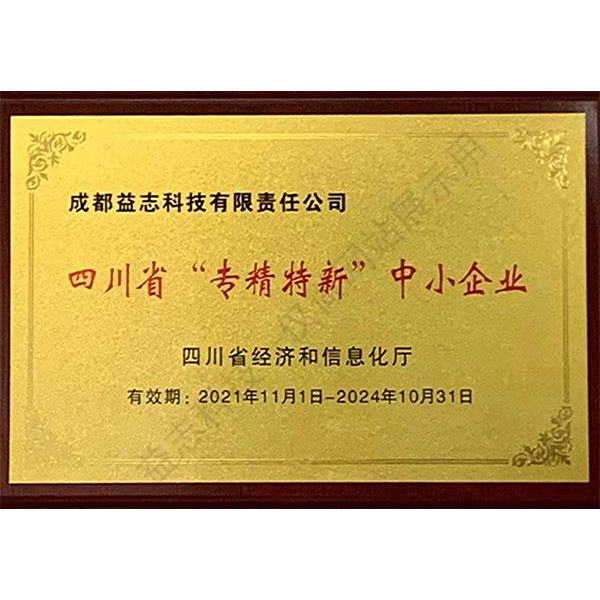
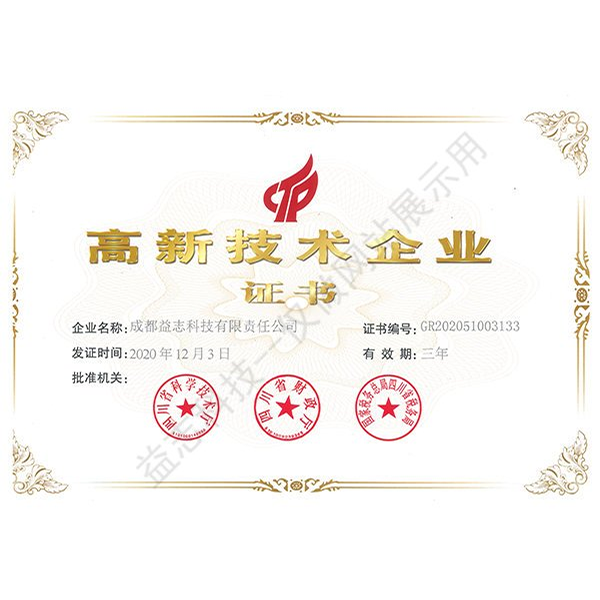
It was then that local design institutes began to appear, which undertook not just to copy, but to redesign processes “from scratch”, based on the realities of Chinese factories. One of the striking examples isChengdu Yizhi Technology Co.(a subsidiary of Huaxi Technology). Their website (yzkjhx.ru) is replete with cases on gas separation, but if you filter the advertisements, a clear specialization is visible: working with “dirty”, unstable flows, where classical membranes or short-cycle adsorption quickly fail. They are not chasing a record oxygen purity of 99.9%, but optimize the process for a specific customer task - for example, obtaining technical oxygen for re-supply to the same converter or for use in the neighboring epoxy resin production.
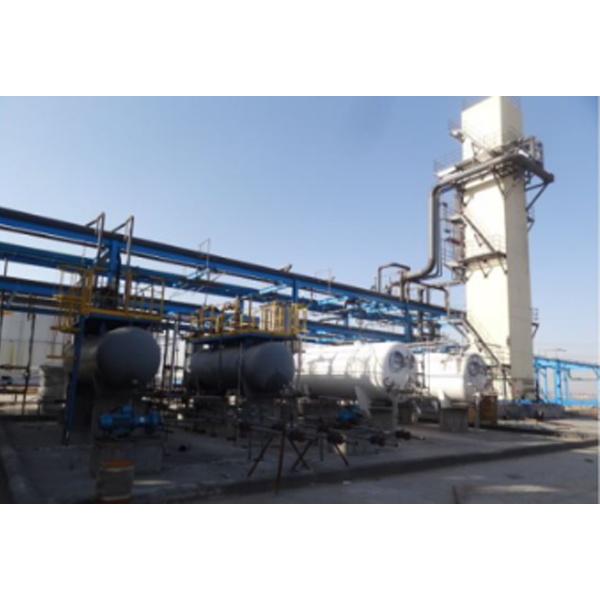
What is their fundamental difference, in my opinion? In refusing the “ideal” schemes. At one of the projects in Hebei Province, I saw their installation for the utilization of oxygen-containing tail gas. There was a hybrid system: pre-cleaning with scrubbers of their own design (rather primitive, but effective against dust and acid vapors), then a non-standard configuration of adsorbers with zeolite, operating at variable pressure. Engineers on site admitted that energy efficiency here is not the best in the world, but reliability and maintainability are key factors. They launched it quickly, and the installation has been operating for 6 years with minimal downtime. This is typically Chinese pragmatism: not to create a masterpiece of engineering, but to solve the client’s problem here and now.
Failures and lessons: where theory diverges from practice
Of course, not everything is smooth sailing. When talking about leadership, we must not forget about failure. In 2017-2018 there was a boom in technology implementationoxygen utilizationin small chemical plants. Many companies, including design institutes like Yizhi Technology, offered compact modular solutions. The calculation was for a quick payback due to savings on the purchase of liquid oxygen. But in practice we were faced with a problem that is often underestimated: the variability of the composition of the feed gas.
At one such ethylene oxide project, a plant designed for a certain proportion of oxygen in the purge stream began to chronically choke. at the slightest fluctuations in the main reactor. The control system did not have time to adapt, the purity of the product dropped, and it could no longer be returned to the process. It was necessary to urgently refine the online analysis and dynamic valve control system. It was an expensive lesson. Websiteyzkjhx.ruBy the way, now in the description of its solutions it especially emphasizes “adaptability to an unstable input stream?” — they clearly took into account past mistakes.
Another stumbling block is the qualifications of personnel. The most advanced installation is useless if operators are used to working the “old fashioned way”. At several sites I saw how local technical personnel, bypassing instructions, manually closed automatic valves, trying to “tighten” them. process, which led to emergency releases. Training and implementing a maintenance culture proved more difficult than installing equipment. This is a nuance that is rarely covered in glossy brochures, but it is what determines the success of the project in the long term.
Technological details that are rarely written about in articles
If we ignore global issues of leadership, it is interesting to look at specific “pieces of iron”. In the same systems from Chengdu Yizhi Technology, a non-standard solution for gas pre-cooling is often found. Instead of expensive turboexpanders, they use a cascade of heat exchangers that utilize waste heat from other areas of production. On the one hand, this reduces the energy consumption of the oxygen installation itself. On the other hand, it creates a complex dependence on the operation of the entire plant. If the neighboring workshop stops, efficiency drops. But for integrated metallurgical-chemical complexes, of which there are many in China, this is an ingenious and cheap solution.
Another point is materials. Classic packaging for adsorbers was often imported. Now, local manufacturers, stimulated by demand from such institutes, have launched the production of modified zeolites and metal-organic framework structures (MOFs), which work better in the humid and aggressive environment of converter gases. They may not have ultra-high selectivity, like some German analogues, but their cost and resistance to poisoning by sulfur compounds are beyond competition for local conditions.
It is in such details - in connection with a specific, non-ideal industrial environment - that the possible advantage lies. This is not leadership in the fundamental science of gas separation, but leadership in applied, “dirty” science. engineering, where the criterion of success is not a patent, but years of uninterrupted operation of the installation under conditions that a European engineer would consider unacceptable.
What's the end result? Leadership or narrow specialization?
Returning to the title. Can China be called the undisputed leader inoxygen utilization? On a global scale, no, if we talk about pioneering technologies or maximum levels of purity and efficiency. The leaders there are traditional giants like Linde or Air Products. But if we narrow the scope to a specific niche - namely, the recovery of oxygen from complex, contaminated, unstable by-streams of heavy industry, with an emphasis on economic feasibility and survivability of equipment - then there are Chinese companies, and in particular design institutes likeChengdu Yizhi Technology Co., are truly at the forefront.
Their strength lies not in writing articles for scientific journals, but in their accumulated portfolio of dozens of implemented, working objects. Each such object is a set of solutions for specific problems: in some places we had to deal with coke dust, in others we had to deal with pressure fluctuations. This experience, often obtained by trial and error, is difficult to formalize and even more difficult to copy.
So, to answer the question, I would say this: China has become the undisputed leader in the implementation of oxygen utilization technologies in the most difficult industrial conditions. This leadership is hard-won, it’s not perfect, but it works. And as the global industry moves towards a circular economy and closed cycles, this purely practical experience will only become more valuable. And the companies that went through this, like Huaxi Technology and itsdesign institute, will set the tone in this market segment. Not because they have the most advanced science, but because they know how to make that science work in a factory that is far from a sterile laboratory environment.