China: fine removal of sulfur from coal - technology and export?
2026-03-13
When people talk about Chinese coal desulfurization technologies, they often imagine something monumental, giant installations at thermal power plants. But the real work, especially in the segmentfine removal of sulfur, often begins with much more mundane and capricious things. Many people mistakenly believe that if there is a reagent or apparatus, then the process has begun. In fact, the key often lies not in the technology itself, but in its “grinding in?” to a specific coal, which may vary from batch to batch. About this “grinding in”? and it makes sense to speculate about what comes out of this for export.
What is hidden behind the “subtlety”?
The term "fine removal" - not for beauty. This is not just about reducing the sulfur content, but about bringing its residual content to levels that allow us to talk about a qualitatively different fuel or raw material. Say, for coking or for certain chemical processing processes. This is no longer just ecology, it is the economics of the process. But here lies the first pitfall: coal is a heterogeneous thing. Sulfur in it can be in different forms - pyrite, organic, sulfate. And if pyrite can still be dealt with using relatively traditional methods of enrichment, then with organic, which is, as it were, “woven in”? into the coal matrix, the real headache begins.
In our projects, we often encountered a situation where laboratory tests showed excellent results, but in a pilot plant the efficiency dropped by 15-20%. Cause? The laboratory sample was average and “calm”, but real coal in production had a fluctuating granulometry and, more importantly, a variable moisture content. Humidity affects not only the drying process before processing, but also the kinetics of chemical reactions duringremoval of sulfur. We had to adjust the reagent supply parameters and temperature conditions on the fly.
One of the practical conclusions: it is impossible to create a universal “boxed” one. technology for fine desulfurization. Each time is an adjustment. Some colleagues tried to export installations as a finished product, without adaptation engineering, and faced claims. The buyer received a device that, under his conditions, did not produce the declared parameters. Therefore, now competent export is always a package: technology + engineering + commissioning, and often personnel training.
Technological zoo and choice of path
There are many methods: chemical leaching, biodesulfurization, various flotation options with ultrafine grinding, thermochemical processes. Each has its own niche in terms of cost and applicability. Biomethods, despite their environmental appeal, are still too slow for large volumes. Chemical leaching, especially using certain oxidizing agents, is effective, but raises the issue of liquid waste disposal. This is a whole separate story.
At one time we closely studied the direction of oxidative leaching. Performance on organic sulfur was impressive. But we were faced with the problem of equipment corrosion - the aggressive environment required expensive alloys, which killed the economics of the project for medium-sized enterprises. We had to look for compromise solutions on material and modes, which, naturally, slightly reduced the overall efficiency. This is a typical example of how ideal laboratory technology runs up against the harsh reality of cost of ownership.
Now, in my opinion, combined schemes are the most promising for export. First, physical or physicochemical methods to remove the bulk of pyrite sulfur (this is relatively cheap), and then more “fine” ones. finishing tool. For example, the same process with ultrafine grinding and flotation using special collecting reagents. This scheme is more flexible and can be adapted to different budgets.
Export: not just selling iron
Chinese exports in this area have long ceased to be simply the supply of equipment. This is the export of solutions and experience. But there are also stereotypes here. Buyers from some regions are still waiting for the ?cheapest? option, not always understanding that low capex (capital costs) can result in high opex (operating costs) or low reliability.
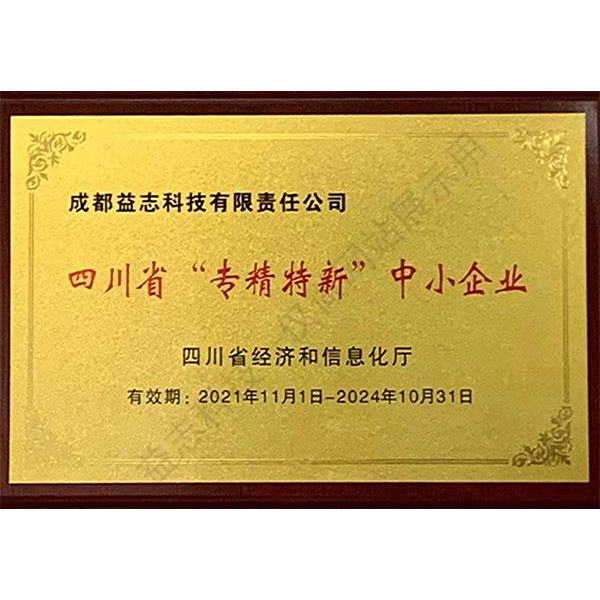
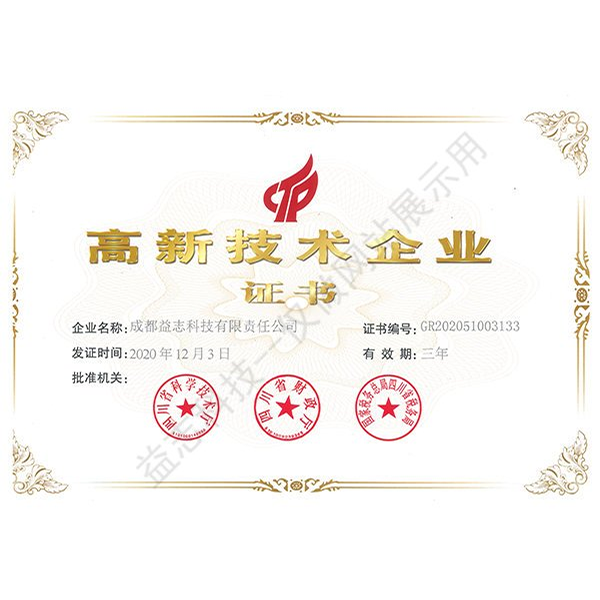
A good example is working with one of the design institutes, for example,Chengdu Yizhi Technology Co.(their website isyzkjhx.ru). They, being a subsidiary of Huaxi Technology, often act as integrators. Their approach, which I observed, is not based on the imposition of a “branded” brand. technology, but on an in-depth analysis of the customer’s raw materials. First, they do a trial treatment, see what kind of sulfur is present and in what ratio, and only then they propose a technological chain. This is the right way.
The key to exporting is creating references. One successful project, where it was possible to consistently achieve contractual sulfur indicators (say, reduced from 2.5% to 0.8% with a guarantee), works better than any advertising. But for such a project you need to be prepared for a long trip for your engineers to the customer’s site. There is no way without this. I know of cases where, due to savings at the commissioning stage and training of local personnel, the installation then stood idle for years or worked at half capacity.
Local pitfalls
Even with a perfectly selected technology, you can fail at the implementation stage. Production culture is a factor that is often underestimated. Does the operator need to constantly monitor parameters or is the system automated? How are things going with prevention and repair? A simple example: at one of the sites in the CIS, we were faced with the fact that fine filters, critical for our scheme, clogged many times faster than the estimated time. It turned out that the screen at the coal preliminary preparation site had failed, and an increased proportion of fines was released into the flow, which our filters were not designed to retain in such quantities. We had to quickly install an additional screening stage.
Another common question is the quality of the reagents. Sometimes it is more profitable to supply them centrally from a trusted manufacturer, but customs and logistics costs eat up the benefits. Localizing the production of reagents on site is a separate complex task that requires quality control. We followed the path of transferring the recipe and production technology of key reagents to licensed local partners, but this is also not a panacea and requires a strict audit.
And one more point - energy consumption. Some are ?thin? The methods are very energy intensive. In regions with expensive electricity, the economics of the entire project may not add up, despite the high efficiency of desulfurization. You have to calculate the full cycle of costs in advance and be honest with the customer.
Looking ahead: which way is the wind blowing?
Demand for fine sulfur removal technologies will grow, but will shift towards integrated solutions. It is no longer enough to simply clean the coal. The sulfur-containing waste from the process must be disposed of or, better yet, commercialized. Recycling desulfurization waste into marketable products (e.g., elemental sulfur or sulfates) is the next required step. Without this, the environmental benefit of the technology becomes moot.
The second trend is digitalization and predictive analytics. The introduction of sensors for online analysis of the elemental composition of coal before and after processing will allow flexible management of the process, minimizing the overconsumption of reagents and energy. This is no longer science fiction; some pilot solutions are being tested. For export, this will be the next competitive advantage: not just an efficient, but also a “smart”, economical installation.
And finally, nicheization. More and more requests are coming not for universal installations, but for solutions for very specific tasks: for example, for preparing a coal charge for the production of highly pure electrode coke or for synthesis gas of a certain composition. This requires deep cooperation between coal technologists and technologists from related industries. Such projects are more complex, but their value is higher and competition is less. I think it is in this segment that the real technological level and export potential will be determined in the coming years. Everything else will gradually become a commodity.