China: new LNG liquefaction technologies?
2026-03-13
When people talk about new liquefaction technologies in China, gigantic capacity numbers or big claims of breakthroughs often come up. But in practice, there is a gap between the launch of a pilot plant and its stable, economical operation at full scale, which not everyone recognizes. There was a lot of noise around modular solutions and so-called “breakthrough” solutions. processes, but where is the real operational history? Let's dig deeper, without gloss.
From boom to selective adoption: an evolving approach
I remember a period about five to seven years ago: it seemed that every major player and many provinces wanted their own, “the most advanced” one. liquefaction plant. The request was for speed of deployment and, often, for maximum unit power. This led to a wave of licensing of classical processes - mixed refrigerants, nitrogen expansion cycles. But Chinese engineers quickly realized that not all foreign technologies work equally well. on local raw materials, which could vary greatly in composition, and on specific climatic conditions, say, in the western regions.
Now the trend has shifted. It’s no longer just about “novelty,” but about technological adequacy to a specific project. Take, for example, medium and small-scale installations for distributed energy or ship bunkering. Here, what comes to the fore is not absolute efficiency under ideal conditions, but adaptability, the ability to work with unstable feed gas, and, most importantly, a reduction in capital costs. It was in this niche that interesting local developments began to appear.
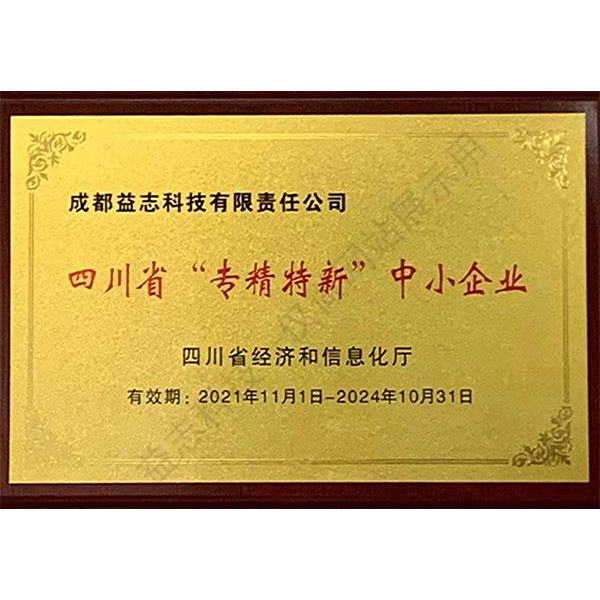
It is in this context that we can mention the work of such design institutes asChengdu Yizhi Technology Co.(a subsidiary of Huaxi Technology). Their websiteyzkjhx.rureflects precisely this pragmatic, applied approach to gas separation and purification technologies, which are critical ?preliminary? a step before liquefaction itself. Without high-quality preparation of raw materials, not a single, even the most advanced, liquefaction technology will work as it should.
Key areas: where the real work is going on
Marketing aside, several areas look the most vibrant. Firstly, it is the optimization and hybridization of existing cycles. Do not reinvent the wheel, but modify it for local roads. For example, a combination of pre-cooling with propane with a main cycle using a mixed refrigerant, but with the composition of this same refrigerant adapted for certain fields. I have seen projects where such customization gave an increase in efficiency by 5-7%, which is a huge amount of money for such energy-intensive processes.
Secondly, this is modulation. But not the one that the headlines are screaming about, but the real one, for complex regions such as high mountains or remote offshore fields. The problem is often not the liquefaction process itself, but the logistics of construction. Here are Chinese contractors and engineering companies, including the one mentionedChengdu Yizhi Technology Co., have accumulated serious experience. Their profile is the design of complex technological lines, which for modular construction means everything: from compact placement of equipment to control systems, which must be as reliable as possible with minimal personnel presence.
Third, and less obvious, is integration with renewable energy sources. There are pilot projects to use excess wind or solar energy to power individual liquefaction stages. So far this is more R&D, but the direction is promising, especially taking into account the “green” policy. development. True, the main stumbling block is the intermittency of such energy supply, and the liquefaction process loves stability.
Problems that are not always mentioned in reports
Anyone who has worked on a real construction site or startup knows that theory and practice are at odds. One of the key headaches is import dependence on critical equipment. Turboexpanders, special heat exchangers (the same infamous spiral wound heat exchangers), high-pressure pumps for refrigerants. Yes, localization is progressing, and quickly, but operator confidence in new samples, untested in continuous long-term work, is still low. Risking stopping a line worth billions is not the best motivation for experimentation.
Another problem is the qualifications of personnel to service these “new” ones. technologies. You can buy a license, you can install equipment, but the culture of operation, understanding the intricacies of the process at the level of shift engineers - this takes years to develop. I have seen situations where a relatively simple problem in the control system led to a week-long downtime due to indecisiveness of local staff and a long wait for specialists from the technology supplier.
And, of course, raw materials. Many new deposits, especially shale gas, have an unstable composition and may contain more “heavy” elements. components or impurities (mercury, CO2) than expected in the original design. This kills the schedule and forces you to modernize the pre-treatment area on the fly. This is where deep technological expertise is needed, the same that is offered by specialized design institutes. Their role is not just to draw a diagram according to a template, but to foresee possible fluctuations in advance and build flexibility into the technological chain.
Cases and lessons: what worked and what didn’t
There was one project in northern China where they tried to use a very energy-efficient, but capricious liquefaction technology for small volumes of associated gas. The idea was beautiful: to recycle what was previously flared. But they did not take into account the frequent and sharp changes in pressure and composition of this very associated gas. The installation constantly went out of mode, its efficiency fell below the calculated one. As a result, the project barely breaks even. Conclusion: for unstable raw materials, sometimes reliable and “forgiving” operator errors old technology is better than the most efficient but demanding new technology.
But the opposite example is an LNG receiving terminal in one of the eastern provinces. There they relied on regasification with integrated refrigeration production for use in a neighboring industrial park. This is not exactly liquefaction, but a related area. The project turned out to be extremely successful from the point of view of the overall economy. The key was not the process itself, but smart integration into the broader energy and industrial ecosystem. This is perhaps a more important trend than the race for liquefaction cycle efficiency percentages.
If we talk about specific players, then companies likeChengdu Yizhi Technology Co.(you can find out about them atyzkjhx.ru) often act as just such integrators and adapters of technologies. Their strength lies in their ability to take the licensing process or its elements and “sharpen” it. to specific customer requirements, be it special environmental conditions or the need to link the liquefaction plant with other production facilities on site. This is the same “new technology?” in the applied sense - not necessarily a revolution in the physics of the process, but a revolution in its application and adaptation.
Looking ahead: which way is the wind blowing?
I think that in the next 3-5 years we will not see any one “breakthrough” one. Chinese liquefaction process that will revolutionize the entire industry. Instead, the gradual but persistent optimization and localization of value chains will continue. The focus will shift to digitalization and predictive analytics for already operating installations - how to squeeze out a few more percent of efficiency from them and avoid unplanned shutdowns.
The direction of mini- and micro-LNG for transport looks extremely promising. Here the technology requirements are different: even greater compactness, an even greater degree of automation, the ability to quickly start and stop. This is an area for innovation, perhaps even using alternative refrigerants or unconventional circuits.
And finally, we cannot discount the political factor - energy security and "green" issues. transition. This will drive investment in technologies that allow for economical combustion of lower-quality or distributed gas, as well as linking LNG production with renewable energy sources. In this complex technological puzzle, the role of engineering companies with a deep understanding of both chemical processes and construction practices (like the sameChengdu Yizhi Technology Co.), will only grow. New LNG liquefaction technologies in China are not about one magical installation, but about an ecosystem of competencies that learns from its mistakes and slowly but surely finds the optimal path for each specific case.