China: fine sulfur removal from coal gas?
2026-03-13
When they talk about cleaning coke oven or syngas in China, many people immediately think about basic scrubbers and thiophanes. But "subtle" removal is another level, where it is not just about achieving emission standards, but about obtaining raw materials for high-purity chemistry or, say, protecting expensive catalysts at subsequent stages. This is where the real engineering begins, and often the “made in China” approach. turns out to be much more pragmatic and adapted to local realities than it seems from the outside.
Where is the line of “subtlety”?
In our projects under “fine cleaning” We usually mean reducing total sulfur to levels below 1 ppm, and often down to 0.1 ppm. But the key point is not just the output number, but the stability of the process when the composition of the source gas fluctuates. Chinese coal can be very different, and its gas after gasification can bring surprises. For example, in addition to H2S, there may be mercaptan, COS, CS2. Standard alkaline cleaning can handle H2S, but COS often goes further. This is a classic problem.
Therefore, "subtlety" begins already at the design stage of the circuit. Often this is a cascade: first a rough purification (say, amine or iron oxide-based), then hydrogenation of COS to H2S, and then a finishing stage. It is at the finish line that the main drama unfolds. We tried a lot - zinc oxides, activated carbon with special impregnations, processes like Sulfinol. Each has its own restrictions on temperature, humidity, and the presence of oxygen-containing compounds.
I remember one incident at a coal conversion plant. The customer required an output of <0.3 ppm to protect the methane catalyst. We set up a standard scheme. Everything is fine until planned load fluctuations begin. With a sharp decrease in performance, the temperature in the adsorber dropped and sulfur began to be released. It turned out that the kinetics of sorption on the selected material is highly nonlinear in this temperature window. We had to modify the heating/cooling system and control circuit. Trifle? No, it is precisely such nuances that determine the success of the “subtle” one. process.
Pragmatism of Chinese solutions: adaptation, not copying
I often hear that in China they simply copy Western technologies. This is not the case in our field. They take it as a basis, but radically adapt it to local conditions and the economy. For example, the service life of the sorbent is a critical parameter. Imported materials can work longer, but their price is 2-3 times higher. Local manufacturers have learned to make very worthy hydrogenation catalysts and zinc-based adsorbents, which, when used correctly, provide 3-4 years of stable operation. The economics of the project are becoming different.
Another point is the attitude towards regeneration. In the West, completely regenerable cycles are often designed. In China, especially in medium-sized enterprises, they can deliberately choose a disposable or partially regenerable sorbent if its disposal is simpler and cheaper than organizing a complex regeneration circuit with processing of waste streams. This is not “backwardness”, but an engineering compromise based on a complete calculation of the installation’s life cycle.
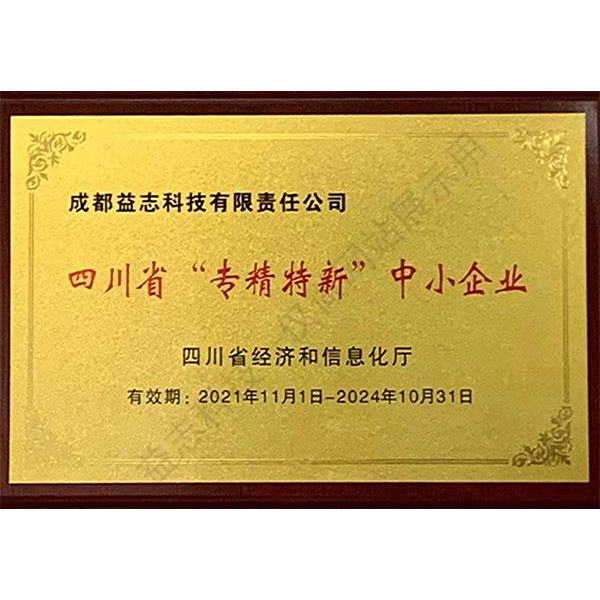
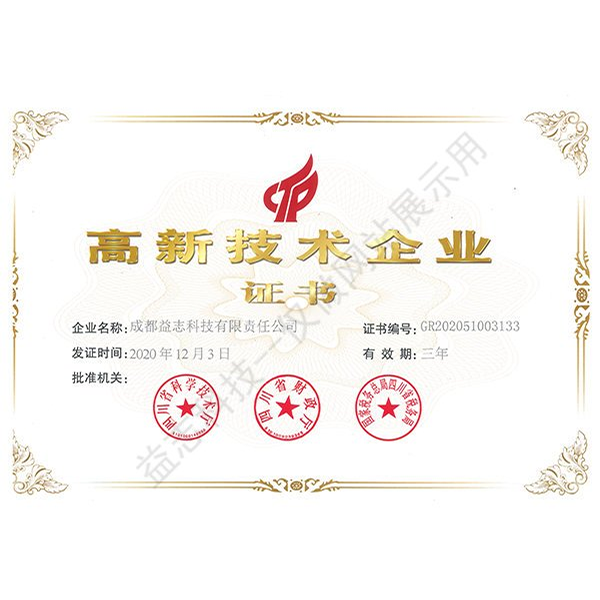
Take, for example,Chengdu Yizhi Technology Co.(their website ishttps://www.yzkjhx.ru). This design institute, created by Huaxi Technology, is actively working in precisely this niche. They don't just sell technology, but often offer hybrid solutions. Let's say, at the first stage - your proven amine scrubber for rough cleaning, and at the finish - a customized layer of impregnated activated carbon from a local partner to capture residual organic sulfur compounds. This approach reduces capital costs. Their experience, accumulated since its founding in 2013 with a solid authorized capital, shows this specificity well: a deep understanding of the clients’ raw material base and a willingness to combine methods.
Equipment and hardware: where the unobvious problems lie
Talking about chemical processes is one thing. But 50% of success in fine cleaning is the correct equipment. The liquid distributors in the absorbers, the sampling system for online analysis, even the nozzle material - everything matters. Chinese equipment manufacturers have made huge leaps over the past 10 years. Previously, there was a problem with the quality of welds in high-pressure apparatus, but this has now been resolved.
But their “pains” remained. For example, corrosion in condensation zones. After the stage of hydrogenation and cooling of the gas, condensate with microconcentrations of ammonia and cyanide may fall out - a hellish mixture for 304 stainless steel. It is necessary to lay more resistant alloys in specific areas, which is not always obvious from the beginning. On one of the projects, it was necessary to urgently change the pipeline material in the area between the scrubber and the fine adsorber after just six months of operation due to pitting corrosion.
Or a story with analysis. To control the process at the level of tenths of ppm, you need a good online chromatograph or analyzer using the UV fluorescence method. Their purchase and maintenance is a serious expense item. Many small factories go the route of periodic sampling and laboratory analysis. This creates a lag in control, and the sorbent may “slip” sulfur. Therefore, the current trend is towards more affordable Chinese online analyzers. Their accuracy may be slightly lower, but the reliability and response speed for operational control are already sufficient.
Economy and ecology: an inevitable balance
Fine cleaning is always a compromise between cost and results. You can install super technology and achieve 0.05 ppm, but if the next stage is simply burning gas in a furnace, then this is not economically justified. Pressure from environmental regulations is increasing in China, but it varies from province to province. Therefore, a system is often designed with a margin in productivity and cleaning depth, but it is put into operation in stages.
An interesting case is the recycling or disposal of spent sorbent. If it is zinc oxide saturated with sulfur, it can sometimes be transferred to the production of sulfuric acid. But logistics and heavy metal content become obstacles. More and more people are thinking about on-site regeneration, but this is again a capital expense. This is an area where there will still be a lot of innovation, perhaps towards cheaper and more recyclable materials.
From an operating cost perspective, the biggest enemy is energy consumption. Recirculating solution pumps, heaters for regeneration, compressors - all this? many. Modern projects, including those from the mentionedChengdu Yizhi Technology, are already focused on optimizing energy flows: using heat from other stages of the process for regeneration, energy recovery. Without this, it is impossible to compete today.
Looking to the future: integration and digital
Where is everything going? In my opinion, the key trend is not the invention of any one magical technology, but the deep integration of purification stages into the overall gasification or coking scheme. When a fine cleaning installation is designed not as a separate “box”, but as part of a single technological cycle with a common control system. This allows you to respond more flexibly to changes in raw materials and minimize pressure and heat losses.
The second is digitalization. Simply collecting data from sensors is no longer enough. Predictive models are appearing that, based on indirect signs (for example, the temperature gradient in the adsorber), can predict an early “breakthrough”? sulfur or the need for regeneration. This allows you to make maximum use of the sorbent resource and avoid emergency situations. Chinese engineering companies are actively investing in such developments.
And finally, raw materials. Coal is here to stay, but the share of gas from biomass and waste is growing. Their sulfur composition is even more capricious. The experience gained in “thin” removing sulfur from classic coal gas will be invaluable for these new directions. So, despite all the complexity and nuances, this area is far from being a routine service, but a constantly evolving field for engineering, where Chinese specialists have long not caught up, but go their own way, offering pragmatic solutions for real problems. And this is perhaps the most accurate definition of what is happening now in this area here.