China: how does adsorption hydrogen purification technology work?
2026-03-13
When they talk about adsorption purification of hydrogen, many immediately imagine standard schemes with zeolites or carbon. But in reality, especially in Chinese projects of the last decade, everything often comes down not to the idea of adsorption itself, but to how to make it work stably on a specific, sometimes quite dirty, flow. One of the key points that is often missed in general descriptions is not so much the choice of adsorbent, but the control of the process with fluctuations in pressure and composition of the raw material. This is what is most worth talking about.
From theory to hardware: where the pitfalls lie
Take, for example, the classicshort-cycle heat-free adsorption technology(KCBA). In the textbooks everything is smooth: several columns, alternating adsorption and regeneration, the output is pure hydrogen. But when you start working with installations, say, at hydrotreating plants or in methanol synthesis shops, it turns out that the main headache is the raw materials. Chinese hydrogen producers often use steam reforming of natural gas or refinery gases, where in addition to the main H? contains CO, CO?, traces of sulfur compounds and hydrocarbons. And if the designer only planned to remove CO?, then in six months you can get cloggedadsorbentsheavier impurities, which apparently should not have been in such concentrations.
I had experience at one of the enterprises in Sichuan province, where they encountered just such a problem. The CCBA installation was designed for a specific composition, but in practice it periodically “slipped” in the gas mixture. increased contents of propane and butane. Standard molecular sieves did not cope with this effectively, the regeneration cycle did not keep up, and the purity of the product decreased. We had to modernize the pre-drying system on the fly and install an additional stage to capture heavy hydrocarbons. This is the case when there is a theory of adsorption, and its adaptation to non-ideal industrial conditions is a separate art.
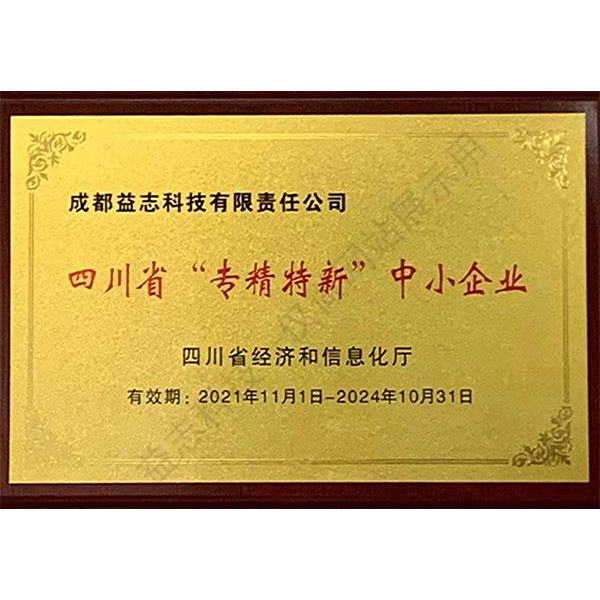
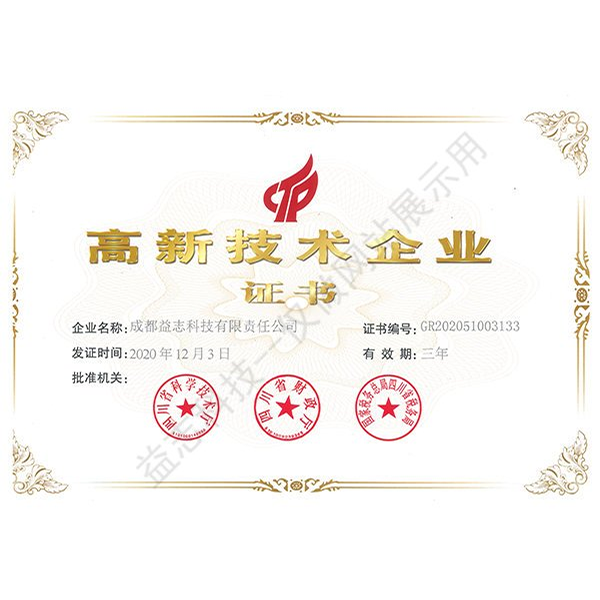
And here you can see the difference between just a supplier of equipment and someone who is deeply immersed in process engineering. Companies that grew out of research institutes, such asChengdu Yizhi Technology Co.(a subsidiary of Chengdu Huaxi Chemical Technology), are often approached differently. They can not just sell columns with an adsorbent, but first conduct long-term tests on the customer’s real gas in order to select exactly the multilayer bed of adsorbents that will work under specific conditions. This is critically important, because the economic efficiency of the entire installation depends on the service life of these same adsorbents and the stability of the product yield.
Adsorbents: choice, combinations and why there is no universal solution
Many people ask: “Which adsorbent is the best for hydrogen?”. The question, frankly speaking, is incorrect. It all depends on the target impurity. For drying - only materials (activated aluminum oxides, zeolites), for CO removal? - often zeolites; special copper-containing adsorbents can be used to capture CO in hydrogen-rich streams. In a real CCBA installation, you will almost never see one single backfill. It's always a ?sandwich? or several layers, each of which is responsible for its own group of impurities.
On one of the projects to purify hydrogen for fuel cells, we experimented for a long time with combinations to achieve a purity of 99.999% based on the sum of all impurities. Particularly difficult was carbon monoxide (CO), which required deep purification down to several ppm. Standard zeolites did not always perform at the required level here. As a result, after a series of pilot tests, we settled on a scheme with preliminary removal of moisture and CO? on one layer, and then on a special adsorbent for CO. The key was the sequence of layers and granulometric composition - too small granules created high hydraulic resistance, too large - reduced efficiency.
At the same time, regeneration is a separate matter. They often think that since it occurs due to pressure release (desorption), then everything is simple. But if you do not calculate the cycle time and pressure drop correctly, you can either not purify the adsorbent (and then the purity of hydrogen in the next cycle will drop), or spend too much productive gas on purging, reducing the overall yield. This is always a balance that is found through experience. Information about such nuances rarely ends up in open sources; this is precisely the know-how of engineering companies.
Chinese market context: designing for demanding requirements
In China, the demand for pure hydrogen has grown sharply not only in traditional chemistry, but also in new sectors - fuel cell energy, electronics, and metallurgy. And the requirements for cleanliness are completely different there. This forces engineering companies to be very flexible. Standard block "turnkey" often not enough.
Take, for example, the sitehttps://www.yzkjhx.ruis the Russian-language representative office of the mentioned Chengdu Yizhi Technology. If you look at their portfolio, you can see that they are working on hydrogen purification plants for a variety of sources: from chemical production gases to coke oven gas. This speaks of broad expertise, because each type of raw material presents new challenges in terms of the composition of impurities. Their approach as a design institute, created with a registered capital of 120 million yuan, involves deep development of technology for each case, and not the sale of standard solutions.
What characterizes many Chinese suppliers today is their willingness to take on complex and non-standard tasks. For example, if a customer has a by-product gas with a high content of hydrogen sulfide, then beforehydrogen adsorption purificationa serious pre-cleaning step will be required. And such complex solutions, where CCBA is only one of the blocks, are becoming increasingly in demand. What is important here is the integration of various technological stages into one reliable chain.
From practice: when something goes wrong
There are no technologies without failures. I'll tell you about an incident that taught me a lot. On one installation, after six months of flawless operation, a gradual decrease in productivity suddenly began. The pressure in the columns increased, the cycles became more frequent, but the purity decreased. Standard checks - replacing filters, checking valves - did not yield anything.
After opening the columns, it was discovered that the main adsorbent layer was sintered in the lower part. The cause turned out to be microscopic but constant oil leaks from the compressor at the previous stage. The adsorbent, which was supposed to catch gases, began to absorb oil vapors, and during regeneration by releasing the pressure, the oil was not removed, but, on the contrary, accumulated and coked. This was a classic example of how the problem is not in the treatment technology itself, but in ensuring ideal conditions at the inlet. I had to install an additional, more efficient coalescent fine oil filter and change part of the adsorbent. Since then, I have given primary attention to gas pre-treatment.
Situations like this show that successadsorption technologydepends on hundreds of small details: from the quality of piping and shut-off valves to the training of the operator, who must notice the slightest deviations in pressure readings. This is not “buy and forget”, it is a system that requires understanding.
Looking Ahead: Efficiency and Integration
The current trend is not just to purify hydrogen, but to do it with maximum energy efficiency and minimal losses of the product itself. In modern schemes, they are increasingly thinking about recovering energy from pressure relief during regeneration or integrating an adsorption treatment unit with membrane separation or steam reforming units. The result is hybrid systems.
In China, a lot of attention is paid to this as part of the overall green strategy. hydrogen. Even clearing the ?gray? hydrogen must be optimized as much as possible. Therefore, in new projects from companies like Chengdu Yizhi Technology, you can expect not just a CCBA installation, but an intelligent system with advanced control, which itself adjusts the cycle duration depending on the load and composition of the raw material, minimizing losses.
As a result, to summarize my experience,hydrogen purification technology by adsorptionin China it has long been more than just borrowing Western patents. This is a mature engineering practice, where adaptation to real, often “substandard” ones is of key importance. gas flows, the ability to combine adsorbents and build reliable process control systems. And the most important knowledge comes not from textbooks, but after analyzing the problems that arise in already operating installations. It is this practical experience that distinguishes true specialists in this field.