China and Russia: joint LNG technologies?
2026-02-13
- Behind the facade of megaprojects: where competencies really intersect
- Cryogenic valves and pumps: a discreet revolution
- Liquefaction “in the field”: modular solutions and their limits
- Joint R&D: is there light at the end of the tunnel?
- What's in the bottom line? Pragmatic symbiosis instead of loud statements
When people talk about cooperation in the field of LNG, they often immediately think of “Yamal LNG”. or ?Arctic LNG 2? — large-scale projects with Chinese financing. But a technology pool is not only an investment in production. In fact, there is a whole layer of less visible, but critically important interaction: joint development and adaptation of technologies for medium-scale production, storage, transportation and, most importantly, cryogenic equipment. Many people mistakenly believe that China is only a buyer or investor here. Reality is more complex and interesting.
Behind the facade of megaprojects: where competencies really intersect
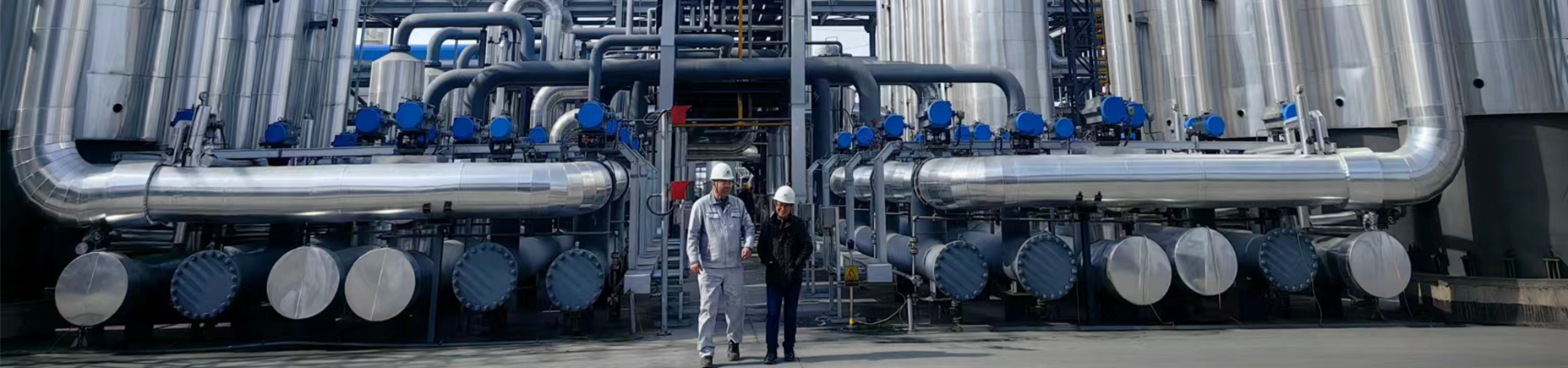
Big headlines aside, the area for real technological symbiosis lies in the medium and small capacity segment, as well as in the post-liquefaction value chain. Russian companies have historically been strong in the design of large technological lines based on domestic developments, for example, the use of turboexpanders. Over the past decade, China has made a huge leap forward in cryogenic engineering, standardization of modular solutions and, most importantly, in reducing capital costs.
Let's take, for example, equipment for nitrogen purification or heat exchangers of the “cold box” type. Russian design institutes can produce excellent process diagrams, but when it comes to purchasing a specific heat exchanger for low-temperature environments, Chinese manufacturers often offer more competitive production times and prices. But not everything is smooth here. The problem of “docking” often arises: Russian standards (GOST, PB) and Chinese standards (GB) are two different worlds. The process of approval and validation of equipment can drag on for months, killing the entire economics of the project.
Personal experience: participated in discussions on one small LNG project in the Far East. The Russian side provided the site and general design, the Chinese side provided the modular liquefaction plant. It all came down to the requirements for materials for working in arctic conditions. Our Chinese colleagues initially offered standard steel, which simply would not have passed our examination. It took long technical seminars, almost at the level of an engineering educational program, to find a mutually acceptable option. This is a typical situation that is not written about in press releases.
Cryogenic valves and pumps: a discreet revolution
This is where the influence of Chinese technologies is already being felt very concretely. Just 5-7 years ago, the market for cryogenic valves in Russia was divided between a couple of European brands and expensive American suppliers. Today, names like “Cryostar” are increasingly appearing in specifications. (not to be confused with the French brand) or ?Sinoenergy?. Their products - valves, pumps, evaporators - are gradually gaining trust.
But this trust is cautious. Local engineers, especially at existing Gazprom plants. facilities are skeptical about new suppliers. The main complaints are not about the quality of metal or assembly (it is often excellent), but about the long-term reliability of the seals and operation in a cyclic “heating-cooling” mode. Chinese manufacturers are making a huge step forward, actively purchasing European engineering companies and adopting experience. However, for their equipment to become a standard for Russian projects, we need not just successful tests, but years of trouble-free operation in our realities. So far, this process is happening locally, on peripheral projects.
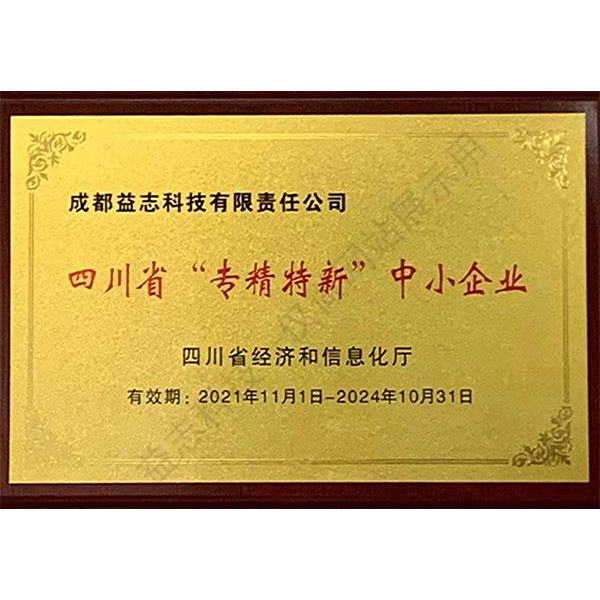
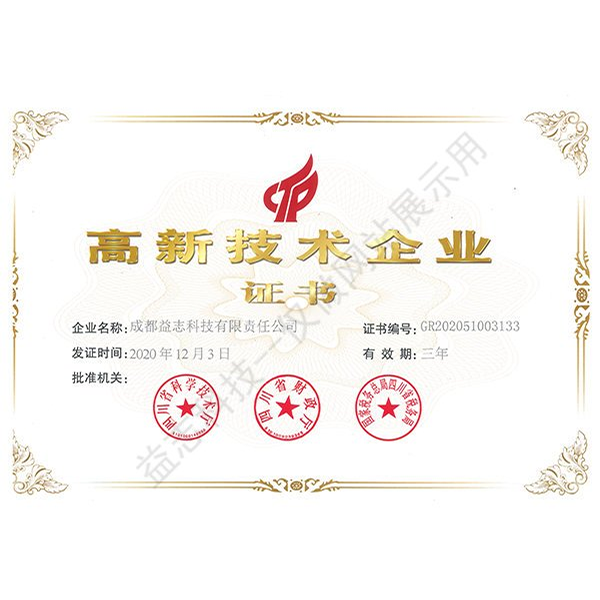
An interesting case is working with designers who act as integrators. For example, a design instituteChengdu Yizhi Technology Co.(a subsidiary of Huaxi Technology, their website ishttps://www.yzkjhx.ru), which positions itself precisely as a connecting link. They don’t just sell equipment, but offer comprehensive turnkey solutions adapted to the customer’s specifications. Their approach is to take the Russian technological scheme and “fill it up?” its reliable, verified Chinese equipment, taking on all the headaches of approvals. This is a smart strategy that removes many barriers.
Liquefaction “in the field”: modular solutions and their limits
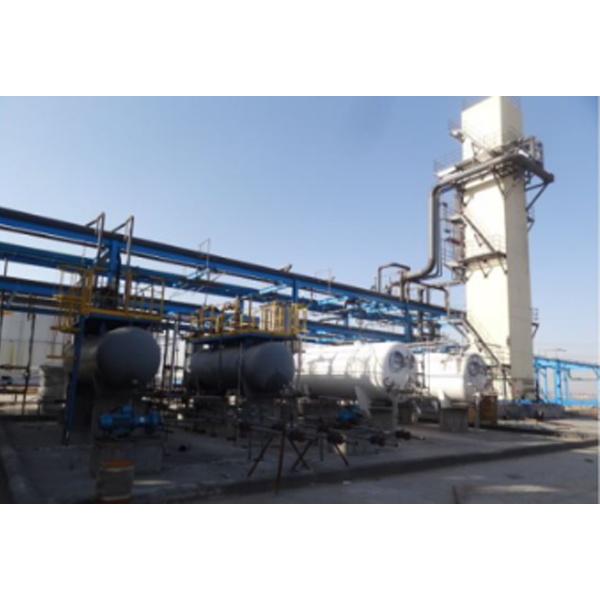
Great hopes for cooperation are pinned on modular liquefaction plants. Chinese companies have learned to make them almost in an assembly line manner. This looks ideal for the development of remote associated gas fields or gas supply to isolated areas in Siberia. I ordered a container, delivered it, connected it - and here’s LNG.
However, in practice there are a lot of nuances. Firstly, the climate. Most standard Chinese modules are designed for moderate climates. Frost at -50°C, snowstorms, problems with logistics during the muddy season - all this requires serious modification, which negates the advantage of a “ready-made solution”. Secondly, personnel. Servicing such an installation requires specially trained operators. Are Chinese partners ready to not only supply, but also provide training and service for years at a remote Russian site? Often, high-level agreements are broken over this everyday issue.
I was familiar with the attempt to launch such a modular installation in Yakutia. The equipment worked, but its efficiency dropped by 15-20% in winter due to suboptimal operation of the pre-cooling system. Chinese engineers who flew in for diagnostics were faced with conditions that they simply did not include in their models. We had to work together ?on the go? modify the thermal insulation system and make adjustments to control algorithms. This is a valuable, albeit expensive, experience for both parties.
Joint R&D: is there light at the end of the tunnel?
Discussions about joint research centers on LNG have been going on for a long time, but there have been few real breakthroughs so far. The main problem is different motivations. The Russian side is often interested in solving a specific applied problem “here and now?” for your field. Chinese technology giants think in global markets and strive to create a universal, scalable product.
A promising niche could be the development of liquefaction technologies for gases with high nitrogen or helium content, which is typical for some Siberian fields. Theoretically, Russia has deep expertise in the field of low-temperature separation, and China has the capabilities for rapid prototyping and cost optimization. But for such an alliance to work, we need not just a memorandum, but a common commercial project with a clear division of risks and intellectual property. For now, such models are just being developed.
Here again we can note the role of engineering intermediary companies, such as the mentionedChengdu Yizhi Technology Co.(established by Huaxi Technology back in 2013). Their registered capital of 120 million yuan shows serious intentions. Such institutes can act as a platform for such pilot R&D, since they understand the context from both sides and can formalize the problem in a language understandable to both engineers and business.
What's in the bottom line? Pragmatic symbiosis instead of loud statements
So, back to the original question. Yes, joint LNG technologies between China and Russia are not a myth, but an emerging reality. But it is developing not in the logic of “breakthrough collaborative innovation”, but in the logic of pragmatic symbiosis and gradual integration of supply chains. Russia brings a deep understanding of complex environmental conditions, safety requirements and experience in designing complex systems. China offers speed, competitive cost and growing quality in cryogenic equipment and modular solutions.
The main challenge is to overcome the “regulatory and technical” rupture and accumulation of long-term operation experience. Success will be determined not at the level of ministries, but at the level of specific project teams, where engineers from both sides will spend months working on drawings, testing samples and looking for compromises. It's slow, unglamorous work.
Therefore, when watching the news about new rounds of negotiations, it is worth looking not at loud investment figures, but at specific tenders for the supply of pumps forСПГor to enter into service contracts. This is where true technology partnerships are born. It is fragmented, sometimes clumsy, but this is how, step by step, a common technological space is created. And in this process the role of integrator companies capable of translating from one “technical language?” on the other, it will only increase.