China: recycling of vinyl chloride - new technologies?
2026-02-13
When they talk about the recycling of vinyl chloride in China, many people immediately think about pyrolysis - they say, burn it and that’s it. But in practice, especially with PVC waste of mixed composition, this “simplicity” turns into a headache: HCl emissions, problems with chlorides in the ash, corrosion of reactors. New technologies? Yes, they exist, but often under ?new? a well-forgotten old thing is hiding, only with digital control or another catalyst. The real progress is in integrated approaches, where mechanochemical processing or selective dissolution go hand in hand with traditional methods. This is what I want to speculate on, based on what I saw at the sites.
Where does the main difficulty lie? Not only in chlorine
The main focus, of course, is onvinyl chloride recycling- this is the binding of chlorine. But if you take real waste, for example, cable insulation or old window profiles, in addition to PVC there are plasticizers, stabilizers, and dyes. When heat treated they give their “bouquet”. I once observed how at a pyrolysis installation, due to the large amount of dioctyl phthalate in the raw material, the yield of low molecular weight aromatic compounds sharply increased - I had to urgently adjust the temperature regime. Therefore, new technologies are often aimed not so much at breaking the C-Cl bond, but at pre-separation or modification of the entire waste stream.
An interesting trend in recent years is the combination of processes. Let's say, not just pyrolysis, but low-temperature pyrolysis followed by gas-phase dechlorination of the products. Or mechanical activation in ball mills to increase surface area and reactivity before chemical processing. This is not a revolution, but an evolution, but it gives an increase in efficiency by 15-20%, which in scale is already significant.
Another nuance is the economy. The most advanced technology is useless if the cost of recycling a ton of waste is several times higher than the cost of primary raw materials or landfill disposal. Therefore, many “new items” They remain in pilot status. The criterion for success is integration into existing production chains. For example, if hydrogen chloride produced from PVC waste can be directly used at a nearby facility to produce vinyl chloride, then the technology is viable.
Practical experience: what works on sites
From what is actually being implemented, we can highlight technologies using supercritical fluids, in particular water. We tried to recycle medical PVC waste (tubes, containers) on one experimental line. In supercritical water, under certain conditions, almost complete dechlorination occurs with the simultaneous decomposition of the polymer chain into lighter hydrocarbons. Plus - minimal emissions. The downside is high pressure and energy consumption, which is currently holding back scaling.
A more mundane but effective example is modernized granulation and washing lines. Often the problem is not with the PVC itself, but with contamination. I saw the operation of a line where rigid PVC waste (such as profiles) was first crushed, then washed in several stages in hot washing solutions with caustic to remove surface contaminants and part of the plasticizers, and then sent for extrusion to produce secondary granules. The quality of the granules, of course, is lower than the primary one, but for non-responsible products it is quite good. The key here is the formulation of the cleaning solution and the organization of a closed water cycle.
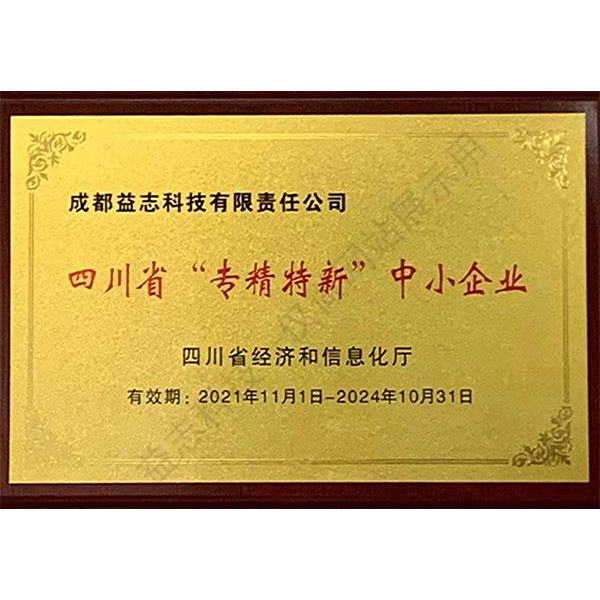
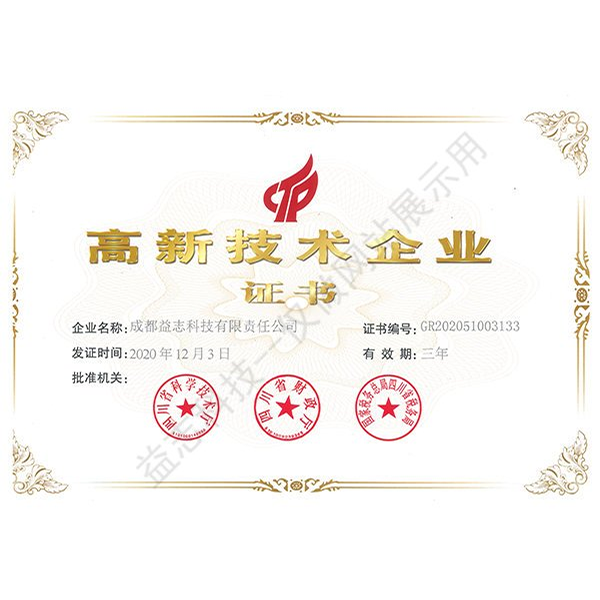
The role of design institutes in technology adaptation is worth mentioning separately. They often become the link between basic research and industry. For example,Chengdu Yizhi Technology Co.(their website ishttps://www.yzkjhx.ru), being a subsidiary of Huaxi Technology, deals specifically with design solutions in chemical technology. As far as I know, their portfolio includes work on optimizing processes for recovering chlorine from waste. Such institutes are important because they can conduct pilot tests on their equipment, “break in” technology using the customer’s real raw materials before recommending it for implementation at full capacity.
Subtleties and pitfalls: about raw materials and control
No technology will work perfectly without control of input raw materials. The most painful issue is sorting. Automatic sorting lines with IR sensors recognize clean PVC bottles well, but errors often occur with technical waste (the same wires, composite materials). You have to maintain manual sorting on the conveyor, and this is costly. Sometimes it is easier to agree with the waste supplier on a strict specification than to deal with impurities later.
Another stumbling block is analysis. Quickly and accurately determining the chlorine content in the incoming crushed mixture is a non-trivial task. X-ray fluorescence (XRF) analysis is good, but requires calibration and does not always distinguish between organic and inorganic chlorine. At one site we were faced with the fact that crushed salt (NaCl) got into the raw materials - the sensor showed a high chlorine content, but in fact it was not PVC. We launched the process - efficiency dropped. It was necessary to introduce additional sample preparation and combined analysis methods.
Emission control is a different story. Even if the basic technology effectively binds chlorine in HCl, there are always risks of the formation of trace amounts of dioxins and furans under non-ideal temperature conditions. Therefore, monitoring must be continuous. Modern installations are often equipped with online flue gas analysis systems, but their maintenance and verification is a constant expense that not everyone is willing to bear.
Looking to the Future: Where the Industry is Heading
I think the main path is not the creation of some single “miracle technology”, but the development of flexible modular systems. Such a system could combine methods depending on the composition of a particular waste batch: one line for mechanical cleaning and regranulation of pure PVC, another for chemical depolymerization of mixed waste to produce monomers or low-molecular-weight products. The key word is flexibility.
Great hopes are placed on catalytic processes that can reduce the dechlorination temperature and increase selectivity. Working with zeolites or metal oxide catalysts shows good results in laboratories. But transfer to the industrial level depends on the cost of the catalyst, its stability and resistance to poisoning by impurities. It's a matter of time and investment in R&D.
Finally, the most important driver is legislation and economic incentives. In China, waste processing requirements are being tightened and extended obligations for manufacturers are being introduced. This creates a market for technologyvinyl chloride recycling. Companies that can offer not just technology, but a comprehensive, economically sound turnkey solution? - from collection and sorting to obtaining a marketable product - will be in demand. This is where the role of integrators such as the mentioned design institute is importantChengdu Yizhi Technology Co., which can take over the entire cycle from design to commissioning.
Instead of a conclusion: thinking out loud
So are there new technologies? Undoubtedly. But they are rarely completely new. More often it is a smart combination, modification, adaptation to local conditions and raw materials. Success in this area does not depend on one brilliant invention, but on attention to detail: to the preparation of raw materials, to the control of process parameters, to the search for markets for secondary products. This is painstaking engineering work, not magic.
Sometimes the most effective ?innovation? — this is a well-established logistics that allows us to provide the installation with raw materials that are stable in composition. Or a new knife design on a crusher, increasing the service life by one and a half times. This doesn’t make the headlines in scientific journals, but it’s these little things that make up the real, not paper, efficiency of recycling.
Therefore, when I hear a question about “new technologies?”, I want to clarify: new for whom? For global science or for a specific plant in Sichuan province? Context is everything. And in this context, it is often not the most advanced, but the most robust technology that wins, the one that will work tomorrow and the day after tomorrow, despite fluctuations in the quality of raw materials and the cost of energy. This is what practitioners are struggling with, including those who work on projects forChengdu Yizhi Technology Co.and similar companies. The result of their work is not a sensation, but a stable, economical recycling line. And this, perhaps, is the main “new technology”? — technology of implementation and adaptation.