China: Leader in Acid Regeneration?
2026-01-07
When you hear this question, the first reaction is skepticism. Many people, especially in the post-Soviet space, still imagine China as a giant assembly shop. But in niche, technology-rich areas likeacid regenerationand resource-saving technologies, the picture is radically different. Here they are no longer catching up, but setting the tone. And it’s not about loud statements, but about specific projects that we, as process engineers, see in action - from drawings to commissioning.
From importing code to exporting solutions: how the landscape has changed
About ten years ago, European installations were considered the main know-how. Yes, reliable, but with a monstrous cost of ownership and often excessive complexity for many tasks. Chinese companies really copied a lot back then. But the key word is then. Their evolution is the classic path from reverse engineering to full-fledged R&D. They took the basic principles, faced real industrial problems at their own giant chemical and metallurgical plants, and began to adapt, simplify, and reduce the cost.
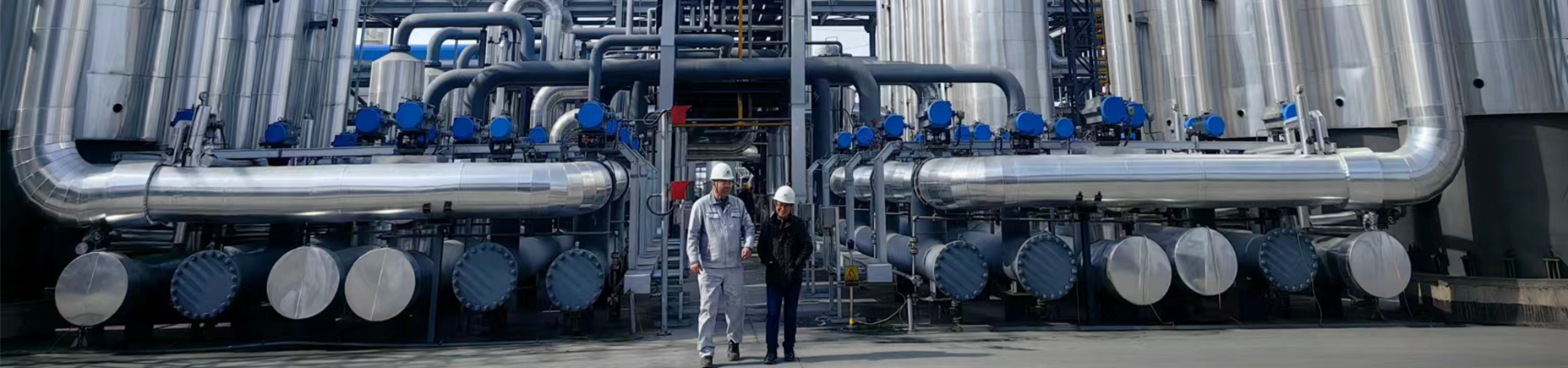
Now their strength lies not in fundamental discoveries (although this exists), but in applied engineering and system integration. They have learned to create effective, indestructible and, critically, economically viable systems for conditions that a European engineer would consider extreme: high dust levels, fluctuations in the quality of raw materials, the need for maximum automation on a limited budget. This is the very practicality that is conquering the markets of Asia, Africa, and now, increasingly, the CIS.
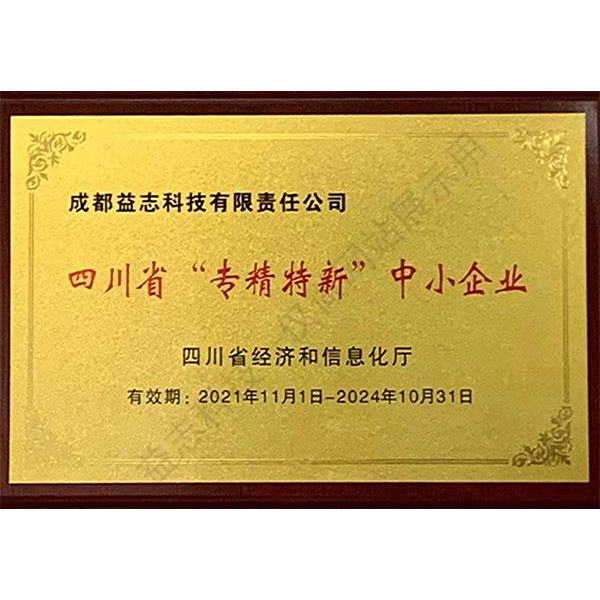
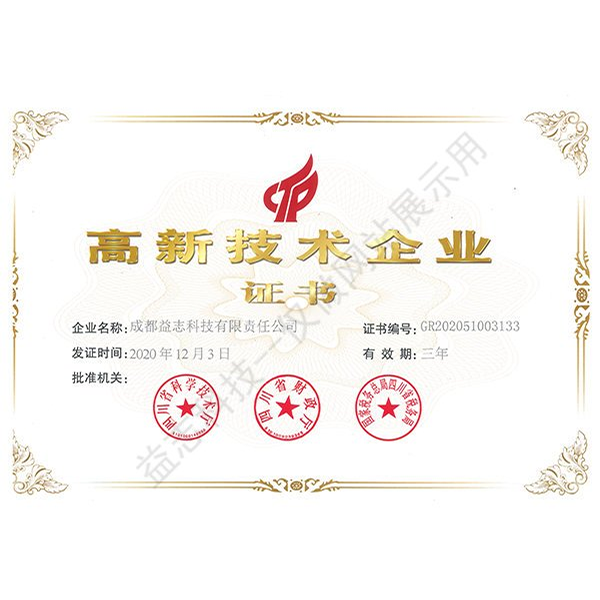
A striking example of this approach is Chengdu Huaxi Chemical Technology Co., Ltd. and their design institute Chengdu Yizhi Technology Co., established in 2013. These are not just equipment sellers. This is a design institute with a registered capital of 120 million yuan, which indicates serious intentions and resources. They don't just offer a column or heat exchanger - they sell a turnkey process chain, from wastewater analysis to production of commercial acid. Their websiteyzkjhx.ruis a portal for specialists where cases are analyzed in detail, which in itself is indicative.
Acid farming as a system: where the real economy lies
Many customers mistakenly focus only on acid recovery percentage. Like, the Germans have 98%, the Chinese have 95% - which means it’s worse. This is the most dangerous simplification. Regeneration efficiency is a balance between recovery rate, energy costs, reagent costs, membrane or packing life, and finally the cost of secondary waste disposal.
Chinese engineers, in my opinion, have become masters of this balance. They can offer a system with a conditional 92%, but which will pay for itself in 1.5 years instead of 4, because it uses less expensive construction materials for a specific environment, has a modular design for easy scaling and a built-in pre-treatment system that extends the life of the main installation significantly. This is systems thinking.
In one of the projects for the regeneration of etching solutions, we were faced with a dilemma: an expensive imported installation with a 98% guarantee or a more affordable Chinese complex. We chose the latter, from the same Huaxi Technology. Did you take a risk? Yes. But their technical specifications on 60 pages with calculations for each unit, with modeling of operation at different iron concentrations, were convincing. In practice, recovery was around 94-95%, but the overall savings due to low operating costs and ease of maintenance exceeded expectations. The main thing is that they calculated in advance and warned about the need to frequently wash one of the filters due to the specific nature of our suspension. Honesty in small things is worth a lot.
Failures that teach: not everything is smooth
Of course, not all stories are successful. There was an experience with another company where they installed a sulfuric acid installation. On paper, everything is perfect. In practice, there are constant problems with pumping equipment that is not designed for our start-stop cycles. It turned out that they took a standard catalog pump without adapting it to the real operating mode. Lesson: It's critical to look not at pretty 3D models, but at the specification of EACH component. Chinese market leaders, those from Chengdu Yizhi, understand this. Their projects include an in-depth audit of the customer's process. Without this, you are on the path to headaches.
Technological highlights: membranes, adsorption, crystallization
If we talk about specific methods, then a clear specialization is visible here. In diffusion dialysis and membrane electrolysis for the regeneration of mixed acids, they have perhaps become one of the world leaders in terms of price/quality ratio of membrane blocks. Their membranes may be inferior in service life to Japanese ones, but the cost of replacement is 3-4 times lower, which often makes the overall economy more profitable.
Particularly impressive is their progress in evaporation and crystallization to obtain pure salts from waste solutions. Previously, this was a zone of continuous scum and stoppages. Now they are introducing combined schemes - for example, preliminary nanofiltration, then evaporation with circulation crystallizers of a special design. This allows you to work with highly concentrated and contaminated wastewater, which previously was simply sent for neutralization. It's not easy anymoreacid regeneration, but the creation of an almost waste-free cycle.
On their websiteyzkjhx.ruYou can find detailed diagrams of such combined systems. What is valuable is that it contains data on real specific energy consumption, and not theoretical maximums. For an engineer, this is golden information.
What's next for the market? Competition and niches
Will China become an absolute monopolist? Hardly. The Germans and Japanese will retain the premium segment for extremely complex tasks. But the share of Chinese solutions in the global market will only grow. Their main weapon is the ability to quickly replicate and scale proven solutions, making technology accessible to medium-sized enterprises.
The next logical step is entering the market of digital twins and AI optimization of regeneration processes. Some Chinese universities and companies are already publishing research on this topic. When these developments flow into commercial products, this will give a new breakthrough in efficiency. Imagine a system that selects a regeneration mode in real time based on an analysis of the incoming flow and a forecast of the production load.
So, back to the title question. Leadership is a multifaceted concept. If we take the volume of implemented systems, the speed of innovation and market coverage - yes, China is already a leader or at least one of two or three key players. If we take the absolute, laboratory efficiency of individual processes, perhaps not. But industry does not live by laboratory conditions, but by economics, reliability and maintainability. And in this paradigm, the Chinese approach toacid regenerationand integrated resource conservation is incredibly in demand. This is no longer a catch-up school, but a completely independent and powerful school of engineering that has to be reckoned with.