China: leader in LNG liquefaction?
2026-02-19
When you hear this question at conferences, you often want to clarify: what exactly is a leader? In import volumes? At the pace of terminal construction? Or in our own liquefaction technologies? Many people immediately think about gigantic regasification capacities - and yes, China has no competition here. But if you dig deeper, into the “kitchen” itself. — production of technological lines, cryogenic equipment, turnkey design — the picture becomes much more interesting and not so clear-cut. There are some successes, but there are still large gaps and dependencies. I’ll try to sort it out based on what I’ve seen and what I’ve encountered in practice.
Power versus technology: where is the real focus?
Yes, the numbers are impressive. By 2025, they plan to increase LNG receiving capacity to 140-150 million tons per year. New terminals are being built like mushrooms after rain - in Tianjin, Shenzhen, Jiangsu. But here’s a paradox: the heart of any terminal is a complex liquefaction or regasification complex, and the key technologies for large-capacity lines (say, 5 million tons and above) have long been Western. Air Products, Linde, Shell - their patents and know-how? dominated. Chinese engineers have mastered the art of building a “shell”, but with a “filling”. it was more difficult.
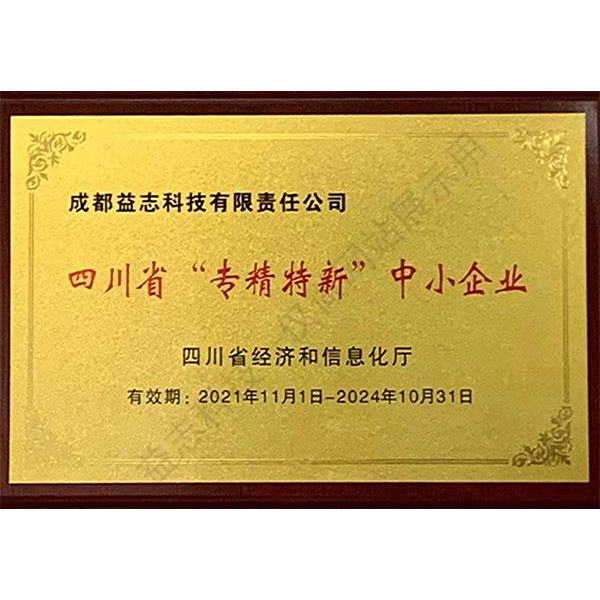
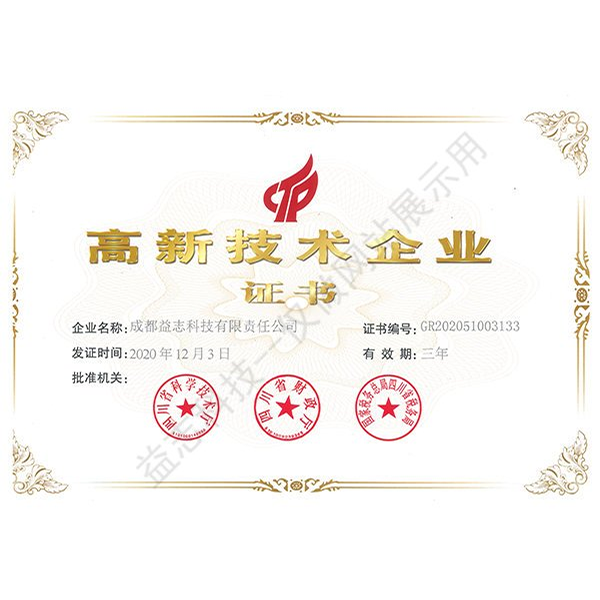
The turning point, in my opinion, began with medium- and small-scale projects. This is where interesting local solutions began to appear. A striking example is the activity of such design institutes asChengdu Yizhi Technology Co.. This is not a random name - I followed their work. They grew fromHuaxi Technologyand judging by their portfolio onhttps://www.yzkjhx.ru, concentrated specifically on cryogenic technologies and liquefaction for medium-sized capacities. Their approach is often more flexible, tailored to specific Chinese feedstock sources - for example, associated petroleum gas or gas with a high nitrogen content, which is not always cost-effective to process in giant plants.
Here lies one of the main secrets of the Chinese breakthrough. While global giants were competing for contracts for mega-projects, local players were methodically honing their skills on niche but widespread tasks. They created their own technology packages for liquefaction using mixed refrigerants (MRC) and the nitrogen cycle. Setting up such equipment is a different story. I remember that at one of the facilities in Sichuan we were faced with the problem of vibration in the heat exchanger due to the non-ideal composition of the raw materials. Standard Western designs would require expensive pre-treatment, but a local team of engineers (possibly from the likes of Yizhi) suggested modifying the operating mode and adding a separation stage. Saved a lot of time and money. This is the same “practical school”.
Equipment: from import to localization, but with reservations
If we take the key equipment - turboexpanders, cryogenic pumps, cold-box heat exchangers? — about ten years ago the list of suppliers was very short and almost exclusively foreign. Now the situation is changing. Chinese manufacturers such as Hangyang or Siyuan already offer quite competitive cryogenic pumps and heat exchange equipment for temperatures down to -160°C.
But there are also “bottlenecks”. For example, high-precision control systems and some types of special fittings for ultra-low temperatures, where reliability requirements are prohibitive. Here the dependence still remains. Local companies often follow the path of strategic alliances: a design institute likeChengdu Yizhi Technology Co., Ltd., with a registered capital of the same 120 million yuan, takes on overall design and integration, purchases critical components from the leaders (the same Linde or Air Products), and assembles the rest locally. This is a reasonable and pragmatic path that reduces risks and costs, but does not yet provide complete technological independence.
An interesting trend is the growth of modular solutions. Instead of building a giant factory “in a field?” Increasingly, liquefaction plants are assembled from ready-made modules at shipyards and then delivered to site. This reduces time and costs. And this is where Chinese engineering companies, with their experience in heavy engineering and logistics, begin to play on an equal footing. They learned to design these modules taking into account the requirements for transportation and subsequent installation in difficult conditions - from the deserts of Xinjiang to offshore platforms.
Raw material base: diversification as a driver of innovation
Many people forget that ChineseLNG- it's not just imports. Within the country there are significant resources of unconventional gas - shale, coal bed methane. It is often mined in remote, small deposits where building a giant pipeline is unprofitable. This is where small-scale liquefaction technologies (small-scale LNG) are in demand.
This is a completely different logic. We need mobile or compact installations capable of working with unstable flow rates and variable gas composition. It is in this niche that Chinese companies, including the mentioned design institute, have cut their teeth. They develop turnkey solutions that include not only liquefaction itself, but also cleaning, storage, logistics - often in the form of liquefied gas in tanks or containers (LNG ISO-tanks).
I came across such a project in Shaanxi. Coal bed methane deposit, a gas with a high content of CO2 and nitrogen. Standard liquefaction line ?choked? would. The project team (I will not say that it was Yizhi, but a very similar approach) proposed a hybrid scheme: preliminary membrane purification from CO2, then liquefaction in a cascade cycle with a nitrogen refrigerant, which better copes with the high content of inerts. The installation turned out to be not the cheapest in CAPEX, but with excellent operating costs. Such cases are the best school for engineers.
Global ambitions and real contracts
Will China be able to export its liquefaction technology the same way it exports solar panels? It's too early to say. There are applications. Chinese contractors participate in projects in Africa and Central Asia, offering a full range of services - financing, construction, equipment. But often the key role in these deals is not so much technological superiority as a package deal tied to Chinese loans and political agreements.
Technological leadership can be called a situation when your license is bought in Houston or Rotterdam. Chinese companies are still far away from this. Their strength now is the optimal ratio of price/quality/time? for projects of a certain class of complexity and scale. And, critically, a huge internal testing and optimization facility. Each new installation built within the country provides invaluable data for refining technologies.
Here it is worth returning to the role of design and engineering companies. Their websites are likeyzkjhx.ru, are often not full of loud headlines, but in the sections of the portfolio specifics are visible: “Liquefaction plant of 300 thousand tons/year in Sichuan province?”, “Modular station for purification and liquefaction of APG?”. This is the bread of real technological progress - dozens of implemented objects on which solutions are tested and improved.
Conclusions: leadership in the making
So is China the leader in LNG liquefaction? If you measure it by the volume of infrastructure and the appetite for imports, of course. If we talk about fundamental, breakthrough technologies for giga projects - not yet, they are still catching up here. But the most important thing happens in the middle.
China has become the absolute leader in creating flexible, adaptive and cost-effective technological solutions for specific tasks: small-scale liquefaction, APG utilization, working with complex raw materials. This is leadership that grew out of practical necessity, supported by a powerful engineering school, as in the case ofChengdu Yizhi Technology Co., and a colossal domestic market.
It is this layer of competencies - the ability to integrate, adapt, optimize for specific conditions - that forms the basis for the future. When the next global LNG investment cycle shifts towards a more distributed, flexible model, perhaps it is Chinese developments and design institutes that have gone through the school of real-world objects that will be most in demand. Leadership is not always about being the first to invent a principle. Sometimes it means becoming the best at applying it massively and intelligently. China has already come a long way along this path.