China: LNG technology, ecology and market?
2026-02-20
When people talk about Chinese LNG, they often immediately think about scale and pace. This is, of course, true, but behind this there are a lot of nuances that you won’t see in the reports. Many, especially in the West, still believe that China is simply buying technology and pushing the volume. This is a great simplification, if not misleading. In fact, there has been a complex game going on there for a long time - where import chains, local engineering solutions, environmental standards and market logic are intertwined in such a way that sometimes market participants themselves do not immediately get their bearings. I’ll try to break down what it looks like from the inside, with those very “pitfalls”.
Technological base: not only ?buy and repeat?
Yes, it all started with the large-scale import of liquefaction technologies. But if earlier these were mostly complete turnkey cycles? from Western contractors, now the picture has changed a lot. Chinese engineering companies are actively localizing processes, adapting them to local conditions and, importantly, to local equipment. Take, for example, key heat exchangers for liquefaction processes—say, mixed refrigerant. Previously, they were imported from Europe or the USA, but now a significant part is already made at local factories that have been certified and learned to work with the required steel grades and accuracy requirements.
But localization is not just about changing suppliers. This often means reconsidering the entire maintenance and repair logic. I remember a story with one receiving station, where it was necessary to change the connection diagram of the refrigerant pumps. The foreign project required a certain type of service, which, given the local personnel resources and climate, turned out to be too time-consuming. Engineers on site redesigned the unit, making it more modular. This increased upfront costs but saved weeks of downtime down the line. This is pragmatism.
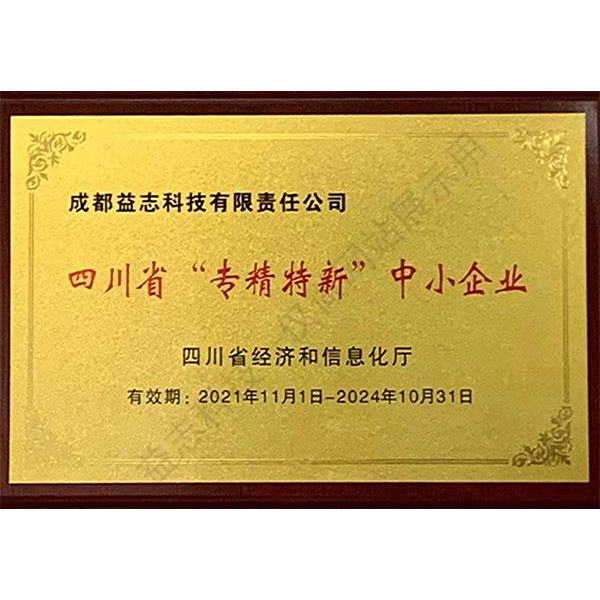
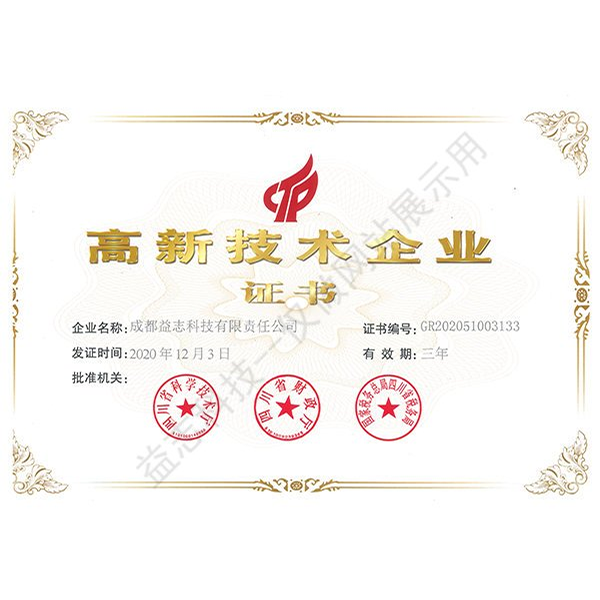
It’s worth mentioning separatelysmall and medium liquefaction plants. This is where Chinese manufacturers have truly found their niche. They don't try to immediately break performance records like giant base terminals. Their strength is relatively inexpensive, flexible solutions for distributed energy, vehicle refueling, and the use of associated gas in fields. Companies like Chengdu Yizhi Technology Co. they are working in this area. Looked at their websiteyzkjhx.ru— it is clear that this is a design institute with a significant authorized capital (120 million yuan), created on the basis of a chemical technology company. Such structures are often engaged in adapting large technological processes to more intimate, but commercially in demand tasks. Their work is not fundamental research, but rather applied engineering: how to make a reliable liquefaction plant that can be installed, say, in a remote area, and so that it works with local personnel.
Ecology: pressure from standards and real priorities
The topic of ecology in China now is not just beautiful words. This is intense regulatory pressure, especially around key industrial zones and densely populated areas. For LNG facilities, this results in two main headaches: emissions during liquefaction (the same volatile organic compounds, noise) and risks during storage and transportation.
On paper, the standards are often even stricter than in some European countries. But in practice, their implementation comes in waves and is very dependent on the region and the specific project. For example, requirements for vapor recovery system (BOG) at CNG filling stations. In the rich coastal provinces they are sold almost completely, often with a reserve. But in internal regions they may seek compromises so as not to kill the profitability of the project. The inspectorate may turn a blind eye to some things if the general indicators for the area are normal. This doesn’t mean that no one cares—it means that there is a certain “pragmatic” attitude. gradation of performance.
The most interesting thing is that environmental requirements have become a driver for some technological solutions. The same mentioned Chengdu Yizhi Technology Co., judging by their profile, is probably faced with requests for projects with a minimal “footprint”. For example, integrating liquefaction plants with facilities that have excess cold or heat to improve overall efficiency and reduce emissions. Or designing compact plants with improved storage insulation to minimize evaporation. It’s no longer just “build it to work”, but “build it to work and comply with all the new standards”. And such tasks precisely form a new level of competencies for local engineering teams.
Market: between plan and demand
The LNG market in China is a classic story of the interaction of government planning and market forces. Five-year plans set the general framework and targets for the share of gas in the energy balance. This creates guaranteed demand and attracts investors. But then completely market mechanisms come into play.
Pricing is a different matter. There are several price indices linked to oil and spot supplies. For small independent players who purchase LNG at the spot and sell it to industry or gas stations, it is a constant play on volatility. They are forced to be flexible, look for short-term contracts, and sometimes stand idle if the purchase price becomes unprofitable. This is not at all the picture of stability that one might think when looking at government mega-contracts with Qatar or Australia.
A very illustrative story is the development of a network of LNG automobile filling stations for freight transport. The idea was to replace diesel with cleaner gas. The state provided benefits and subsidies. But success in each region depended on hundreds of factors: the price of diesel fuel, the availability of infrastructure for repairing gas engines, the logistics of delivering LNG itself to gas stations. In some places it took off, in others the projects are barely breathing. And this is where those very ones are in demandsmall liquefaction plants, which can provide local refueling, independent of main pipelines. This is a typical example where a market niche creates demand for a specific technology.
Logistics and storage: growth bottlenecks
Regasification and storage capacity is perhaps the bottleneck in the chain. The construction of new large terminals is a long, expensive process and highly dependent on approvals. That’s why the big trend right now is floating storage and regasification units (FSRUs). They are quicker to put into operation and offer flexibility. China is actively ordering them and has even begun building them at its shipyards.
But for the domestic market, a network of small storage facilities andcryogenic logisticsdecisions. Delivering LNG from the terminal to the end consumer hundreds of kilometers away is a whole quest. We need specialized tank trucks, transportation approvals, and intermediate storage stations. Equipment wear and tear in this area is high, and safety requirements are stringent. Many local logistics companies started with enthusiasm, but were faced with high fleet capital intensity and management difficulties. Several of these projects that I have heard about simply folded because they could not bear the operating costs.
Here again, engineering companies come to the fore, which can offer a comprehensive solution: not just sell storage capacity, but calculate the entire chain - from acceptance to shipment, taking into account local rules. It is that “last mile” that often determines whether an entire business plan to supply gas to a remote plant or coal mine will even work.
Looking Ahead: Integration and Hydrogen
Now they are increasingly saying that LNG is not an end point, but a stepping stone. Eyes turn to hydrogen and "green" gas. In China, this trend is also gaining momentum, but with a characteristic twist. For now, the main focus is on the so-called “blue?” hydrogen produced from natural gas with carbon capture. Here again, LNG infrastructure is seen as a potential basis.
There are pilot projects to add hydrogen to gas pipelines, and the possibility of using existing storage facilities is being studied. But this is still a very early stage. Technical issues regarding materials, safety, equipment compatibility - these still need to be resolved. For design institutes such as Chengdu Yizhi Technology Co., this is a potentially large new field of activity. After all, it will be necessary to adapt technological lines and develop new safety standards.
In the end, what do we see? The Chinese LNG sector is no longer just an import and assembly site. This is a complex, multi-level ecosystem, where government mega-projects coexist with risky private initiatives, where strict environmental regulations push for technological change, and market logic forces the search for flexible and cheap solutions. Success here depends not so much on global strategies, but on the ability to work with local specifics, negotiate with local regulators and find technological compromises. And it is in this kitchen that the very practical experience that distinguishes a real player from an outside observer is born.