China and Russia: Arctic LNG liquefaction cascade - a breakthrough?
2026-02-20
Let me make a reservation right away: when do you hear the “Arctic cascade?” and ?breakthrough? in one headline, I want to check what this enthusiasm is based on. There is too much industry noise around any project in the Arctic, especially one involving China. Many people immediately imagine ready-made factories and tankers sailing along the Northern Sea Route, forgetting about years of engineering, about ice class, about the logistics of components in permafrost conditions. Let's understand it without gloss.
From concept to metal: where is the real complexity?
The idea of cascading liquefaction, especially for Arctic conditions, is not new. But its implementation is always a compromise between efficiency, capital costs and reliability. Russian projects such as ?Yamal LNG? and “Arctic LNG 2”, showed that it is possible to work. But is it possible? doesn't mean "easy". Chinese companies did not come here empty-handed, but with concrete experience and, more importantly, a willingness to finance and participate in risks. This is not just a purchase of technology, it is a deep dive into the project.
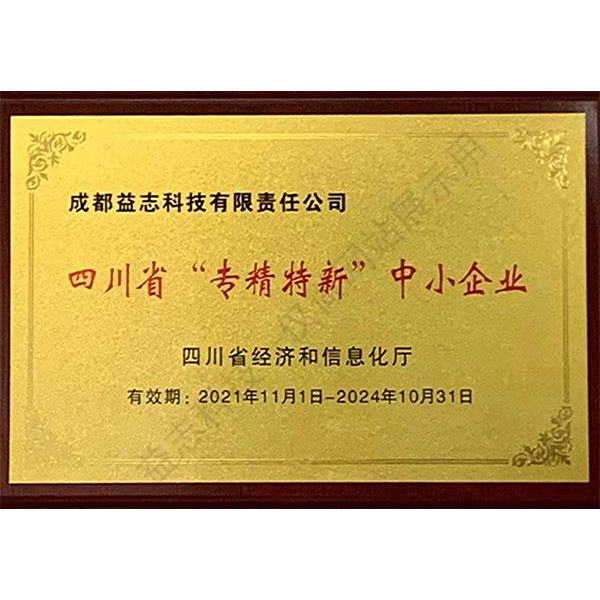
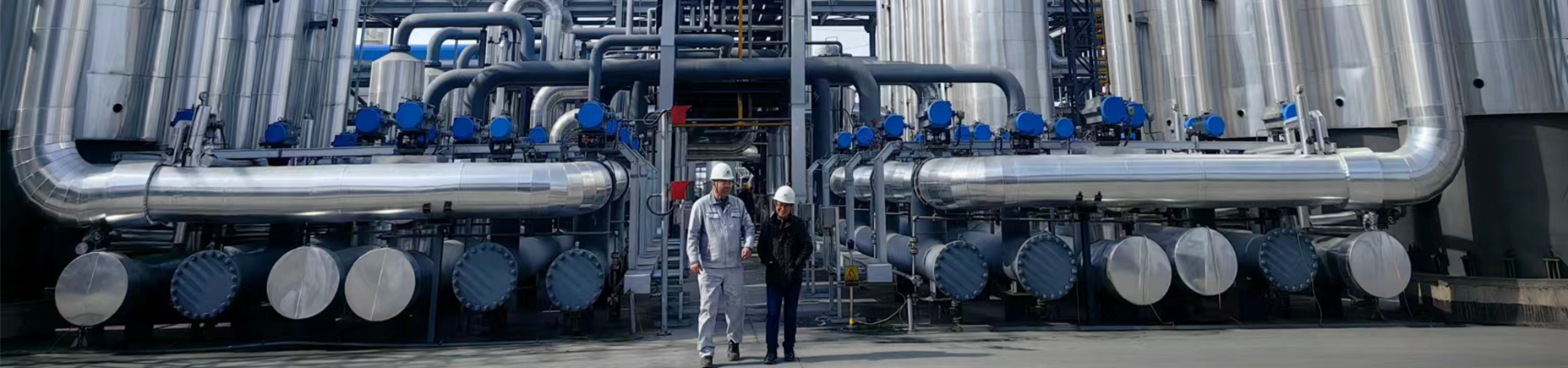
For example, when we were considering the supply of heat exchange equipment for one of the production lines, the key issue was adaptation. A standard cascade operating in a temperate climate in the Arctic requires a different approach to materials, control systems, and redundancy. Chinese engineering institutes such asChengdu Yizhi Technology Co., showed flexibility here. On their websiteyzkjhx.ruit is clear that they are positioning themselves as a design institute created on the basis of a chemical technology company. This is an important nuance: they have behind them not just theory, but applied experience in chemical processes, which directly intersects with liquefaction technologies.
I remember discussions on cold-boxing agents. Theoretically, everything is clear, but in practice, at minus 50 and below, viscosity, heat transfer - everything changes. There were attempts to simply scale proven solutions, which led to inflated energy costs at the start. We had to return to pilot models, which took time. This is a typical story that is not written about in press releases.
The role of Chinese engineering: not only money
There is a stereotype that China in such projects is only a source of financing and, possibly, cheap labor. This is a deep misconception. Their contributions to engineering, especially detailed design and process simulation, have become critically important. Institutes like the one mentioned Chengdu Yizhi Technology Co., Ltd. with a registered capital of 1.2 billion yuan, these are not offices on paper. These are serious organizations that can conduct FEED (Front End Engineering Design) and part of the detailed design, especially for process units related to gas cleaning and pre-cooling.
Their strength lies in integration. They often act as a link between Russian customers, who know their fields and infrastructure, and international suppliers of basic licensing technologies (the same cascade process). They take upon themselves “location-specific?” and optimization for specific conditions. For example, calculating loads on foundations under conditions of thawing permafrost is an area where their calculation departments work closely with Russian geotechnicians.
But this is not without problems. The language barrier in technical documentation is a constant source of errors and delays. It is not enough to translate the specification. It is necessary for the Chinese engineer to understand why the Russian seismic standards for this site are the same, or why this particular grade of steel is required. It is the daily routine that determines success.
Logistics and infrastructure: the hidden stumbling block
Everyone is talking about the Northern Sea Route as a route for finished LNG. That's right. But how to deliver, say, a rectification column 60 meters high and weighing 1000 tons to a construction site? Or factory modules that are assembled in shipyards in China? The story of ?Arctic LNG 2? This was shown well - module logistics became a separate mega-project. And here Chinese shipyards and transport companies gained invaluable experience.
Each such flight is a quest. Ice navigation, limited navigation windows, insurance, port facilities in the Gulf of Ob. The cost of shipping one module can eat up all the savings from its production in Asia. Therefore, there is now an active search for solutions for maximum pre-assembly and testing of modules at the shipyard, so that only the connection remains on site. This reduces risks, but increases the requirements for engineering quality at the design stage of these modules.
It is in such matters that the siteyzkjhx.ruas a representative office of Chengdu Yizhi Technology Co. becomes a useful resource. There you can see their approach to the design of modular installations, which indirectly speaks of their understanding of the entire chain - from drawing to sea delivery.
Economics of the project: when is the ?breakthrough? becomes profitable?
Without numbers, all this is talk in favor of the poor. Cascade liquefaction itself is energy efficient, but its implementation in the Arctic is expensive. The cost of a ton of LNG from a new Arctic project has been a subject of debate until recently. Everything changed with the departure of Western contractors and the need for import substitution.
Here Chinese participation became not just useful, but perhaps life-saving. It made it possible to maintain the dynamics of projects, ensure the supply of critical equipment (turbine generators, pumps, automation systems) and, most importantly, maintain funding. But profitability is now considered in a new way. It is strongly tied to long-term contracts with Asian buyers and to the uninterrupted operation of the Northern Sea Route. Any delay in navigation or breakdown of an icebreaker impacts the economy directly.
Therefore, a breakthrough can be called not the fact of building a plant, but the achievement of a stable, predictable cost, which will be competitive not only at the peak of gas prices, but also in the medium term. Judging by the pace and volume of investment, China and Russia are making a serious bet on this.
Looking forward: sustainability or dependence?
Now the cooperation looks like a symbiosis. Russia receives technology, equipment and sales markets. China - access to resources and unique experience of working in high latitudes, which can be replicated. But the question arises: are we creating a new technological addiction? If all cryogenic heat exchangers for the following projects are supplied from China, and all design is carried out in Chengdu, then what will remain of the Russian engineering school in this area?
On the other hand, the global LNG market is a game of large capitals and competencies. Isolation is impossible. Perhaps the future lies in the creation of joint engineering centers, where experience will not just be transferred, but created anew. It is already clear how Russian and Chinese engineers learn from each other on specific tasks: some - the intricacies of working with permafrost, others - advanced methods of digital modeling (digital twin) of technological processes.
The result?Arctic LNG liquefaction cascade- this is not a one-time breakthrough, but a complex, multi-step process. The breakthrough will be the moment when the chain: field - plant - tanker - market? It will work like clockwork, predictably and in any weather. Judging by the experience accumulated in recent years and the mistakes that have already been overcome, China and Russia are moving precisely towards this goal. But the path is still long, and it will consist of the same routine, quiet decisions, such as calculating the thickness of pipeline insulation or choosing a supplier of shut-off valves for operation at -60°C. This is where the real work lies, not the big headlines.