China: LNG liquefaction technology and products?
2026-02-20
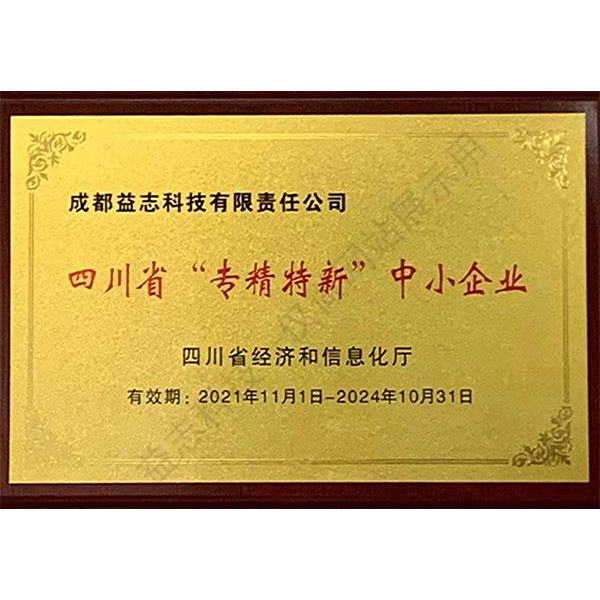
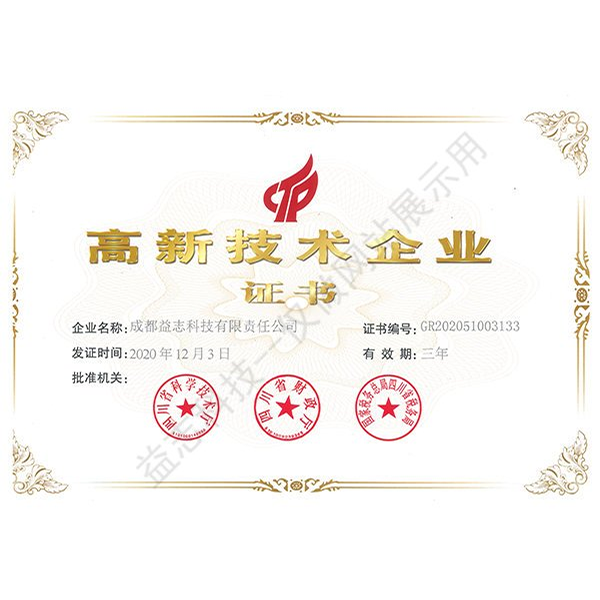
When people talk about Chinese LNG, many people immediately think about large-scale import terminals or giant plants like Yamal LNG, where we participate. But the real picture of liquefaction technologies and products often remains behind the scenes - where design institutes such as Chengdu Yizhi Technology Co. work. Yes, it is they, and not just government giants, who often solve specific engineering puzzles that rarely make the news.
Not just scale: where the real technology challenges lie
The main misconception is to believe that China's key progress in LNG is solely due to copying or purchasing foreign technology. In fact, adaptation is often the driving force. Take, for example, cryogenic heat exchangers. Theoretically, the principle is known, but when you start designing an installation for a specific, “dirty”? Regarding the composition of associated gas at one of the fields in Xinjiang, standard solutions fail. This is where the work of institutes like Yizhi Technology comes into play. Their websiteyzkjhx.ru- this is not just a business card, but a reflection of practice: they do not sell magical “turnkey” installations, but solve problems of optimizing existing liquefaction lines, often modernizing precisely the “bottlenecks”.
A mini-LNG project for a remote coal mine comes to mind. The task was to utilize methane from ventilation systems. It would seem like a standard solution. But the composition of the gas constantly “floated”, the oxygen content was unpredictable. Ready-made imported modules simply refused to work stably. We had to delve deeply into the process control algorithms and refine the pre-cleaning system. This is the same “routine” that forms real technological experience. It is precisely in such situations that a design institute with a registered capital of 120 million yuan, like Yizhi Technology, is needed - resources for deep development, and not for simple assembly.
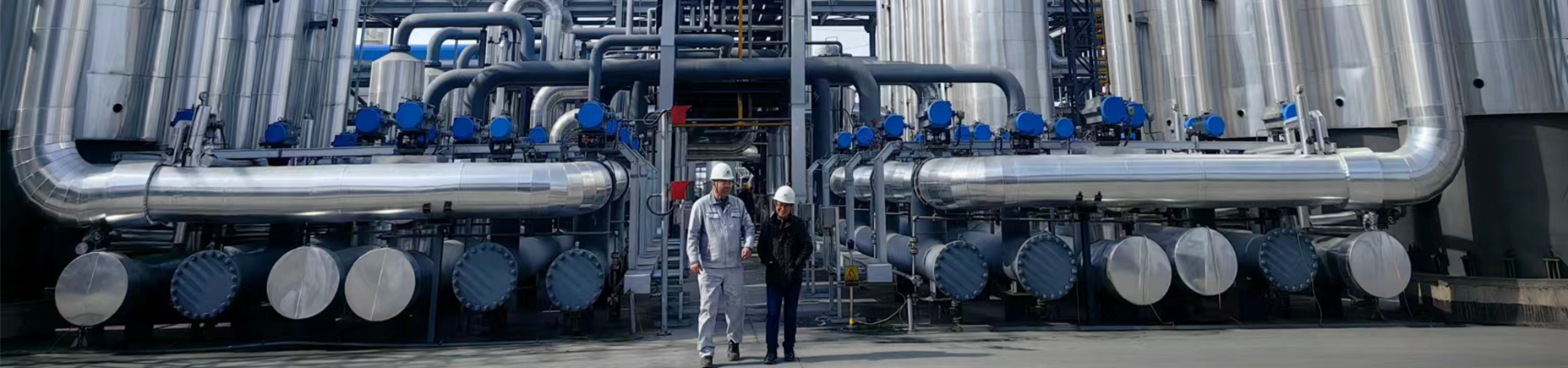
That's why when I talk aboutLNG liquefaction technologiesIn China, I always focus on system integration and process control. We have learned not just to assemble plants, but to flexibly configure them for raw materials that are far from ideal laboratory methane. This is our main product, which is not always noticeable from the outside.
Products or solutions? Evolution of the approach
Previously, the Chinese market demanded mainly ?products? — specific installations, columns, compressors. Now the demand has shifted towards “solutions”, especially for medium and small businesses. This is not just semantics. Previously, it could have been like this: I bought a standard liquefaction module, installed it, but it does not reach its rated performance due to local conditions. The client was left alone with the problem.
Now the approach promoted by leading engineering companies, including Chengdu Yizhi Technology Co., Ltd., is end-to-end design, starting with raw gas analysis and ending with recommendations for the logistics of the liquid product. Their activities as a design institute created by Huaxi Technology are aimed at precisely this. This is not the sale of a box with equipment, but the sale of a guaranteed result - a certain volume and quality of LNG at the output, taking into account all the local “buts”.
A striking example is the boom in CNG refueling stations for trucks along national highways. It would seem like replication of objects of the same type. But each station has its own limitations in terms of area, access roads, and energy supply. A universal ?product? No. There are standard modules, but their layout, wiring, and configuration are always individual. This is where the main added value and technological know-how lies. We have stopped thinking in terms of “liquefaction unit”, we think in terms of “functional unit in a specific infrastructure chain”.
Equipment and materials: dependence and breakthroughs
The weak point for a long time was the key components: turboexpanders, special alloys for cryogenic heat exchangers, high-precision fittings. Heavy dependence on imports from the US or Europe. The situation is changing, but not as quickly as we would like. Our engineering institutes, including Yizhi Technology, are often forced to design with reserves. or develop workarounds due to limitations in available hardware.
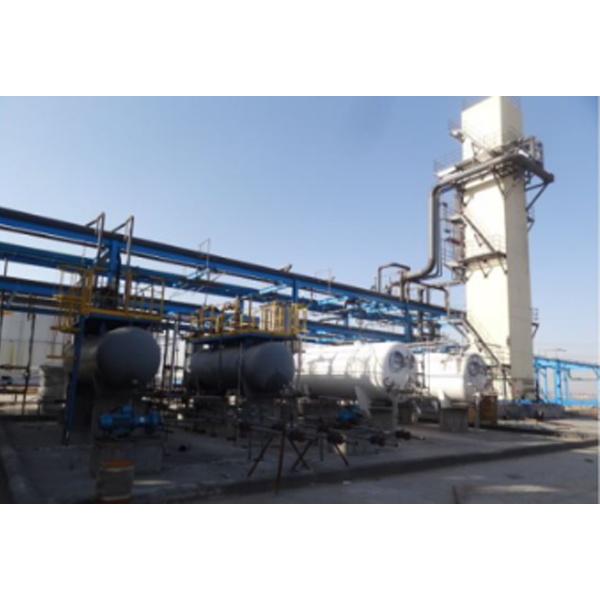
However, there are also successes. For example, in the field of production of cryogenic storage vessels (tanks) for transport and stationary storage, China has reached a very decent level. Competitiveness in price and quality is real. But when it comes to the heart of the process - the liquefaction cycle itself, especially on a large scale, licensed technologies (APCI, Linde, etc.) still dominate. Our role is often their optimal implementation and “ennobling?” according to local conditions.
An interesting case is the use of domestic compressor stations using screw compressors for small gas pre-compression installations. They turned out to be unpretentious and repairable in field conditions, which outweighed their slightly lower efficiency compared to imported analogues. This is an example of how practice dictates the choice of technology solution, not just technical specifications on paper.
Failures as part of the journey: what is not written in reports
Without talking about failures, the picture will be incomplete. One of the most enlightening projects I have been involved in indirectly was an attempt to use a simplified nitrogen expansion liquefaction cycle for high nitrogen content gas. The theory was beautiful: its own nitrogen as a refrigerant. But in practice, dynamic process control when the inlet gas composition fluctuates has become a nightmare. The installation either “choked” or produced a product with an unsuitable temperature.
The project, as a result, was seriously redesigned with the transition to a more traditional, but reliable mixed refrigerant circuit. We lost time and money, but gained invaluable experience. Such situations are the norm for an industry that develops through trial and error. It is design institutes like Chengdu Yizhi Technology that accumulate this experience so as not to step on the same rake. Their authorized capital of 120 million is not only money for development, but also a kind of insurance fund to cover risks during in-depth development of non-standard tasks.
A common mistake is underestimating the preparation of raw materials. You can deliver the most perfectliquefaction technology, but if the pre-treatment unit (removal of water, CO2, sulfur compounds) is designed according to the residual principle, the entire line will operate unstably. The freezer will not work if wet food is placed in it. For some reason, this simple analogy often breaks down at the project financing stage, when the client wants to save on “non-essential” items. equipment.
Looking to the future: flexibility and digital
Where is the industry heading? Obviously, towards even greater flexibility and digitalization. It is no longer enough to simply build a plant. It must be able to quickly change operating modes when the parameters of the incoming gas or the demand for the product change. This requires deep integration of process control systems and advanced software for real-time process modeling.
Here, Chinese companies have the potential to make a breakthrough. Developing your own digital twins for liquefaction lines is no longer science fiction. Such solutions allow for “run-in” modes and identify bottlenecks even before the physical launch of equipment. For the institute, which is part of Huaxi Technology, this is a natural direction of development - the transition from purely engineering design to the creation of intelligent control systems for its projects.
The second trend is the deep utilization of cold generated during LNG regasification. It's not about itself anymoreliquefaction, but about the overall efficiency of the chain. Integration of LNG terminals with industrial enterprises that need refrigeration (chemistry, food processing, data centers) is the next step. And here again we need not just standard products, but comprehensive engineering solutions that take into account the infrastructure of a particular region. This is the area where a new generation of Chinese technologies in the gas sector will be formed - smarter, more adaptive and closely related to related industries.
In summary, the Chinese LNG technology and product scene is not a story of big breakthroughs from the ground up. This is a story about consistent, sometimes tedious, but absolutely necessary work to adapt, integrate and optimize world experience to the complex, diverse and often imperfect conditions of our own market. And it is in this routine work that real competence is born.