China: gas liquefaction technologies and products?
2026-02-20
When people talk about Chinese technologies in the gas sector, many still mentally see just imported installations and large-scale construction projects. But over the past ten years, the picture has changed a lot - our own, deeply developed solutions have appeared, especially in the field of liquefaction. But there are also plenty of myths: either everything is copied, or only giant projects like LNG terminals are worth something. In fact, the most interesting things often happen in the small-scale and modular liquefaction segment, where Chinese engineers have learned not just to repeat, but to adapt and optimize for real, often non-ideal conditions.
From giants to modules: evolution of the approach
I remember about seven years ago they discussed the project of a small LNG filling station somewhere in Xinjiang. It all came down to the cost and delivery time of a traditional installation. Then we paid serious attention to local manufacturers of modular solutions. It turned out that companies likeChengdu Yizhi Technology Co.already offer not just drawings, but complex “turnkey” packages. - from design to commissioning. Their websiteyzkjhx.ru- this is, in fact, a portfolio of implemented objects, where you can see how theory turns into working equipment in the field.
It is in such projects that the main feature is visible: adaptability. Not that ideal picture from a Western vendor’s catalog, but a calculation for a specific gas composition (which, as is known, can float), for the availability of cooling water or dry air, and for local safety requirements. Chinese engineers here are not shy about combining cycles - say, nitrogen expansion with propane pre-cooling, if this provides an energy benefit for a given volume.
There was a case at one of the fields where the customer initially wanted a “proven” one. mixed refrigerant technology. But after analyzing the daily unevenness of production and the costs of energy supply in a remote location, the design instituteChengdu Yizhi Technologyproposed a cascade cycle with ethane and ethylene. The solution seemed more complex to manage, but in the end it provided a 15-20% better cost/performance ratio. under conditions of frequent stops and starts. This is an example of real engineering, and not the sale of a standard box.
Key products: not only installations
When we talk about products, we immediately think about ourselvesliquefaction plants. But they often forget about the “companion”, which determines reliability. For example, plate-fin type heat exchangers. (plate-fin) for low temperature sections. Just five to seven years ago they were purchased mainly in Europe. Now, several Chinese manufacturers have reached a level where their devices operate quietly in the range of -160°C and below, with acceptable pressure drop performance. Of course, not for all critical applications, but more than enough for most small and medium-sized projects.
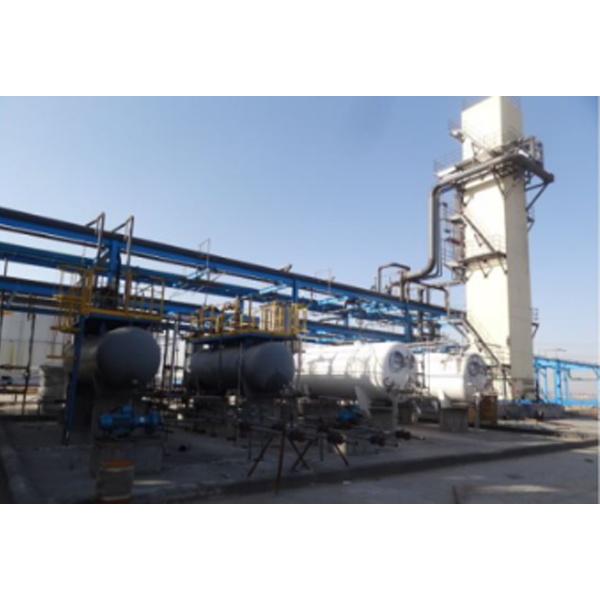
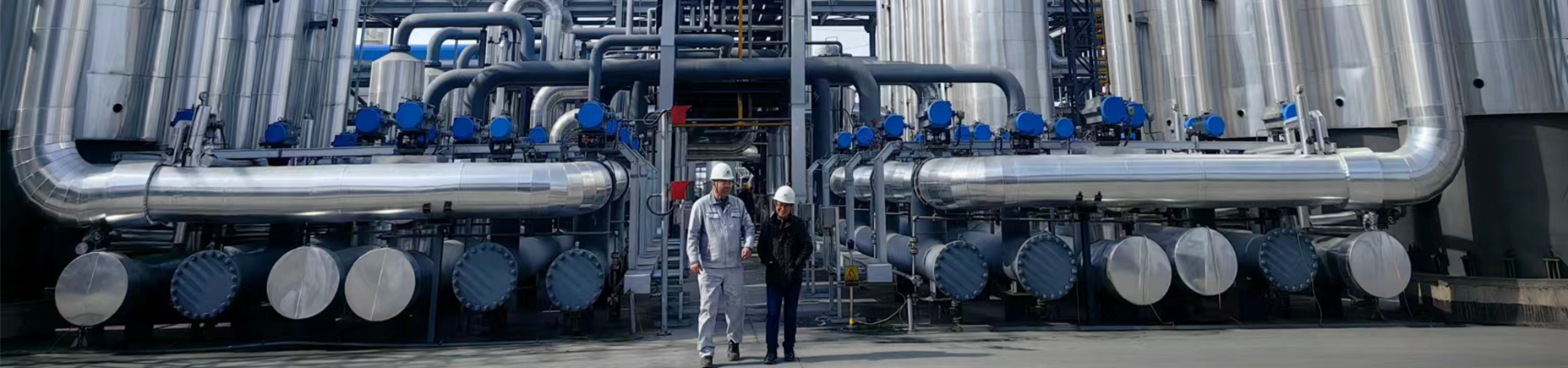
Gas purification systems are a separate story. Chinese raw material flows can be very “dirty”, with high levels of CO2, moisture and even mercury. Therefore, vast experience has been gained here in the design of adsorption and absorption pre-treatment units. They are often integrated into a common module, which saves space and simplifies installation. On the same siteyzkjhx.ruyou can see how such blocks look?in metal? — massive columns with wiring, which are supplied ready for connection.
And the third layer is control systems and power electronics. Here the progress is noticeable to the naked eye. If previously they installed imported controllers and frequency converters, now they increasingly use localized versions or completely domestic analogues. I won’t say that they are always better, but their main advantage is the speed of service support and the ability to deeply customize the software for specific start/stop algorithms that are required at remote sites.
Technological nuances and pitfalls
When implementing these solutions, you encounter typical problems. One of them is expectations of cooling performance. According to the data sheet, the installation can produce 50 tons of LNG per day, but this is at the nominal gas composition and cooling water temperature of +20°C. But in practice, in summer the water is +32°C, and there is 3% less methane in the raw materials. The resulting productivity drops. Good suppliers, like those from Chengdu Yizhi, immediately model these scenarios and offer either a power buffer or options with an additional cooling tower. The bad ones brush it off, saying that the parameters in the contract are nominal.
Another pain point is qualifying local staff for operation. Technologygas liquefaction- not a boiler room, it requires basic knowledge of cryogenics and automation. We often see how a beautiful modern installation, after six months of work, is covered with “beards”. frost in the wrong places due to improper adjustment or untimely regeneration of adsorbers. Therefore, now complex contracts increasingly include not two-week training, but long-term installation supervision support and even remote monitoring of parameters.
And of course, materials. Stainless steel for low temperatures is a separate topic. Chinese manufacturers have generally mastered the production of suitable grades (like 304L and 316L), but the quality of welds and their inspection is the point where you cannot skimp. Successful projects always include a stage of independent non-destructive testing by the customer or a third party. I remember the story of a leak in the refrigerant pipeline - a microcrack in the heat-affected zone of the seam. Manufacturer vinyl installers, those - the manufacturer. As a result, it was downtime for a month. Now we look at this first.
Application scenarios: where it really works
A classic is refueling trucks. The network of LNG filling stations along major highways in China is growing by leaps and bounds. But simpler cases are more interesting. For example, utilization of associated petroleum gas (APG) in small fields. Previously, it was often simply burned in a torch. Now they are installing a compact modular liquefaction plant, receiving several tons of LNG per day and using it to operate their own equipment or sell it to local consumers. The economy converges even with an inconsistent flow of raw materials.
Another direction is providing energy to remote villages or industrial facilities. Instead of running an expensive gas pipeline or depending on diesel generators, LNG is delivered by tanker trucks from the nearest large terminal and stored in a local cryotank. And sometimes a mini-liquefaction plant is built nearby if there is a source of natural gas, but no pipeline. Such facilities are an ideal testing ground for testing the reliability and ease of maintenance of equipment.
I also observe a trend towards the use of liquefaction technologies in the energy sector to store excess electricity (Power-to-Gas concept, but in the Chinese version). Excess energy from renewable energy sources is used for electrolysis, the resulting hydrogen is mixed with natural gas, and then the mixture is liquefied. These are still pilot projects, but the activity of research groups, including those collaborating with applied institutes like the mentioned Chengdu Yizhi Technology Co., Ltd., is high. This is already a look into the future.
Looking ahead: what's next?
If we talk about development, then the obvious focus is on increasing energy efficiency and “intellectualization”. It’s not just about reducing specific energy costs per liter of LNG (they are working on this by improving the cycles and efficiency of compressors), but making the installations more flexible and self-adjusting. So that they can automatically adjust to changes in the composition of raw materials and ambient temperature, minimizing losses. Work in this direction is underway, and some algorithms based on machine learning are already being tested on real objects.
Another trend is the standardization of modules. Not at the expense of flexibility, but to speed up construction. Now you can practically “assemble” installation of the required performance from standard units: cleaning, drying, pre-cooling, liquefaction itself, storage. This reduces design and manufacturing time from 18-24 months to 10-14. This is a direct saving for the customer.
In general, looking at how this segment has developed, you understand that Chinese technologiesgas liquefactionare no longer simply the preserve of state giants. They have become a practical, viable tool for solving specific problems - from APG utilization to the creation of local energy hubs. And their main advantage now is not the lowest price (although this is important), but namely their adaptability to complex, “non-bookish” problems. conditions and the willingness of engineers to look for a non-standard path if it leads to a workable result. The experience that is accumulated in projects implemented by companies like Chengdu Yizhi is the very asset that is difficult to copy from a catalogue.