China: LNG liquefaction process, exporters and technologies?
2026-02-20
When people talk about Chinese LNG, many people immediately think of giant import terminals. But the real picture is more complex - over the last decade, its own rather specific value chain has grown here, especially in liquefaction. There was a lot of noise around the scale, but less about how exactly they adapt and sometimes reinvent technologies to suit their conditions. This is not just copying, but often a response to specific challenges: from logistics to raw materials.
Evolution of the liquefaction process: not only large plants
If we take classic large-capacity lines, then China, of course, actively licenses technologies like AP-C3MR or DMR. But it’s more interesting to look at medium and small-scale solutions. A different logic often works here. For example, for distributed sources of gas or associated petroleum gas (APG) in remote fields of Western China, a large installation is not an option. We have to think about mobility, modularity, and resistance to changes. I have seen projects where the key was not maximum efficiency, but the ability of the installation to operate in semi-autonomous mode at -30°C and with a variable composition of raw materials. This gives rise to its own technical solutions - sometimes successful, sometimes not.
One of the practical challenges is gas pre-purification. Chinese natural gas, especially from fields such as the Sichuan Basin, may have elevated levels of CO2 and sulfur compounds. Direct transfer of standard cleaning regimens sometimes resulted in rapid molecular sieve clogging or corrosion. We had to adjust technological regimes on the fly and combine adsorbents. I remember an incident at one of the early installations, where, due to underestimation of composition fluctuations, it was necessary to urgently modify the drying circuit - the project was stalled for almost a month. This was a lesson: local raw materials require in-depth analysis even at the FEED stage.
The trend now is hybridization. They take, conditionally, the licensed core of the liquefaction process, but the “piping”? - compressors, heat exchangers, control systems - are often localized or adapted. This gives flexibility and reduces capital costs. But there are also risks: when different modules from different suppliers (Chinese, European, Japanese) are joined on site, headaches arise with interfaces and guarantees. Success highly depends on the competence of the engineering company that carries out the integration.
Who are the real export players? Not only CNPC and Sinopec
Yes, large state-owned corporations dominate export contracts. But if you dig into the supply chain of equipment and services forLNG liquefaction, the picture is more colorful. Working alongside the giants are specialized engineering and technology companies that have become key providers of solutions for specific nodes. They are often not seen in the news headlines, but they are the ones who implement projects “on the ground”.
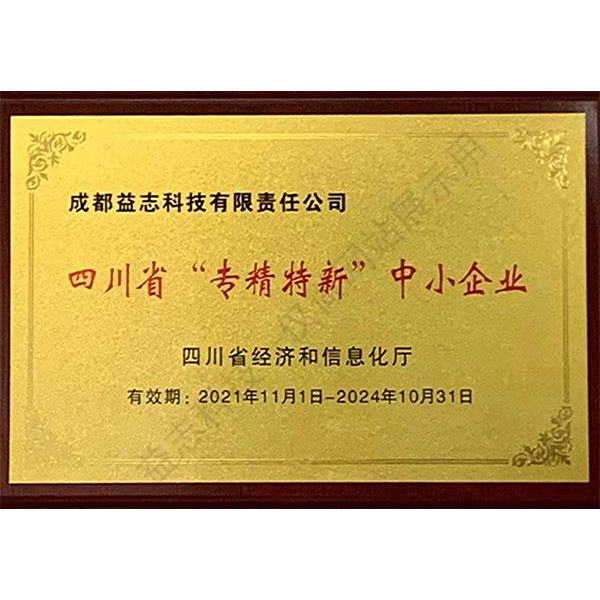
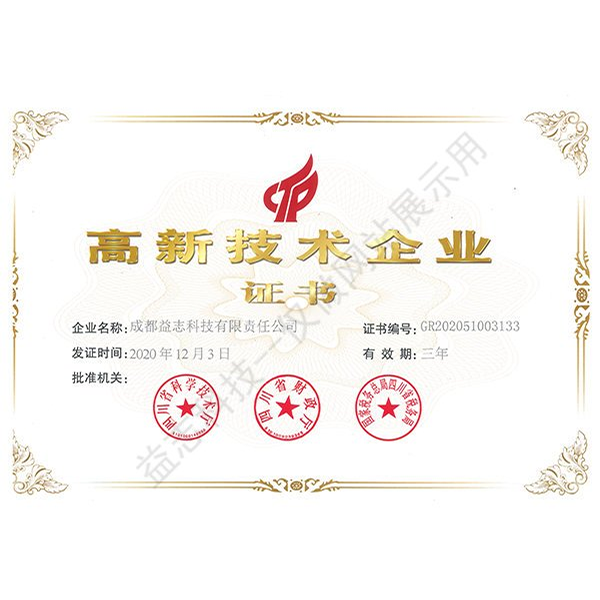
Let's take, for example,Chengdu Yizhi Technology Co.(their website ishttps://www.yzkjhx.ru). This is a design institute created on the basis of a chemical technology company. They don't build entire liquefaction plants, but focus on critical auxiliary systems: gas purification, cryogenic heat exchangers, cold recovery. Their niche is designing and delivering technology packages for these stages. Their portfolio includes solutions for removing heavy hydrocarbons and mercury from raw gas beforeliquefaction process- a task that is relevant for many Chinese fields. Their approach is often more flexible than that of the giants; they can quickly customize a solution to the parameters of a specific field.
What is important: such companies often become testing grounds for domestic developments. The state, through various programs, stimulates the localization of critical technologies. Therefore, in projects whereChengdu Yizhi Technology Co.acts as a contractor, you can find Chinese compressors and automation systems based on local controllers. Not everything works perfectly right away, but iterations go quickly. For a foreign partner, this can be both an opportunity (cost reduction) and a risk (the need for stricter quality control).
Technology trends: where China is experimenting
In addition to improving classic cycles, they are actively looking towards electrified solutions. Especially for small-scale LNG. The idea is simple: use electric drive for compressors instead of gas turbines. This seems logical in the context of the development of renewable energy sources and for remote sites where there are problems with the logistics of fuel for turbines. But in practice, the question of power grid stability and peak loads arises. In one of the pilot projects in Xinjiang, this instability led to frequent shutdowns - fuel savings were eaten up by losses from downtime.
Another trend is the integration of LNG production with other facilities, for example, with coal gasification plants or chemical complexes. This allows you to use excess cold or, conversely, heat flows. This is technically complex and requires fine tuning, but is potentially very energy efficient. I saw a project where the cold from the evaporation of regasified LNG was used at a nearby petrochemical plant to condense the products. The economy turned out to be interesting, but only after the problems with synchronizing the operating modes of two independent production facilities were solved.
And, of course, we can’t help but mention digitalization. The implementation of predictive analytics systems for monitoring heat exchangers is almost standard for new projects. Vibration sensors, real-time temperature profiles all help prevent hydration or clogging. But often ?digit? rests on the human factor: experienced operators, accustomed to working by eye, do not always trust the system’s readings. Implementation is always also a change in the work culture at the site.
Export ambitions and logistics bottlenecks
China, being the largest importer, is increasingly looking at exports as a tool for balancing the regional market and monetizing excess capacity. We are not talking about global exports, like Qatar or Australia, but rather about regional supplies to Southeast Asia or even overland - by road or container transport. Here the key role is played by small-scaleLNG liquefaction.
ISO container technology was a breakthrough. Filled a container at a remote field, loaded it onto a truck or train, and transported it even to Vietnam. But there are also “buts” here. Safety requirements for transportation through densely populated areas are very stringent. Plus the issue of cost: such logistics are profitable only if the gas price in the target market is high enough. Winter peak deliveries to the northern regions of China - yes, it worked. But summer exports to Thailand are a riskier story in terms of margins.
Largeexportersrepresented by CNPC or CNOOC work according to other schemes, often through long-term contracts linked to oil indices. But they are also the largest buyers of technology. Their projects, such as a plant in Shenzhen or expanding capacity in Hainan, are testing grounds for demonstrating and testing both international and Chinese technological solutions. Success or failure at such flagship sites directly impacts trust in Chinese contractors and technology in general.
A look ahead: what will move the industry
I think the energy transition will remain the main driver. Gas is seen as a bridge towards carbon neutrality. This means that liquefaction technologies will increasingly be assessed not only by CAPEX and OPEX, but also by their carbon footprint. Demand for solutions to capture CO2 during feedstock refining and the use of renewable energy for electric drives will increase. Chinese companies are already actively positioning their projects in this vein, especially when working with foreign investors.
The second point is the standardization of modular solutions. Experience gained in projects such as floating small LNG units (FSRUs) or container solutions is now being formalized. This will reduce the time and risks of implementing turnkey projects. Companies likeChengdu Yizhi Technology Co., which I mentioned, can play an important role here, since their business model is initially tailored to the design of standard, but adaptable modules.
And the last thing is the footage. The industry is young, and there is still a shortage of real specialists with experience in the full cycle - from FEED to commissioning and operation. There are many theorists, few practitioners who have worked with complex raw materials with their own hands. This creates a certain gap between ambitious plans and actual deadlines for commissioning objects. But the pace of learning is high. In 5-7 years, I think we will see a new generation of engineers who have grown up on their own, and not just on imported projects. And this is perhaps the main technological asset that China is creating in this area.